解剖学_消化系统
消化系统
- Gastrointestinal (GI) tract 消化道
- long tube that extends from the mouth to the anus.
- About 5-7 m in length
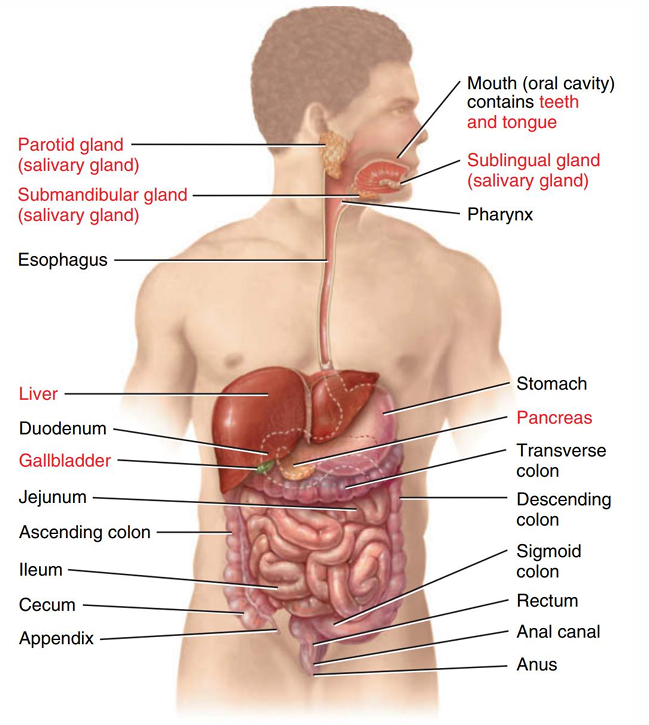
- Organs of the GI tract
- oral cavity 口腔
- pharynx 咽部
- esophagus 食管
- stomach 胃
- small intestine 小肠
- large intestine 大肠
- Upper Digestive Tract
- mouth
- pharynx
- esophagus
- stomach
- duodenum 十二指肠
- Lower Digestive Tract
- jejunum 空肠
- ileum 回肠
- the large intestine 大肠
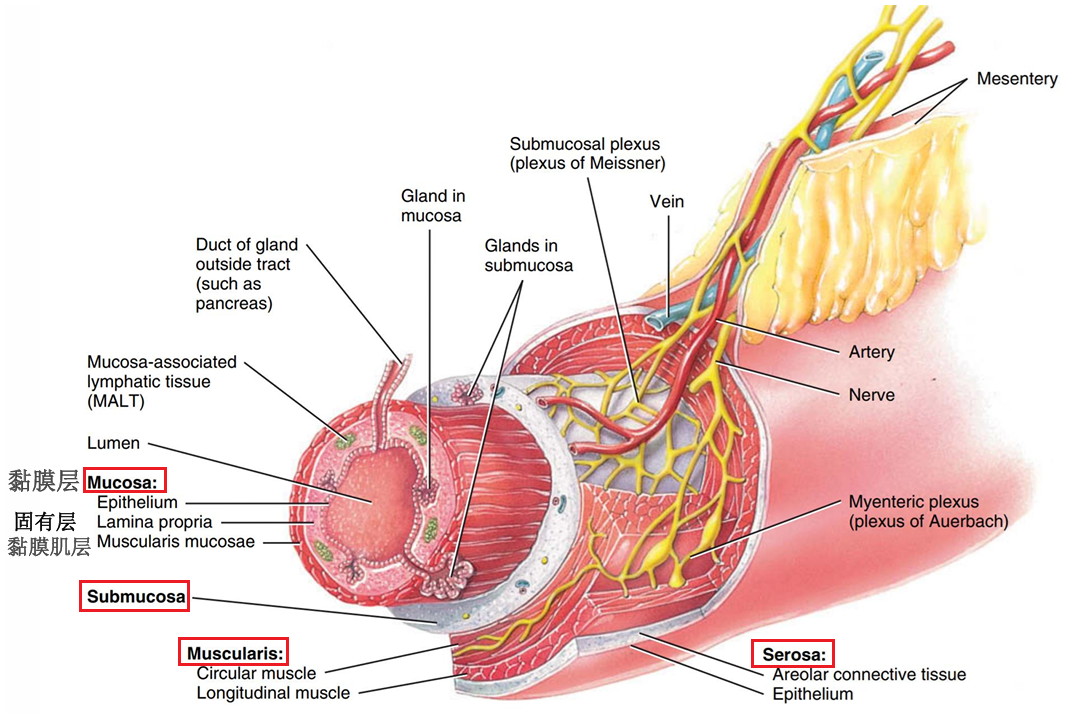
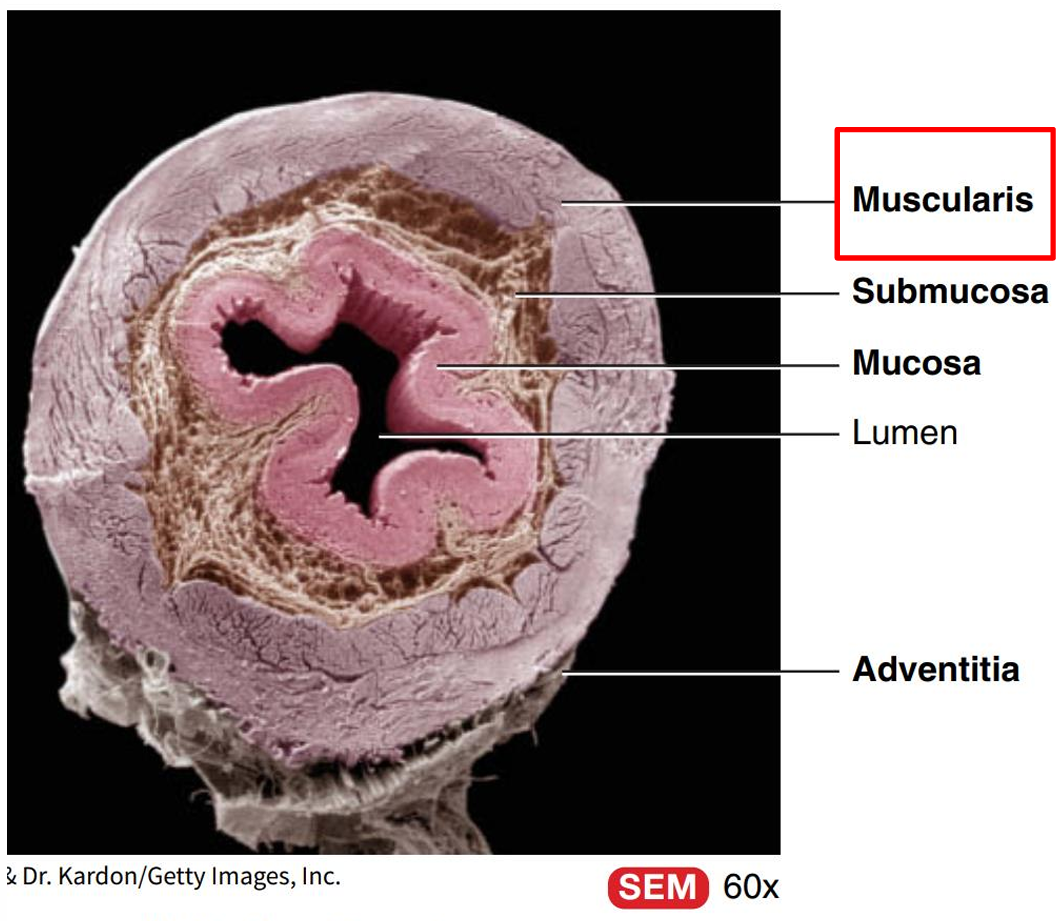
- Layers of the GI Tract
- Mucosa (mucous membrane) 黏膜层
- absorb and secrete mucus and digestive enzymes
- a layer of tight epithelium上皮 in direct contact with the contents of the GI tract.
- a layer of loose connective tissue called the lamina propria固有层. It houses capillaries.
- a thin layer of smooth muscles黏膜肌层 that help to break down food
- Submucosa 黏膜下层
- consists of dense connective tissue
- It contains vessels and plexus
- Muscularis 肌层
- Most muscularis consists of smooth muscle in two sheets
- inner circular fiber (segmentation)
- outer longitudinal fibers (peristalsis)
- Serosa 外膜
- is visceral peritoneum 内脏腹膜
- 图
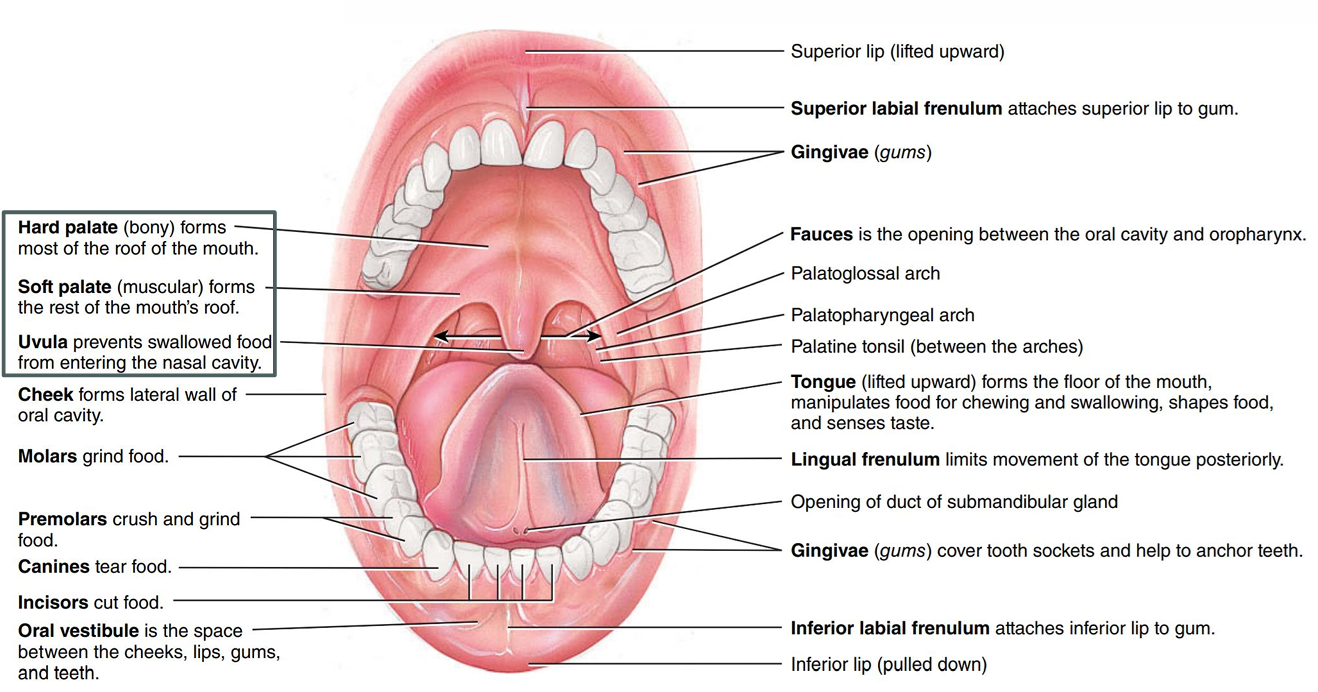
- Oral cavity
- Lips
- Cheek
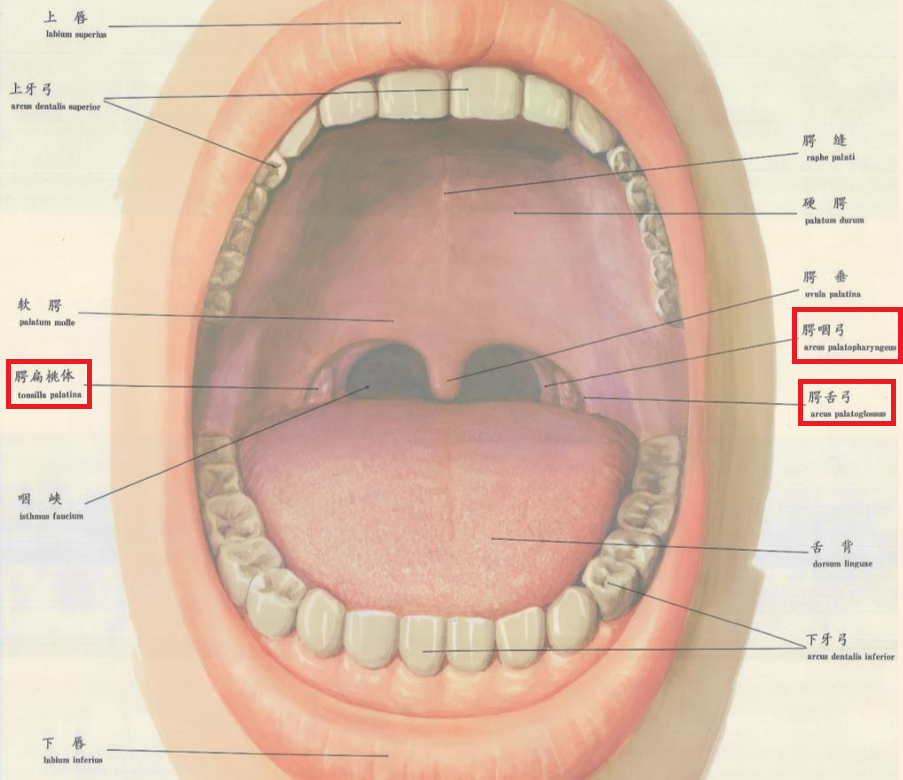
- Palate 腭
- hard palate (maxillae + palatine bones, 2/3)
- soft palate (1/3)
- Uvula 腭垂
- 图
- 硬腭在前,软腭在后
- palatoglossal arch 腭舌弓,palatopharyngeal arch 腭咽弓,palatine tonsils腭扁桃体 is between the arches
- Teeth
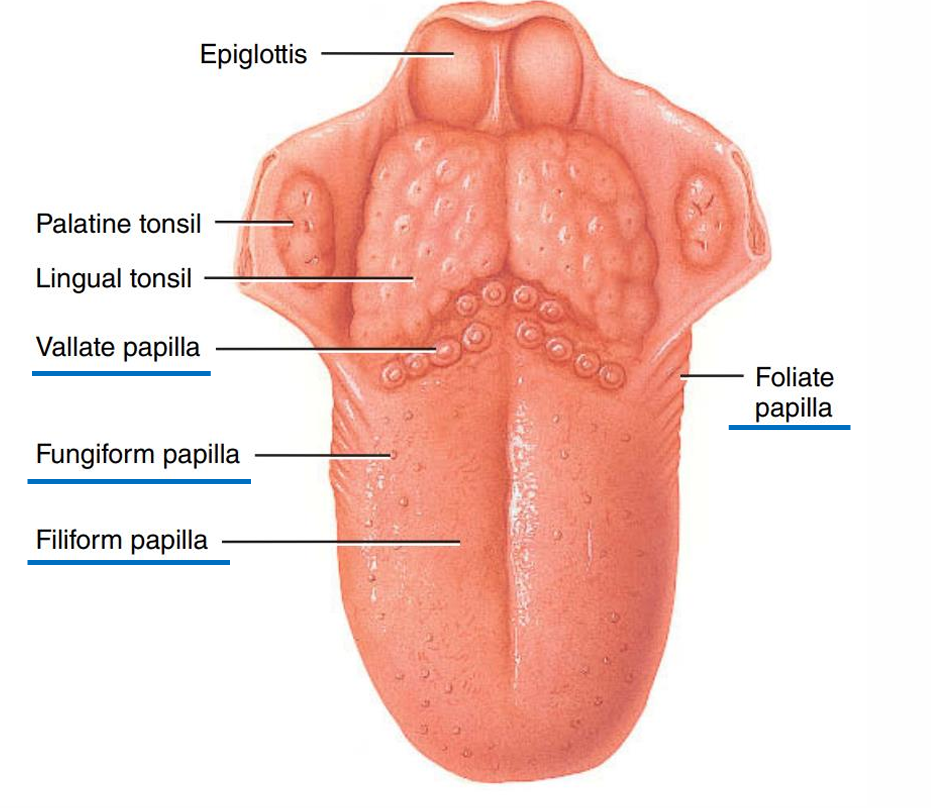
- Tongue
- The surfaces of the tongue are covered with papillae 舌乳头
- Taste buds are in the papillae
- 病-Intubation during Anesthesia 麻醉时插管
- General anesthesia results in a total relaxation of the muscles.
- Relaxation of the tongue muscles cause the tongue to fall posteriorly, which may obstruct the airway
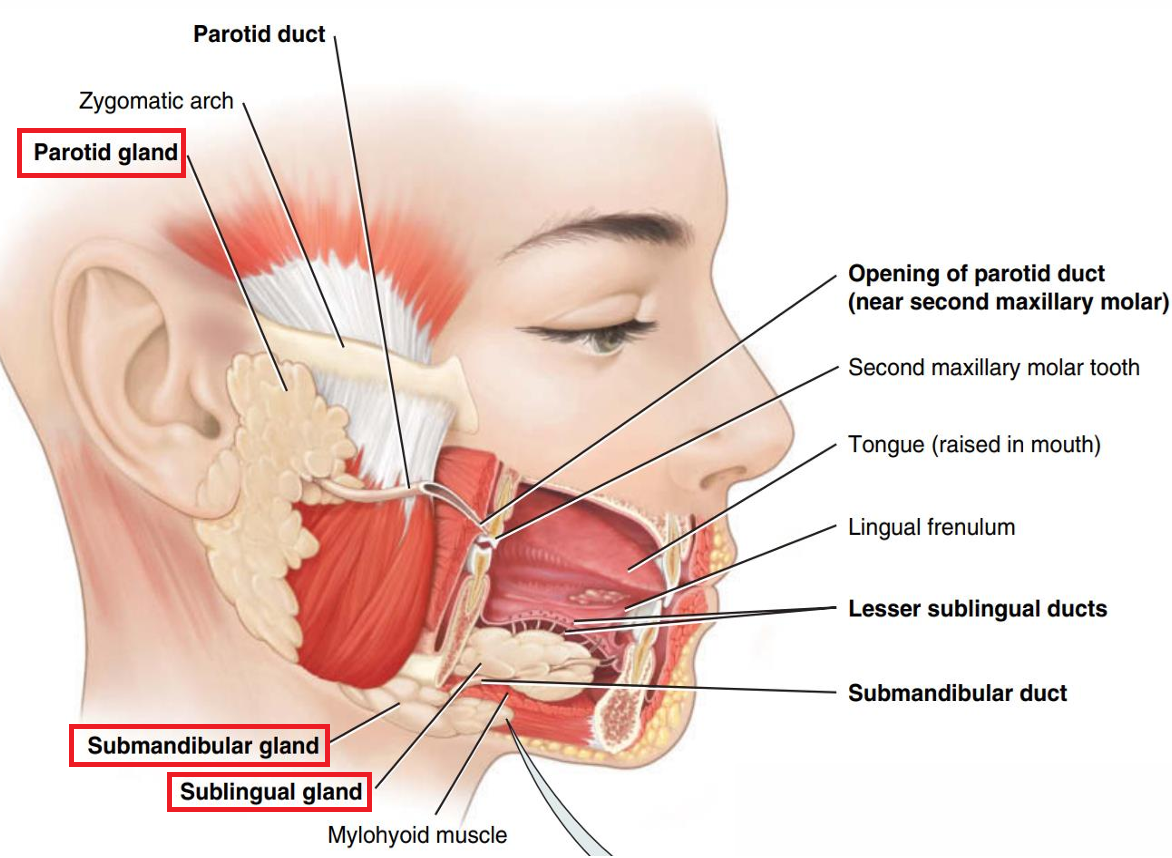
- Salivary gland 唾液腺
- 3种
- Parotid glands 腮腺
- near the ears
- 20-30%
- Submandibular glands 下颌下腺
- below the mandible
- 60-70%
- Sublingual glands 舌下腺
- below the tongue
- Parotid glands 腮腺
- 图
- Secrete saliva to lubricate润滑 the food The food → bolus食团
- Chemical digestion of carbohydrates
- 1.5 L of saliva produced/day
- 病-Mumps 流行性腮腺炎
- Mumps virus typically attacks the parotid glands
- Inflammation and enlargement of the parotid glands accompanied by fever, general malaise, and extreme pain in the throat
- 3种
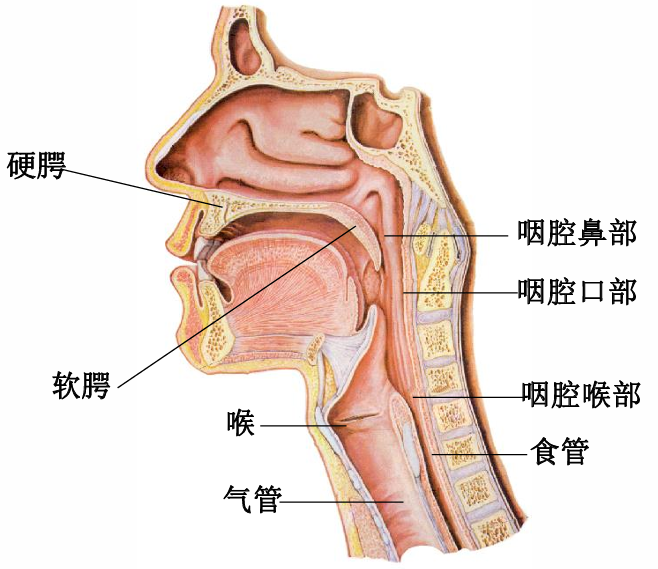
- Pharynx
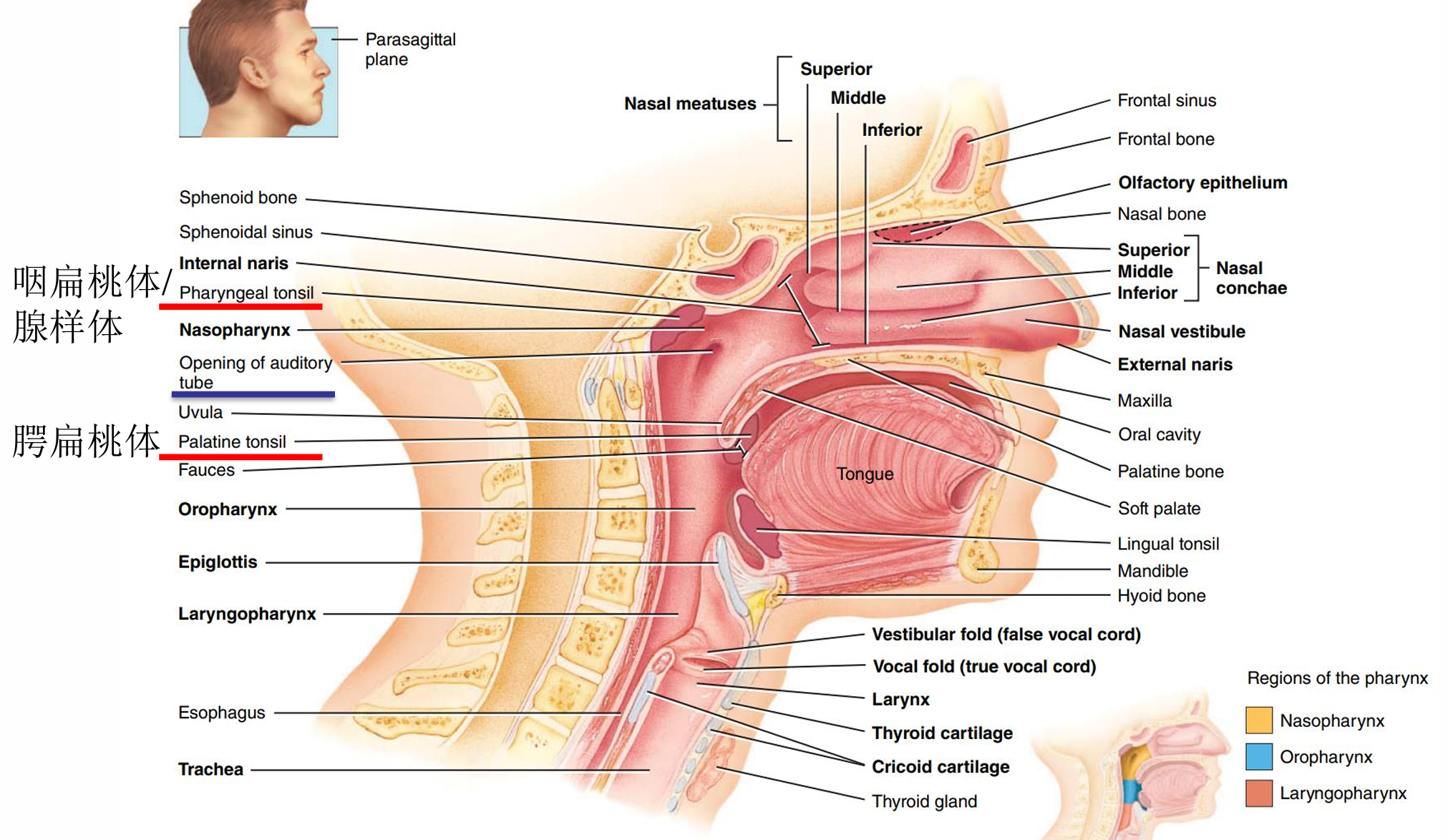
- 3部分
- nasopharynx 鼻咽
- 有一个opening of auditory tubes
- pharyngeal tonsil咽扁桃体/adenoid腺样体在这
- oropharynx 口咽
- palatine tonsil 腭扁桃体在这
- laryngopharynx 喉咽
- nasopharynx 鼻咽
- pharynx vs. larynx
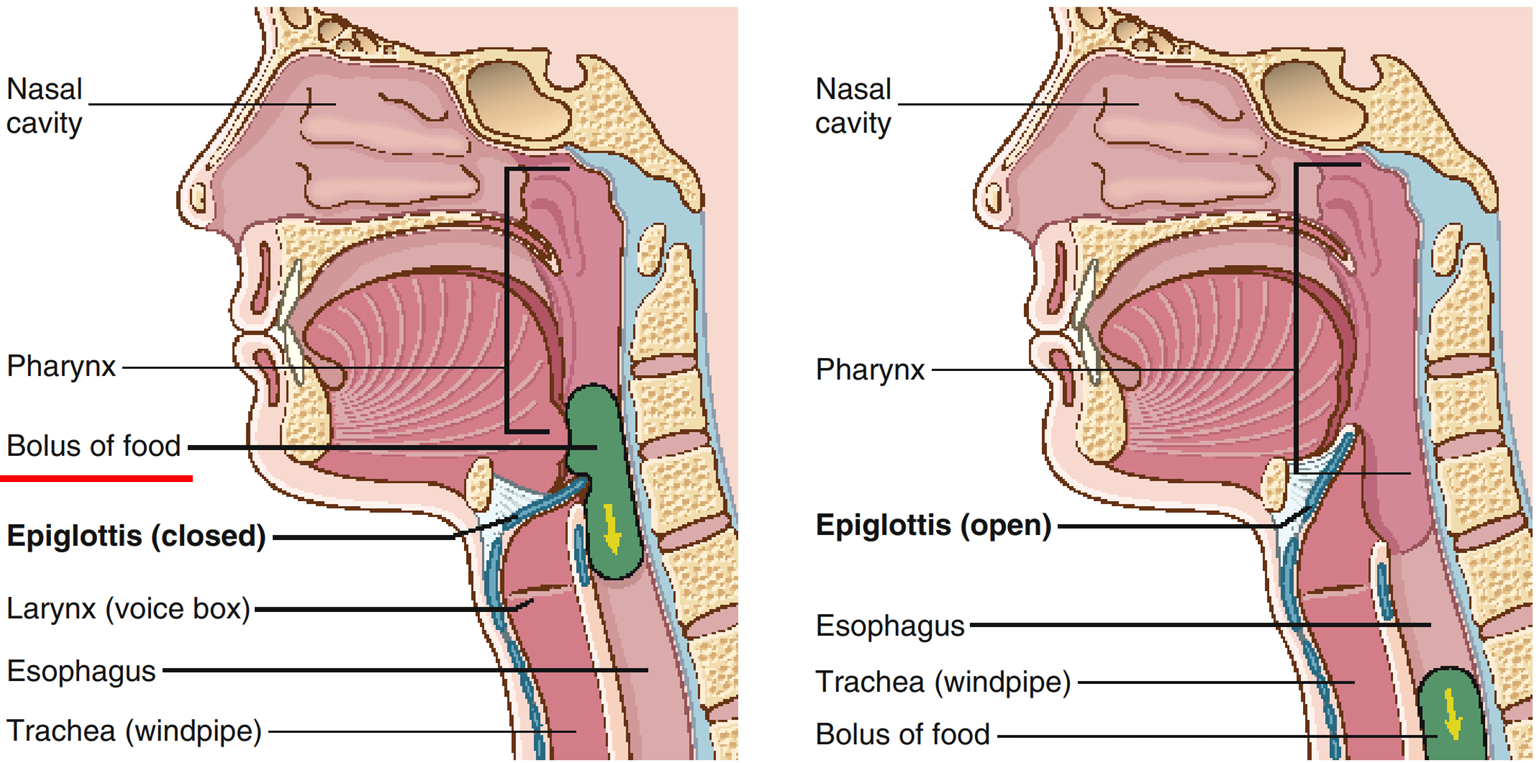
- pharynx 咽 is digestive system + respiratory system
- larynx 喉 is respiratory system
- 图
- Epiglottis 会厌
- The epiglottis seals off the larynx, and the bolus is passed into the esophagus
- The epiglottis seals off the larynx, and the bolus is passed into the esophagus
- 3部分
- Esophagus
- a muscular tube that lies posterior to the trachea
- connect oral cavity to stomach
- No metabolic changes occur
- layers
- 图
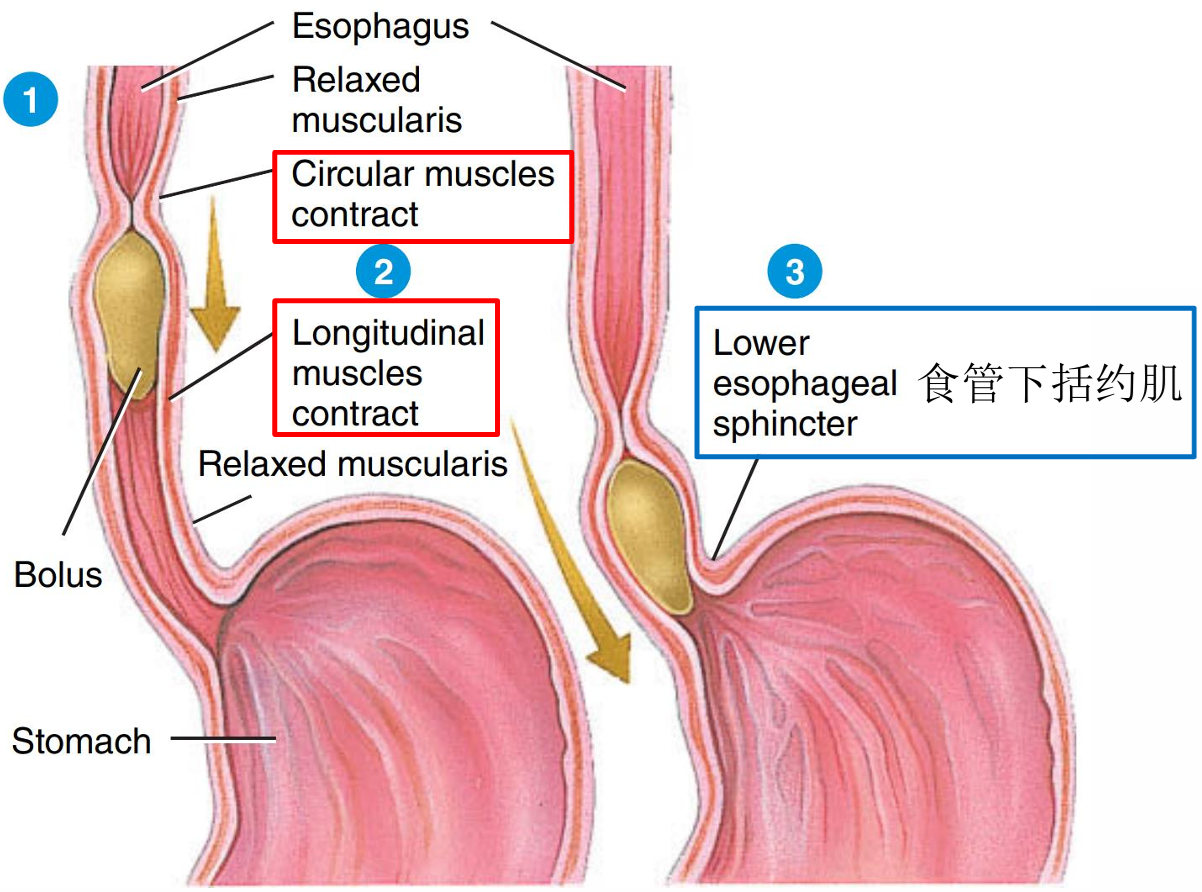
- Muscularis 肌层有两层
- inner circular fibers 内环行肌纤维
- segmentation = squeezing
- outer longitudinal fibers 外纵行肌纤维
- peristalsis = pushing 蠕动
- 一个挤一个往前推
- inner circular fibers 内环行肌纤维
- 图
- Muscularis 肌层有2个sphincters括约肌
- upper esophageal sphincter
- skeletal muscle
- regulates the movement of food from the pharynx into the esophagus
- lower esophageal sphincter
- smooth muscle
- regulates the movement of food from the esophagus into the stomach
- upper esophageal sphincter
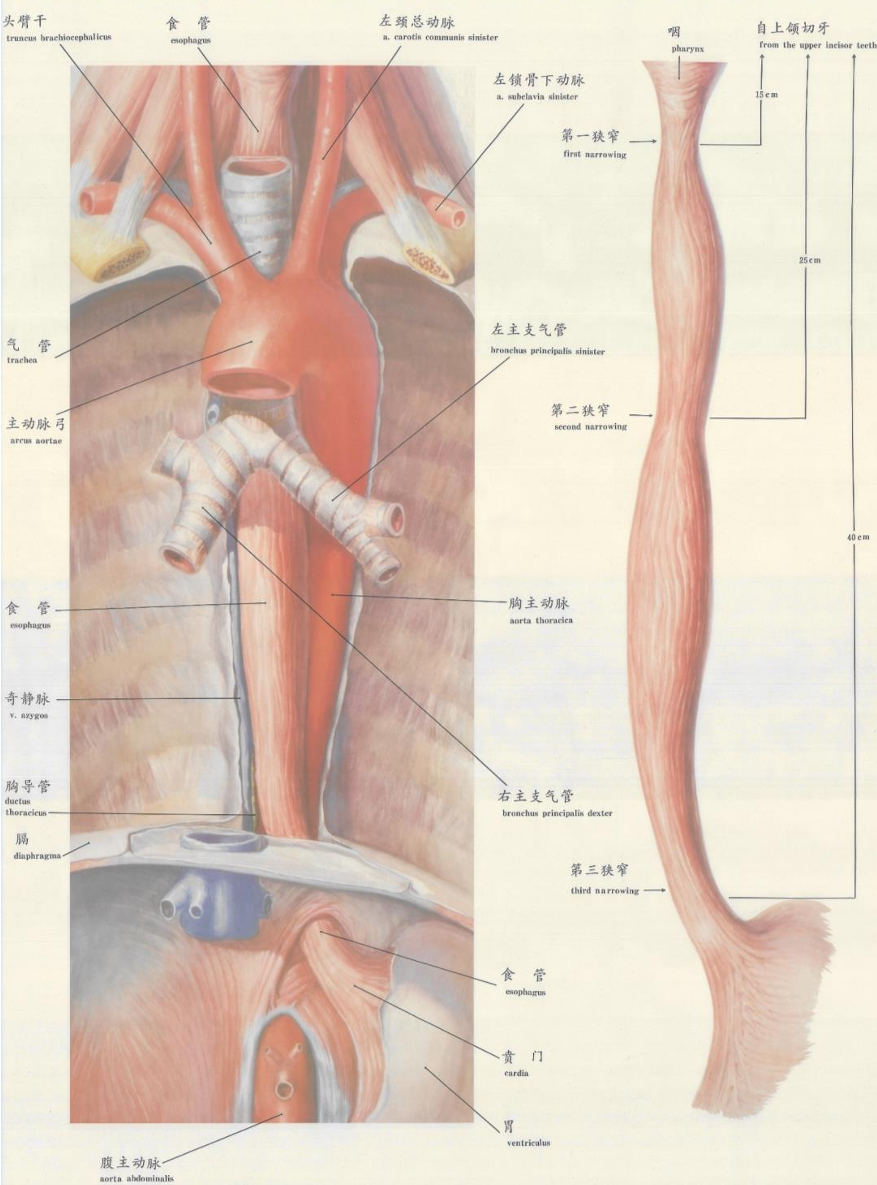
- 3处narrowing狭窄
- first
- Upper esophageal sphincter
- Pharyngoesophageal junction
- second
- Aortic arch and the left main bronchus cross the esophagus
- 位置在食管与左主支气管交叉处
- 主动脉弓和左主支气管压迫形成
- third
- Esophageal hiatus in the diaphragm
- 食管穿过esophageal hiatus膈肌食管裂孔处
- 图
- first
- 病-Reflux 胃食管反流
- stomach contents reflux into the esophagus HCl from the stomach can irritate the esophagus
- resulting in heartburn (a burning sensation)
- Stomach
- 结构
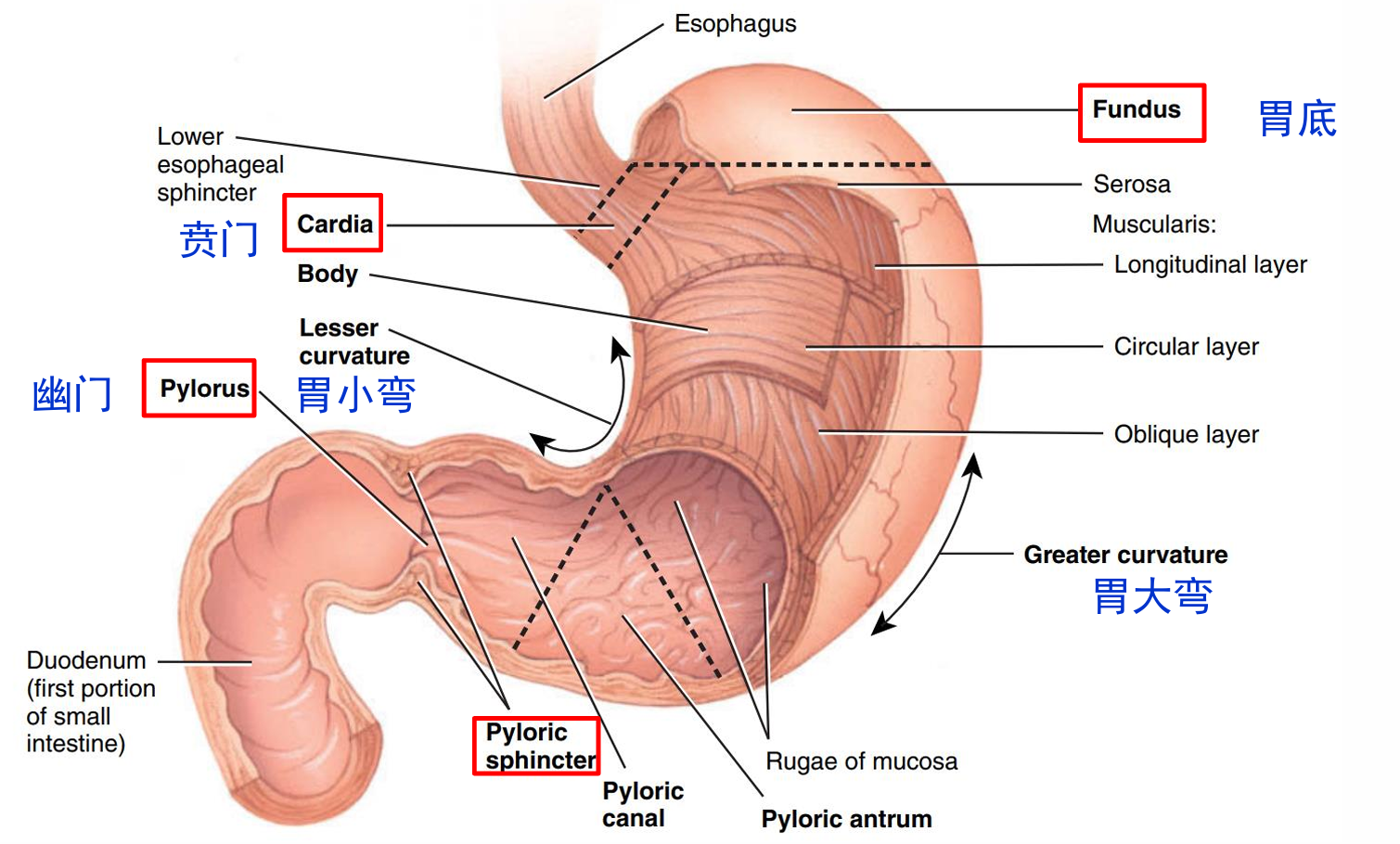
- Cardia贲ben门
- deep to the heart
- adjacent to the esophagus
- Fundus 胃底
- dome-shaped area on the top of the stomach
- where the gas accumulates
- Body
- central portion
- Pylorus 幽门
- connects to the duodenum via the pyloric sphincter 幽门括约肌
- 图
- Cardia贲ben门
- pyloric sphincter
- a ring like muscle
- control the rate of chyme食糜 moving from the stomach into the duodenum
- preventing reflux
- 腹膜连接
- Greater curvature 胃大弯
- convex border
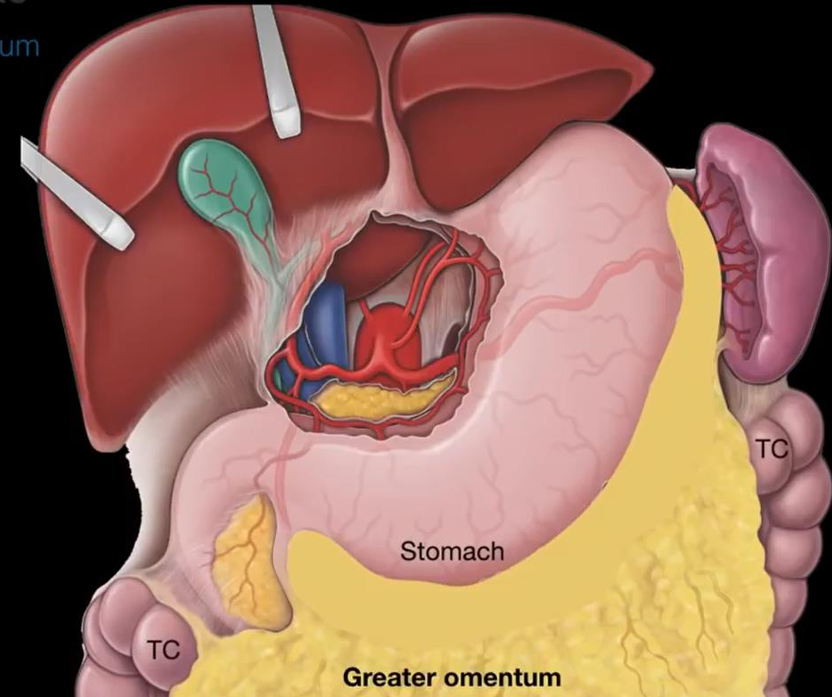
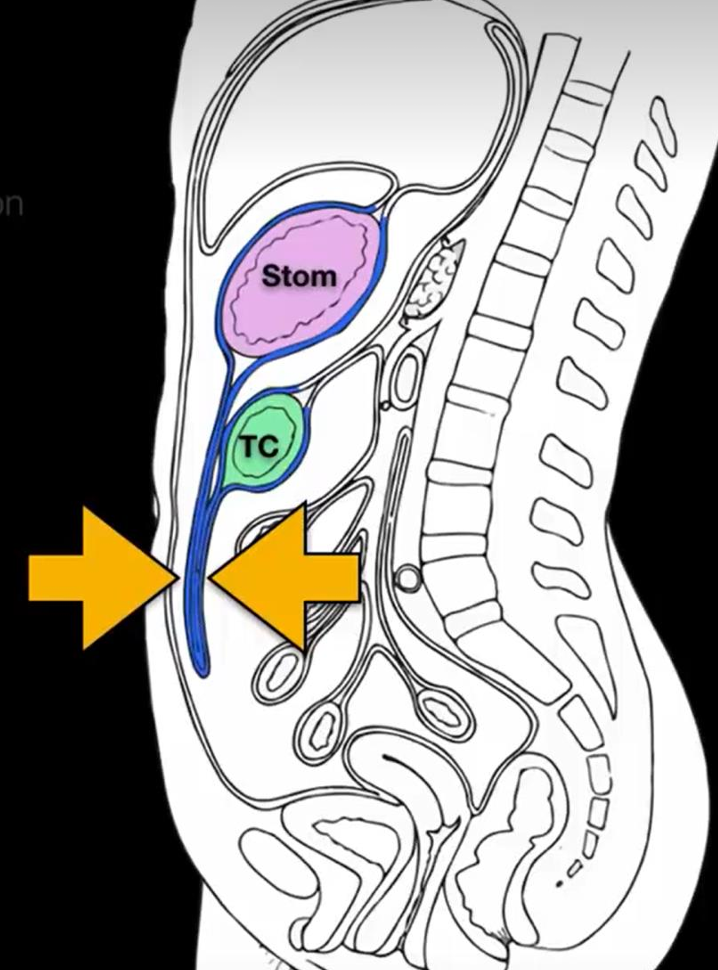
- the greater omentum大网膜
- 胃下面连着大网膜
- peritoneum continues downward and drapes over the intestines
- greater omentum attaches the stomach and transverse colon,4 layers,是”beer belly”啤酒肚的成因
- Lesser curvature 胃小弯
- concave border of the stomach
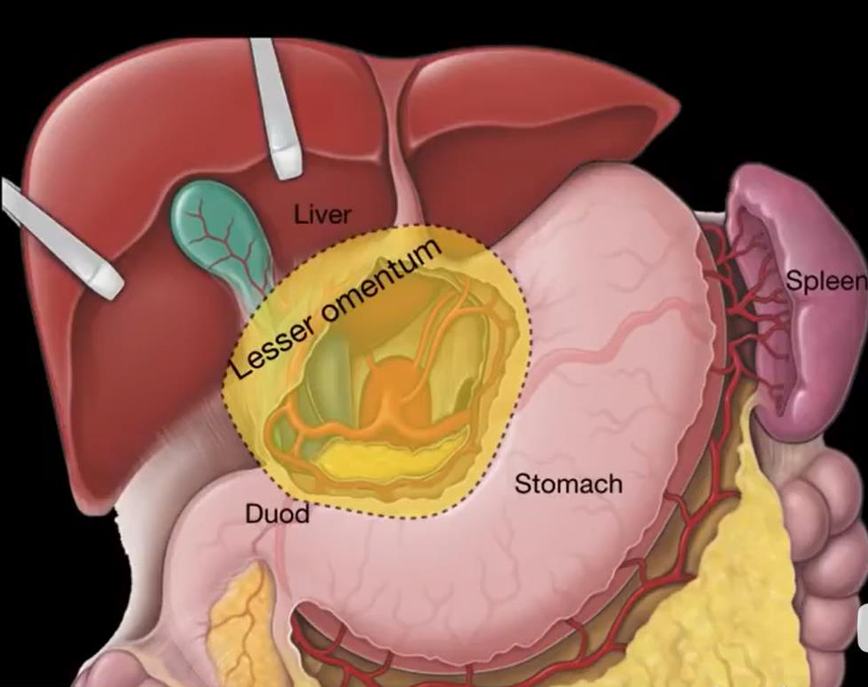
- the lesser omentum小网膜
- 胃上面连着小网膜
- peritoneum extends upward to the liver
- Greater curvature 胃大弯
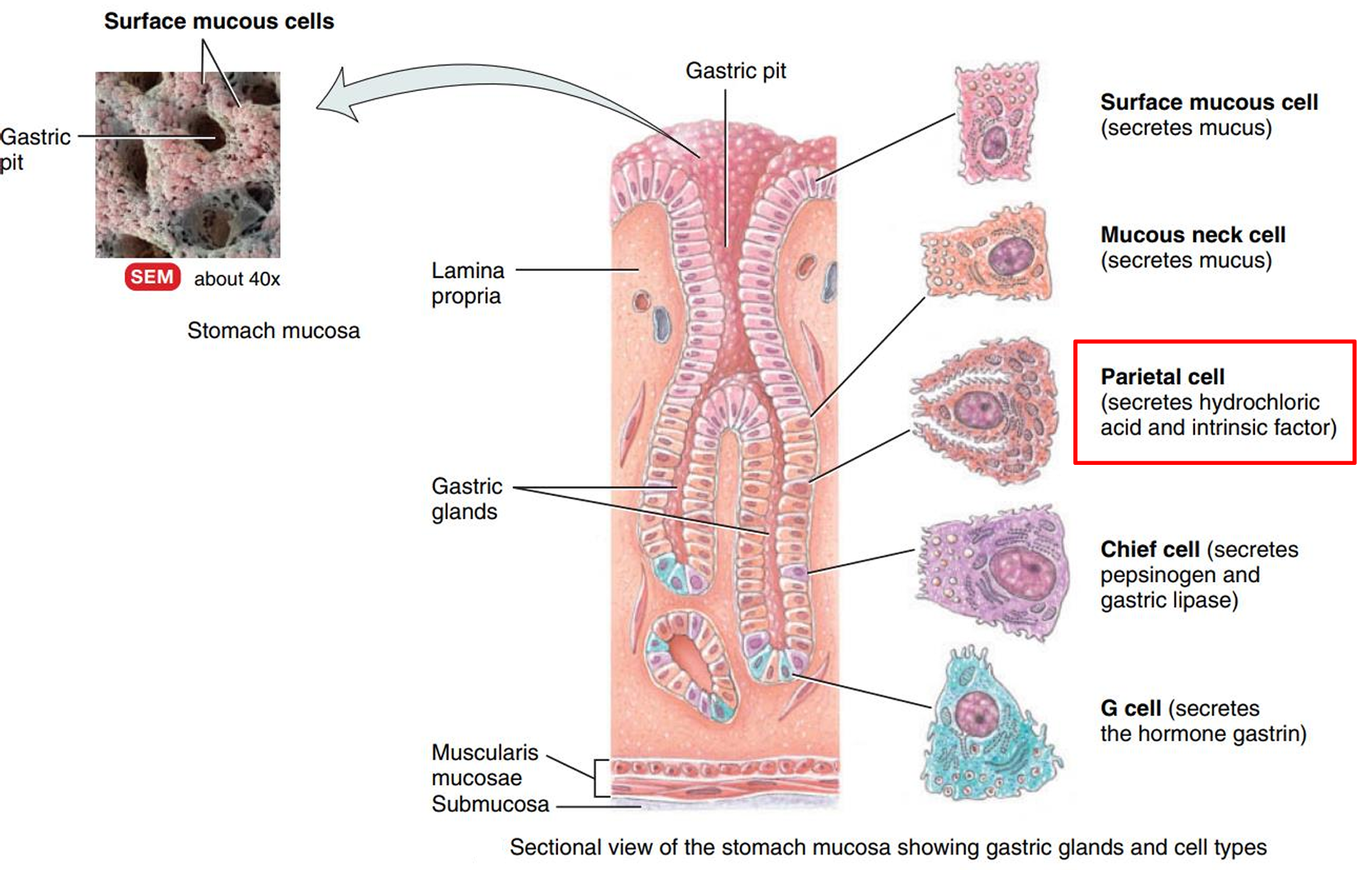
- Mucosa黏膜层
- Gastric rugae 胃皱襞
- help the stomach to expand
- Gastric glands 胃腺
- secrete HCl
- open into the narrow channels called gastric pits胃小凹
- Secretions from gastric glands flow into gastric pit and then into the lumen
- Gastric rugae 胃皱襞
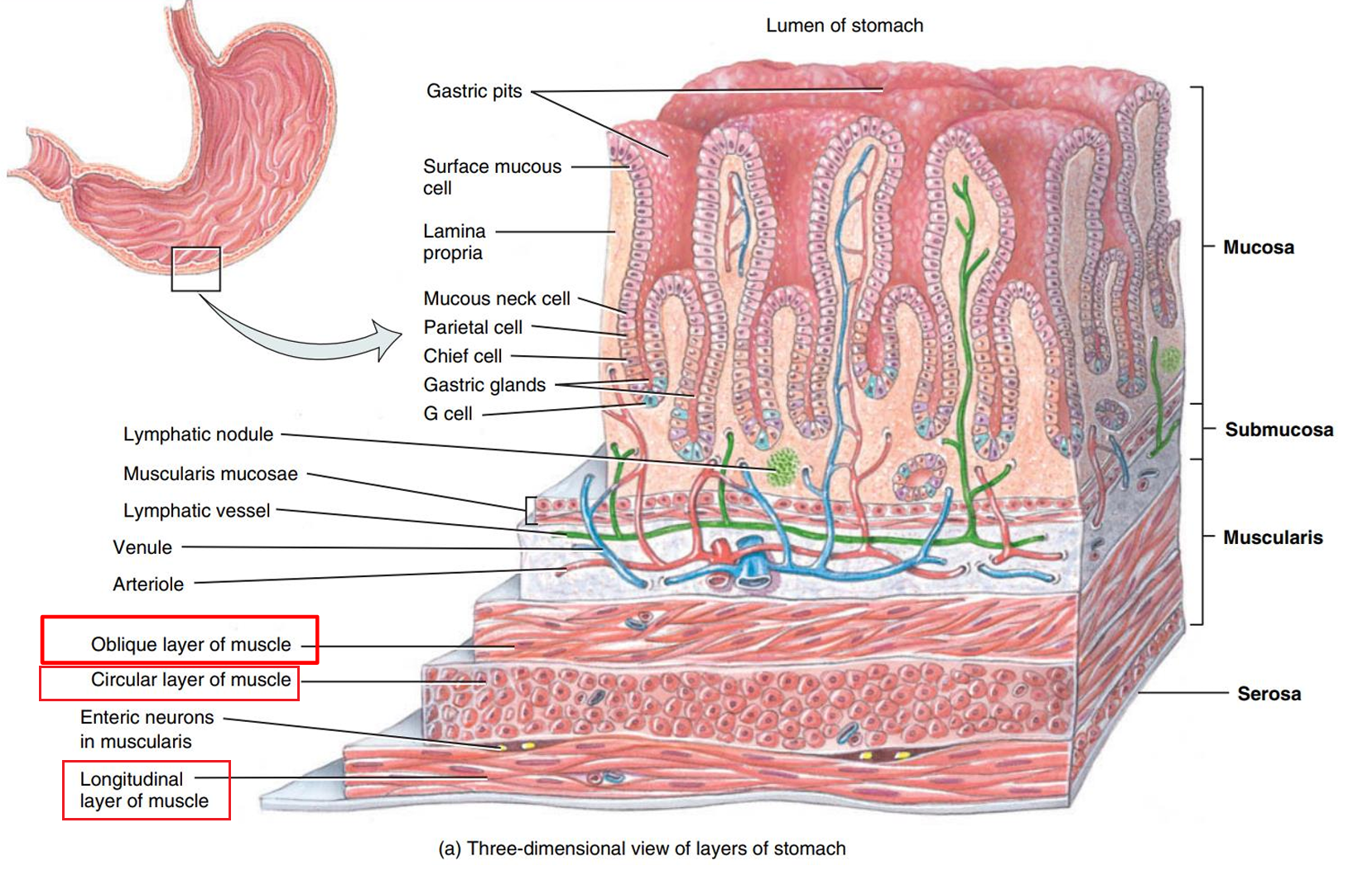
- Three layers of smooth muscle
- an outer longitudinal layer
- a middle circular layer
- an inner oblique layer 斜行肌
- 图
- 病
- Helicobacter pylori 幽门螺旋杆菌
- Pylori (Greek) = gatekeeper
- Resistant to acid
- Pyloric Stenosis 幽门狭窄
- a narrowing of the pyloric sphincter in infants
- food does not pass through
- Symptom is projectile vomiting 喷射性呕吐
- Helicobacter pylori 幽门螺旋杆菌
- 结构
- Small intestine
- 3部分
- The duodenum十二指肠 (25 cm)
- The jejunum空肠 (1 m)
- The ileum回肠 (2 m)
- duodenum
- about as long as the width of 12 fingers
- C-shaped tube
- starts at the pyloric sphincter of the stomach
- largely retroperitoneal
- submucosa黏膜下层 secretes bicarbonate碳酸氢盐 to neutralize gastric acid in the chyme
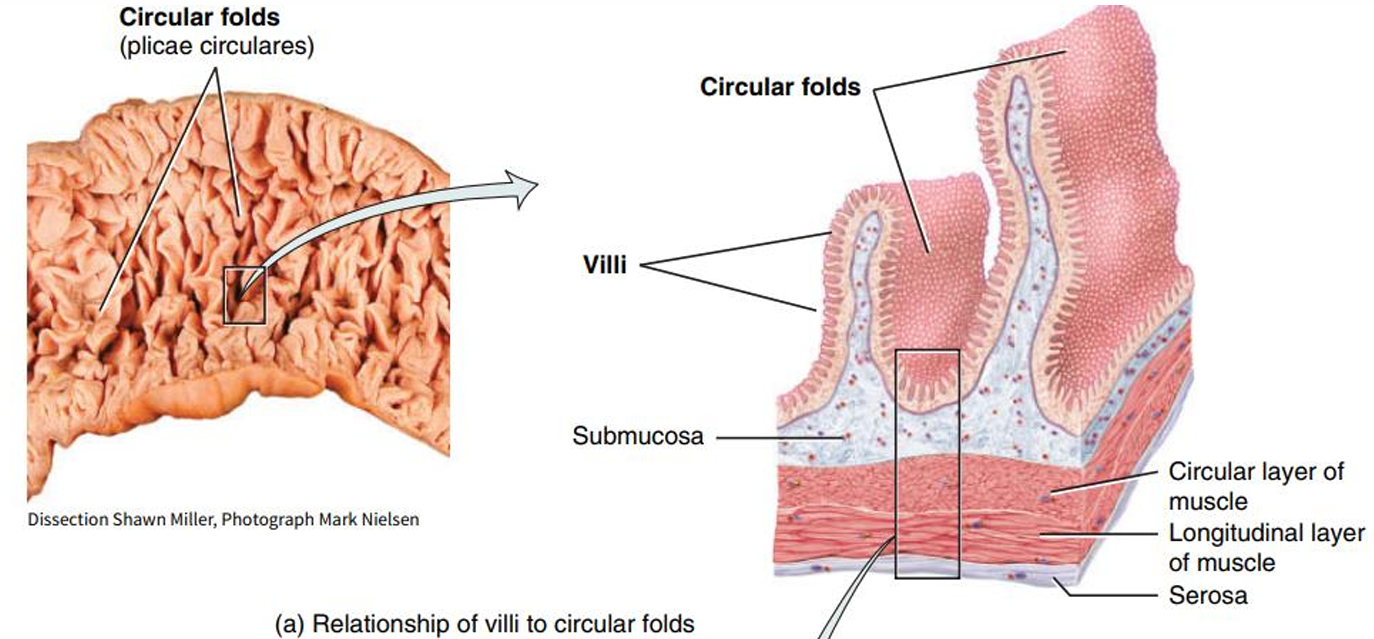
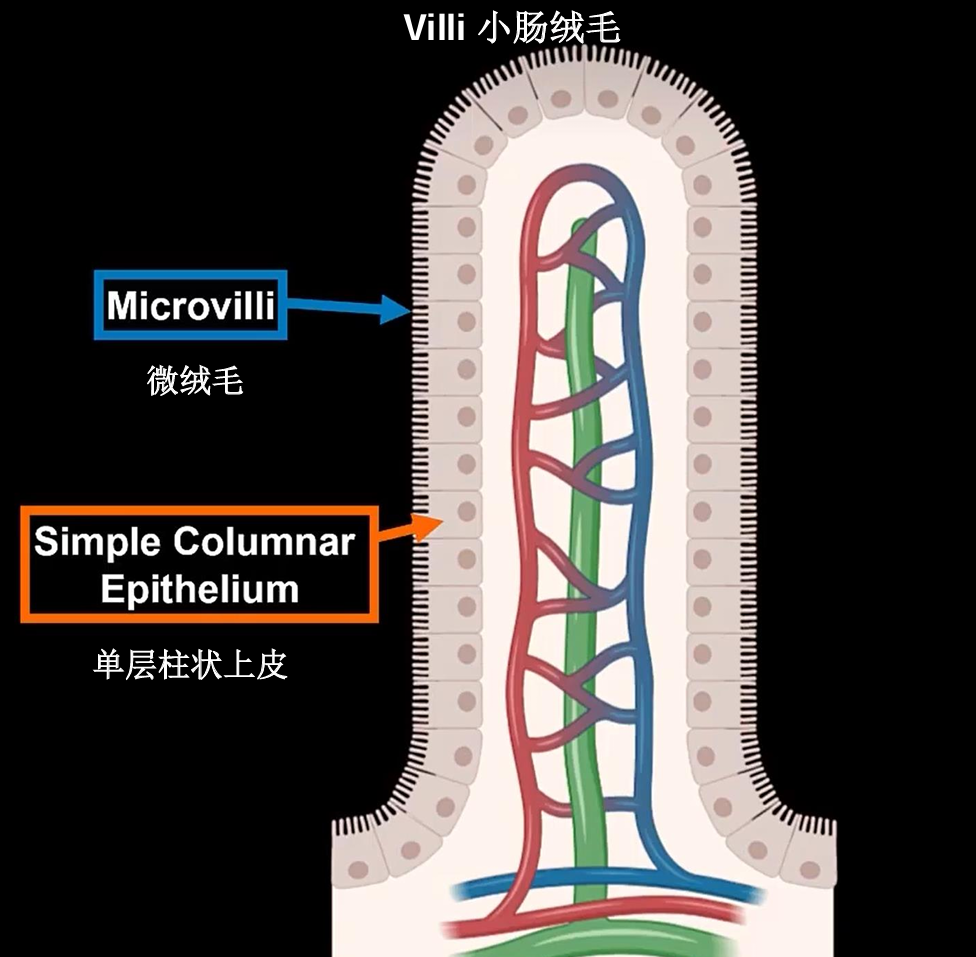
- Circular folds 环状襞
- permanent folds of the mucosa and submucosa
- extend from the duodenum to the ileum
- increase surface area for digestion and absorption
- The epithelial layer of the mucosa consists of simple columnar epithelium
- Jejunum 相比于 ileum , jejunum have
- thicker wall
- more circular folds
- villi are taller and more numerous
- more vascular
- darker in color
- stronger ability to absorb the nutrients
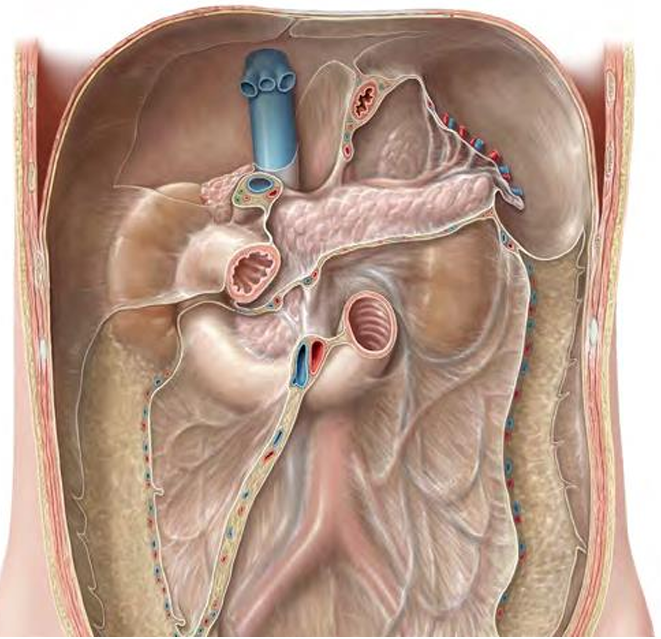
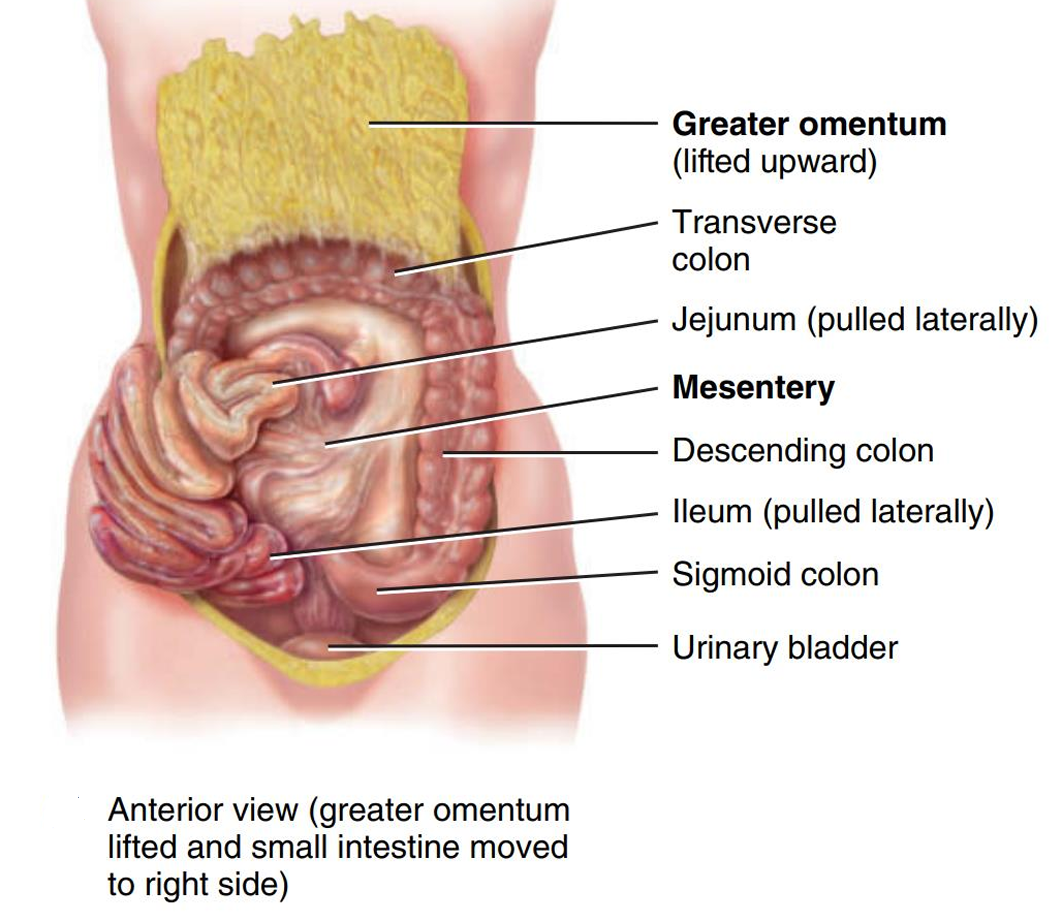
- Mesentery 肠系膜
- binds the jejunum and ileum to the posterior abdominal wall
- two layers
- 这个图中大网膜被提溜起来,小肠被横向的扒拉了
- Functions of the Small Intestine
- Segmentations mix chyme with the digestive juices
- After most of a meal has been absorbed, segmentation stops and peristalsis蠕动 begins.
- Peristalsis pushes chyme forward.
- Completes digestion of carbs, proteins, and lipids
- Absorbs about 90% of the nutrients and water
- 3部分
- Large intestine
- The large intestine is about 1.5 m long and 6.5 cm in diameter
- Cecum 盲肠
- A small pouch about 6 cm long
- Ileum joins the cecum at ileocecal sphincter 回盲括约肌
- 病-Intussusception 肠套叠
- A part of the intestine folds into another section of intestines, resulting in obstruction. (Ileum folds into the cecum)
- In children, the cause may be linked to excessive peristalsis
- In adults, the cause may be linked to polyp息肉 or tumor肿瘤
- Appendix 阑尾
- Attached to the cecum
- 病-Acute Appendicitis 急性阑尾炎
- often caused by bacterial infection
- Initially, diffuse pain is felt in the periumbilical region肚脐周围
- the appendix becomes more inflamed and irritates the parietal peritoneum, the pain becomes well localized to the right lower quadrant
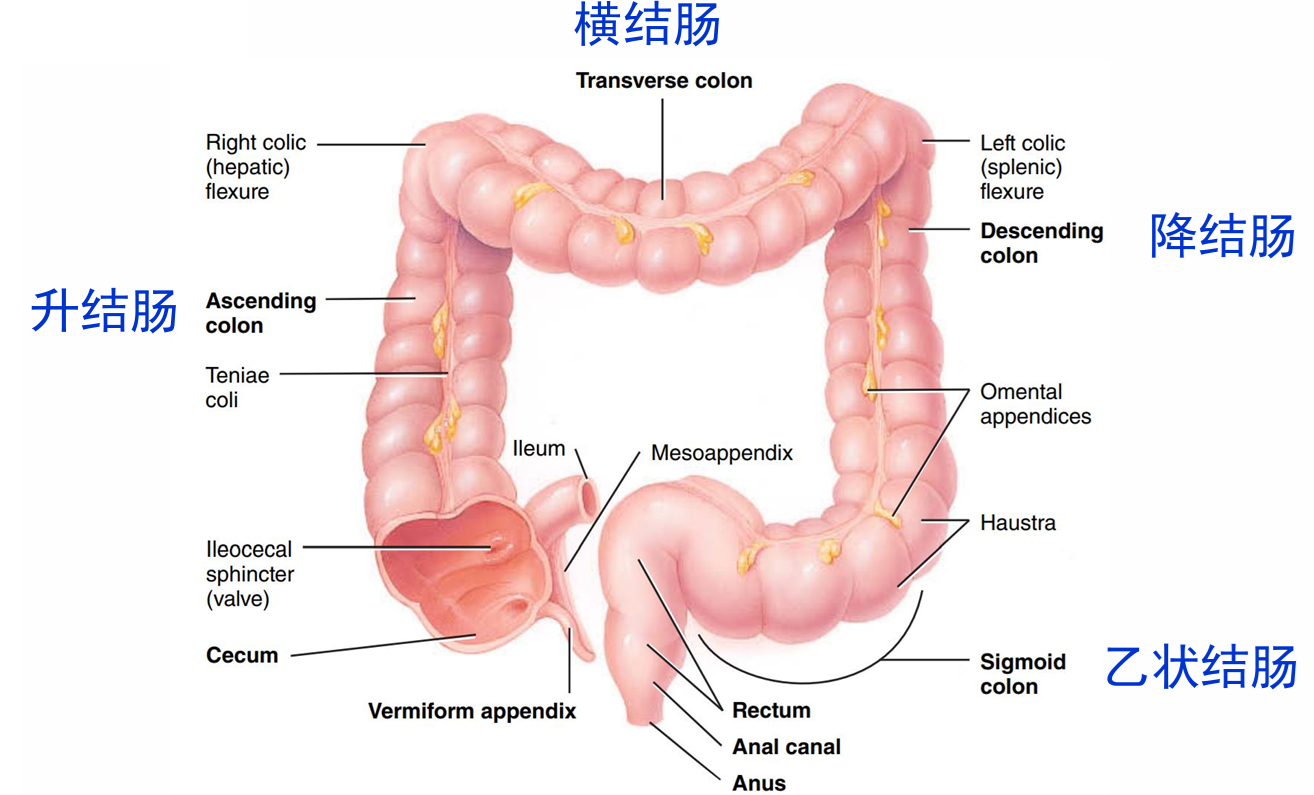
- Colon结肠
- 4段
- ascending
- transverse
- descending
- sigmoid
- 图
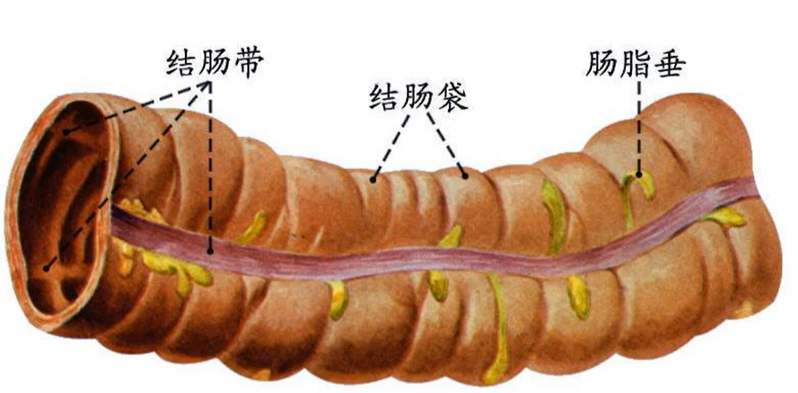
- Features of the cecum and colon
- Teniae coli 结肠带
- three bands of longitudinal muscle assist in peristalsis
- 3条纵向的带子
- Haustra 结肠袋
- sacculations of the colon created by the contracting tenia coli
- 像袋子的凸起
- Omental appendices 肠脂垂
- small fat accumulations
- 黄色的脂肪
- 图
- Teniae coli 结肠带
- 4段
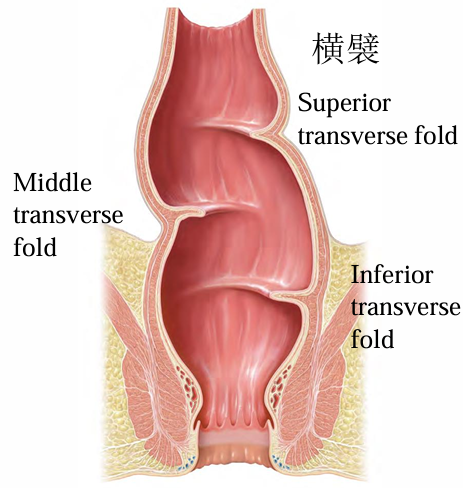
- Rectum直肠
- The rectum is about 15 cm in length and lies anterior to the sacrum骶骨 and coccyx尾骨
- 图
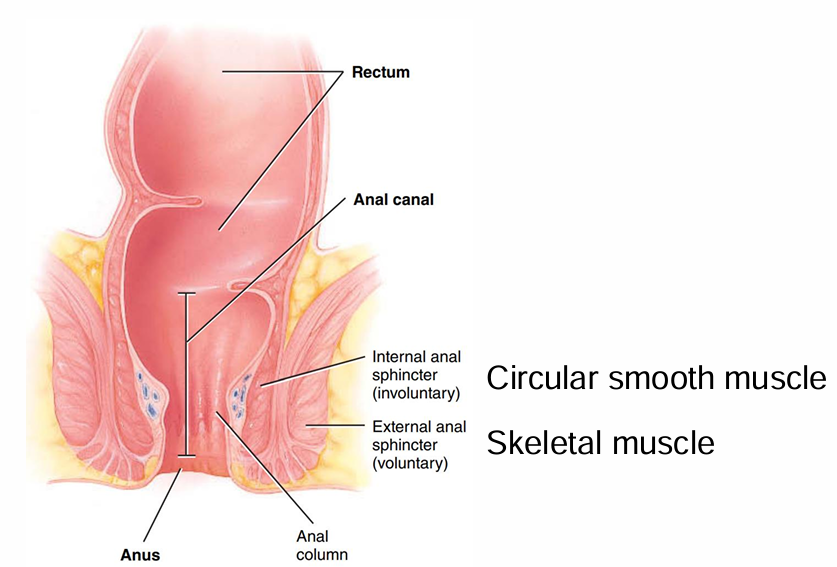
- Anal canal 肛管
- The terminal 2–3 cm of the large intestine is the anal canal.
- The opening of the anal canal is called the anus.
- The anus is surrounded by internal and external anal sphincters. 肛门内括约肌 肛门外括约肌
- 外括约肌是skeletal muscle, voluntary
- 病-hemorrhoids痔疮
- The mucosa of the anal canal is in longitudinal folds.
- The mucosa contains rectal venous plexus.直肠静脉丛
- If the vessels get swollen and enlarged, the hemorrhoids form.
- Internal hemorrhoids - hemorrhoids above the dentate line 内痔
- External hemorrhoids - hemorrhoids below the dentate line 外痔
- Dentate line 齿状线
- Liver
- The liver is inferior to the diaphragm
- Ligaments around the liver
- Ligaments towards diaphragm
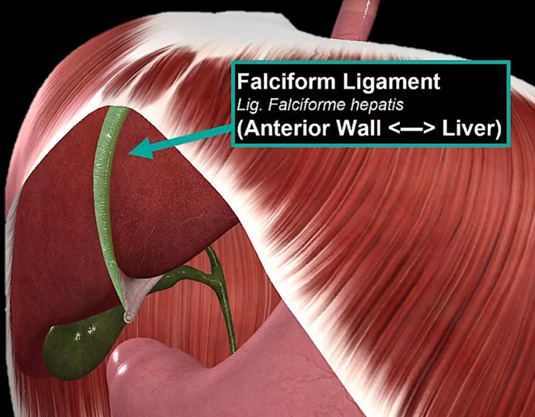
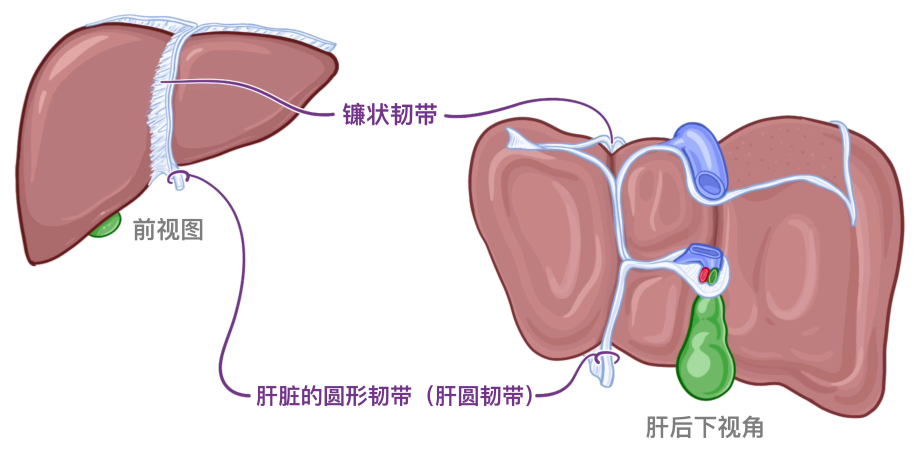
- Falciform ligament 镰状韧带
- attaches the liver to the anterior abdominal wall and diaphragm
- divides the liver into a large right lobe and a smaller left lobe
- 把两叶肝分开的//绿色
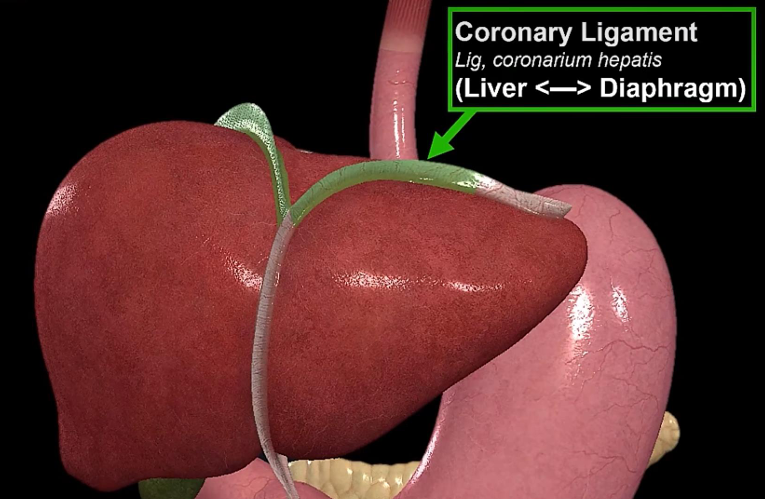
- Coronary ligament 冠状韧带
- 连接肝与diaphragm
- 在上面,像皇冠一样
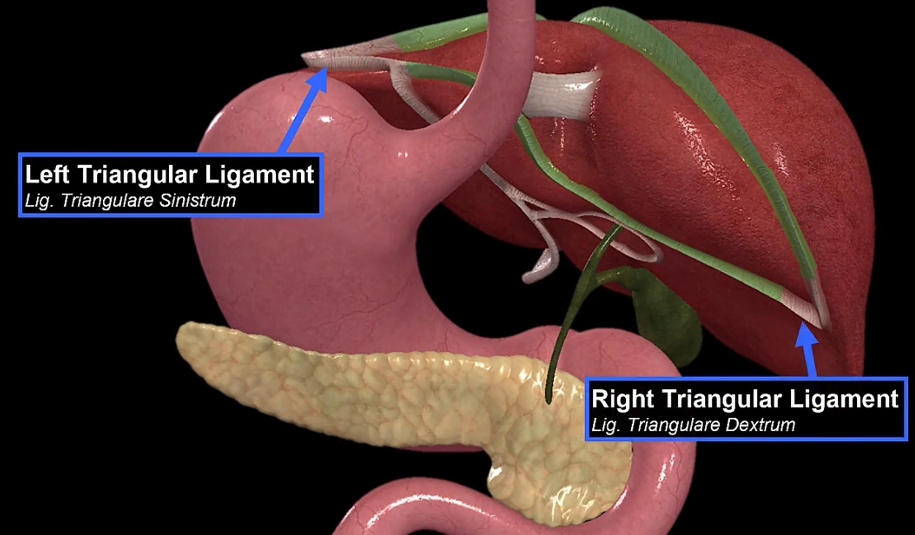
- R/L triangular ligaments 左/右三角韧带
- 延续冠状韧带,连接后方的肝到diaphragm
- 延续冠状韧带,连接后方的肝到diaphragm
- Falciform ligament 镰状韧带
- Ligaments towards organs
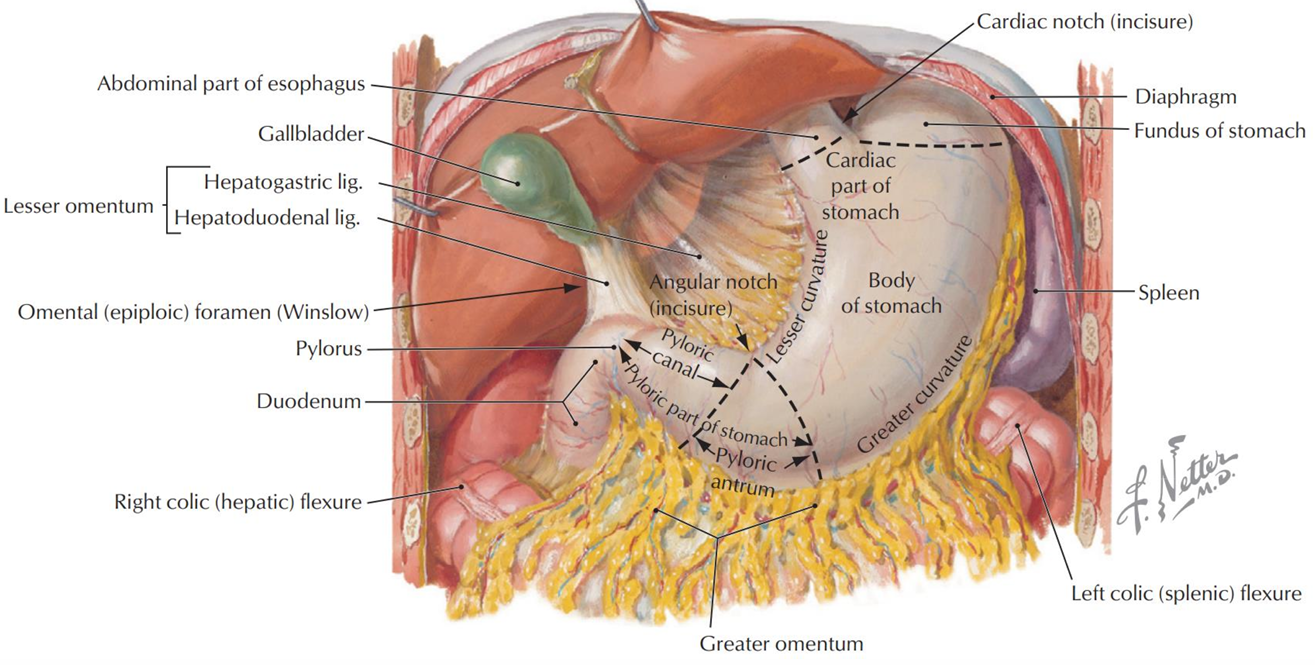
- Lesser omentum小网膜
- Lesser omentum attaches to the stomach, duodenum and liver.
- Hepatogastric ligament 肝胃韧带
- extends from the liver to the lesser curvature of the Stomach
- Hepatoduodenal ligament 肝十二指肠韧带
- extends from the liver to the first part of the duodenum
- 小网膜 = 肝胃韧带 + 肝十二指肠韧带
- 这个图肝被提溜起来了,底下的小网膜分别连接胃与十二指肠
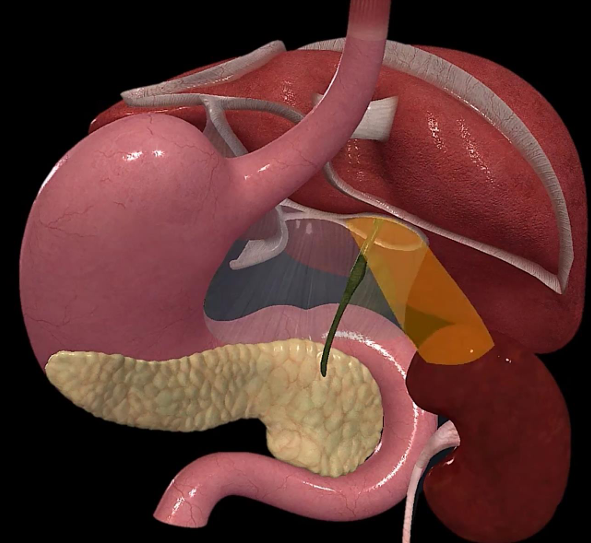
- Hepatorenal ligament 肝肾韧带
- 连着肾//橙色的
- 连着肾//橙色的
- Round ligament of the liver 肝圆韧带
- 由胎儿时期的脐静脉闭锁形成
- 胎儿期脐静脉将母体含氧血从胎盘输送至胎儿肝脏,大部分血液经静脉导管(Ductus venosus)直接汇入下腔静脉,绕过肝窦
- 前面连着肚脐眼
- 被夹在镰状韧带中间
- Lesser omentum小网膜
- Ligaments towards diaphragm
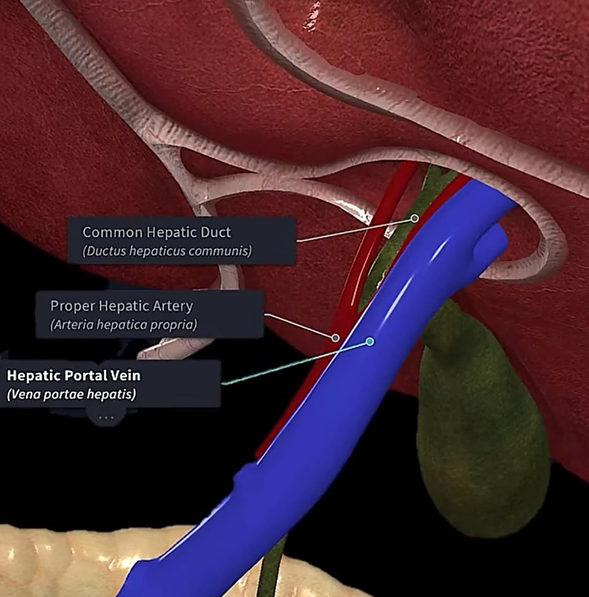
- Porta hepatis肝门
- Hepatic artery proper 肝固有动脉
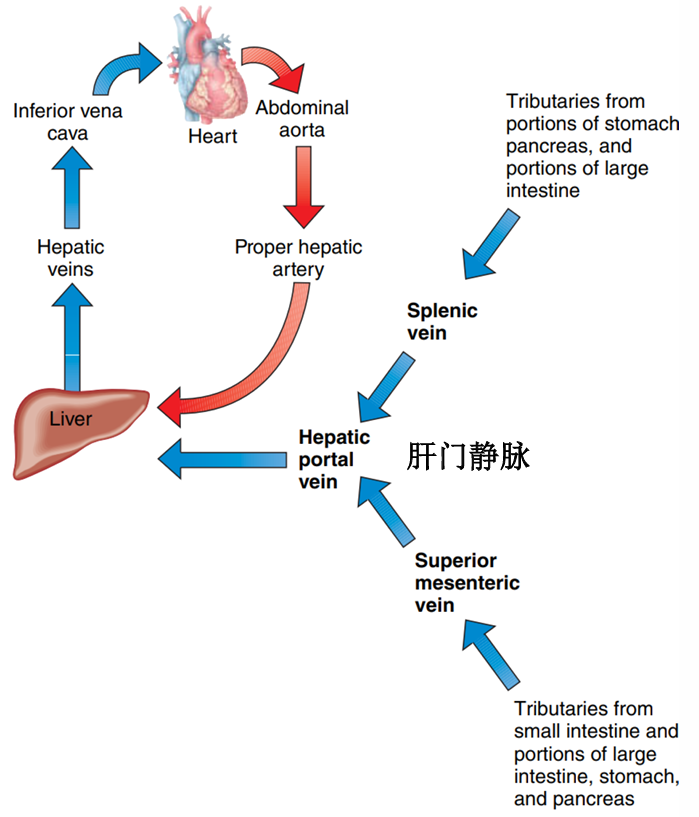
- Hepatic portal vein 肝门静脉
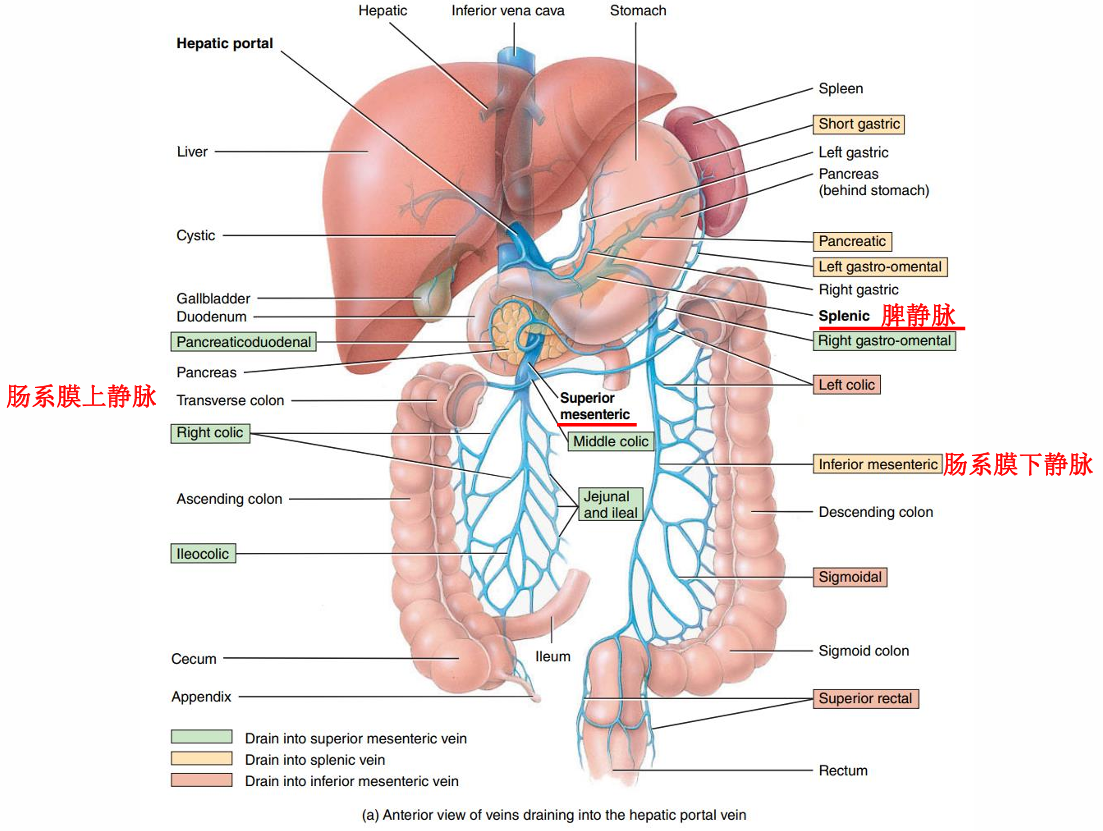
- 这里有一个非常重要的路径//通常肠系膜下静脉先汇入脾静脉
- Superior mesenteric and splenic veins unite to form the hepatic portal vein
- Hepatic portal vein delivers the blood to the liver, 进入肝脏后代谢营养物质,解毒,免疫防御等, 然后在从肝静脉出去
- 病-Portal hypertension 门脉高压
- 门静脉血压升高到>12mmHg
- Ascites 腹水
- Bleeding 流血
- Caput Medusae 海蛇头
- Diminished liver function 肝功能下降
- Enlarged spleen 脾脏肿大
- 这里有一个非常重要的路径//通常肠系膜下静脉先汇入脾静脉
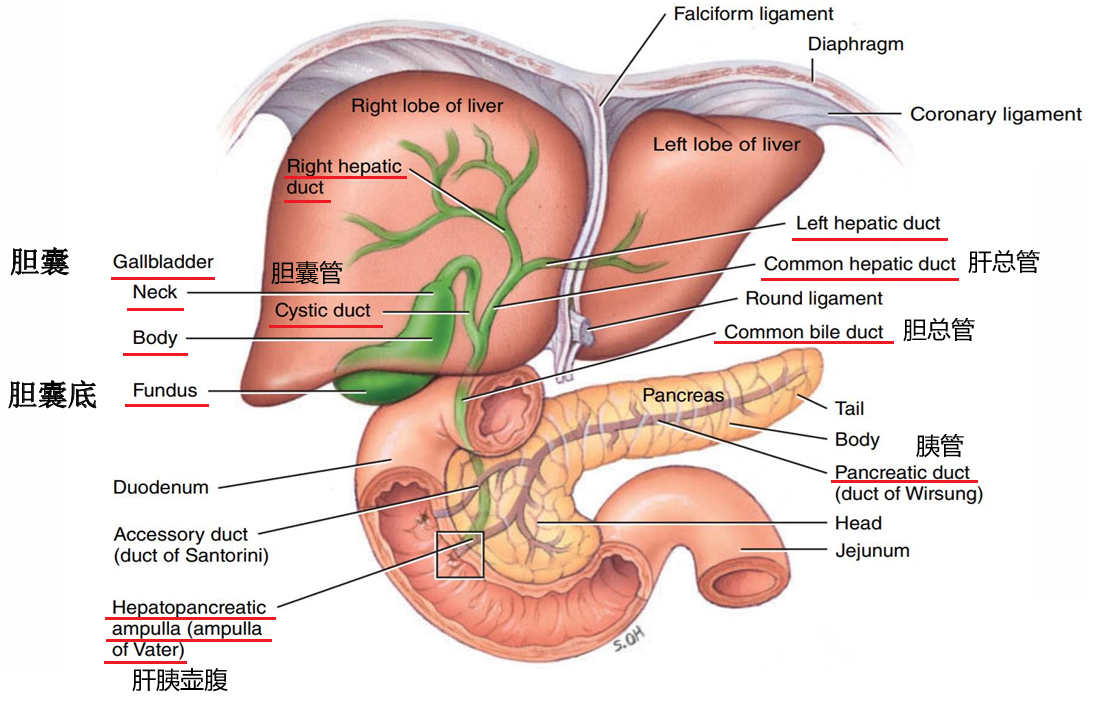
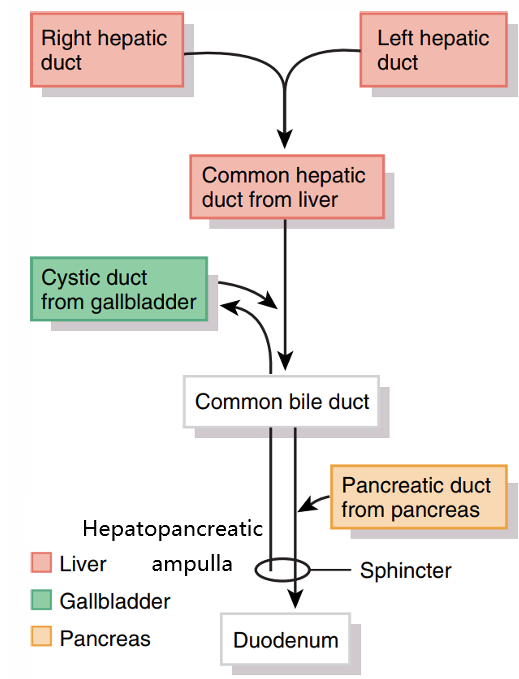
- Common bile duct 胆总管
- common hepatic duct 肝总管 + cystic duct 胆囊管 汇入胆总管
- Lymphatic vessels
- Nerves
- 图
- Gallbladder 胆囊
- in a depression of the posterior surface of the liver
- Part of the gallbladder projects inferiorly beyond the inferior border of the liver
- 图
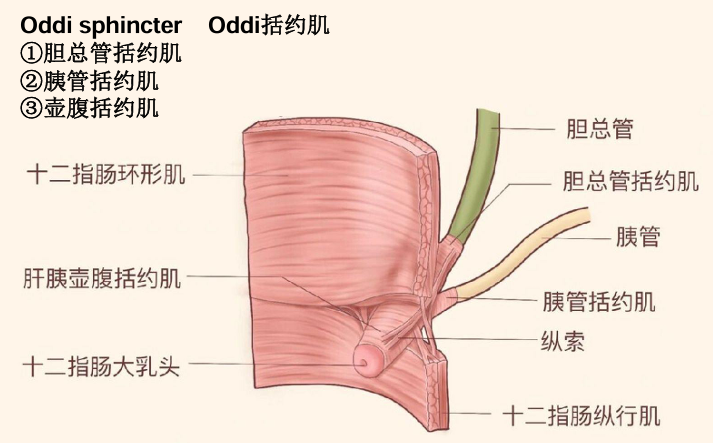
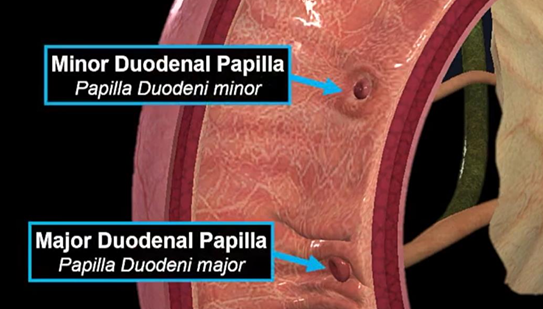
- bile生产后从left/right hepatic duct进入common hepatic duct,不吃饭时候经过cystic duct进入gallbladder存储,吃饭时候流出来进入common bile duct, 最后在hepatopancreatic ampulla处与pancreatic duct汇合, 从major duodenal papilla十二指肠大乳头处进入duodenum
- 肝胰壶腹结构
- Functions of the liver and gallbladder
- Filter blood coming from the digestive tract
- Detoxification (alcohol and excrete drugs)
- Produce bile 800-1000 mL/day
- Synthesize cholesterol 胆固醇
- Storage site for glycogen (maintain a normal blood glucose level), certain vitamins and minerals (iron and copper) 糖原 ⇌ 葡萄糖
- The gallbladder stores and concentrates浓缩 the bile.
- Between meals, after most absorption has occurred, bile flows into the gallbladder for storage because the sphincter of the hepatopancreatic ampulla closes off the entrance to the duodenum
- Bile 胆汁
- 成分
- water
- Bile salts 胆汁盐
- emulsification乳化
- Bile salts breakdown large lipid globules into a suspension of small lipid globules (large surface area)
- Cholesterol 胆固醇
- Bilirubin 胆红素
- 病-Gallstones 胆囊结石
- Cholesterol stones 胆固醇结石
- Bilirubin stones/Pigmented stones 胆色素结石
- insufficient bile salts or excessive cholesterol
- cholesterol may crystallize to form gallstones
- obstruction to the flow of bile
- 成分
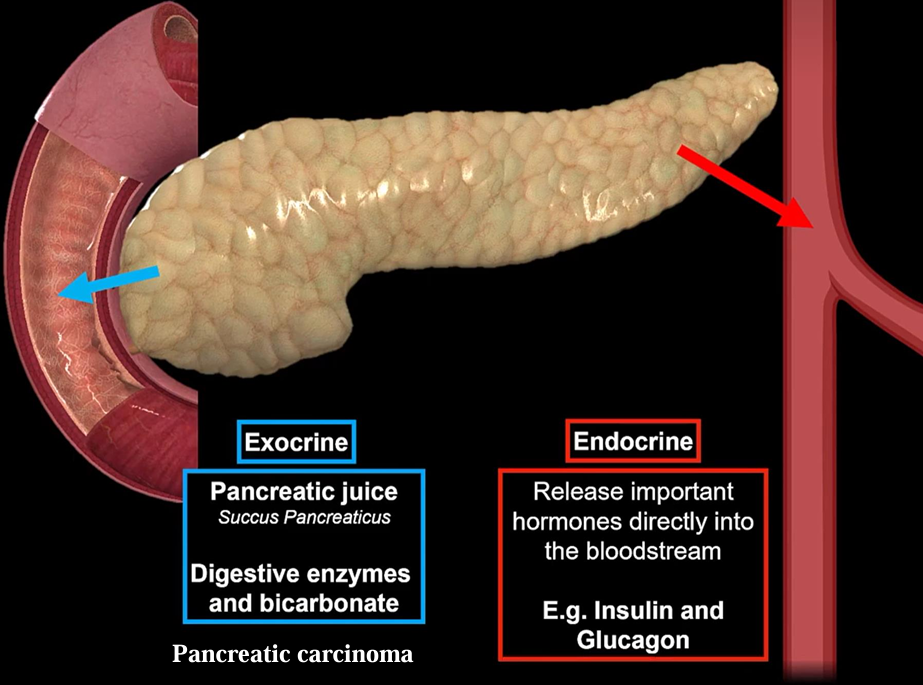
- Pancreas
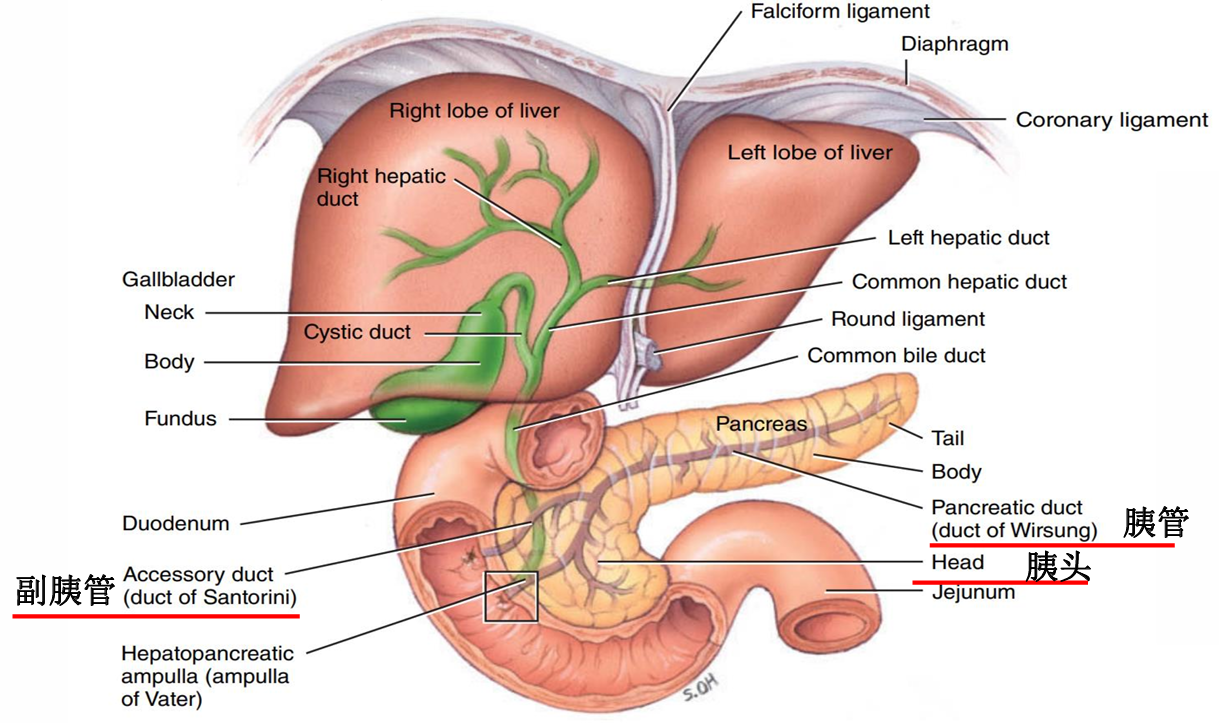
- The pancreas lies posterior to the greater curvature of the stomach
- The pancreas consists of a head, a body, and a tail
- Pancreatic juices are secreted into the pancreatic duct and accessory duct
- The pancreatic duct joins the common bile duct and enters the duodenum
- 图
- 有两个口
- Pancreas produces pancreatic juice (a clear, colorless liquid) 1200-1500 mL/day
- The enzymes in pancreatic juice
- pancreatic amylase – carbohydrates into oligosaccharides
- Trypsin - proteins into peptides
- pancreatic lipase – triglycerides into fatty acids + glycerol
- 有exocrine与endocrine两个作用
- 病- neonatal新生儿 (physiological) jaundice黄疸dan
- Jaundice is a yellowish coloration of the whites of the eyes, skin, and mucous membranes due to a buildup of bilirubin
- Because the liver of a newborn functions poorly for the first week or so, many babies experience a mild form of jaundice
- Usually, it is treated by exposing the infant to blue light, which converts bilirubin into substances the kidneys can excret
- 总结
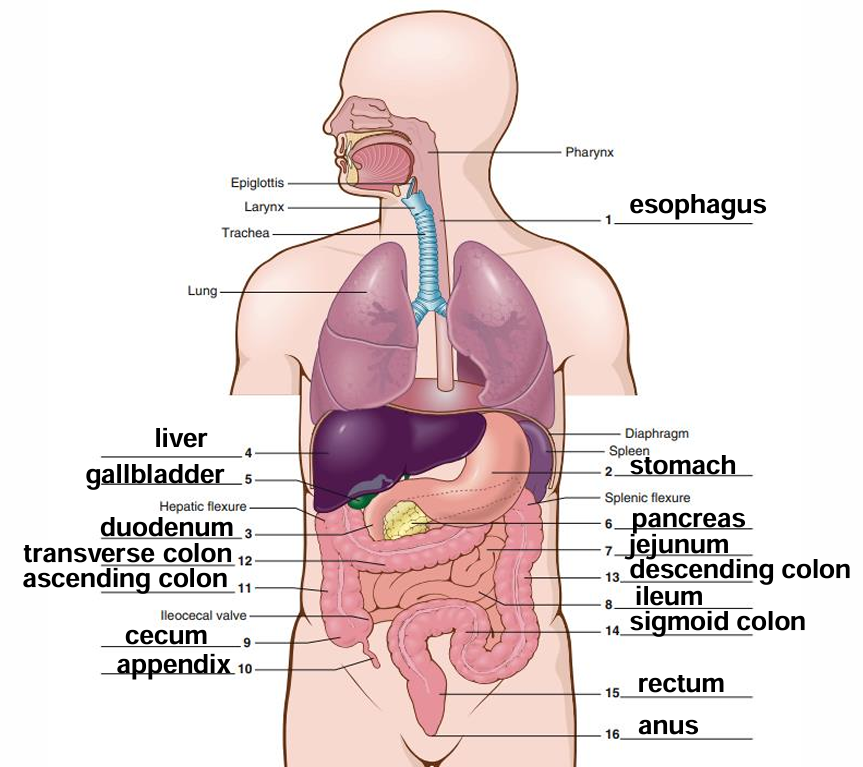
- The digestive system has 6 processes:
- Ingestion
- taking food in (eating)
- Secretion
- accessory digestive organs secrete water, acid, buffers, and enzymes into the lumen.
- Segmentation and Peristalsis
- Digestion
- Absorption
- Defecation/bowl movement
- Feces/stool leave the body through the anus.
- 图
- 图
- The digestive system has 6 processes:

All articles in this blog are licensed under CC BY-NC-SA 4.0 unless stating additionally.