解剖学_神经系统
神经系统
- 基础
- 分类
- CNS
- brain
- spinal cord
- PNS
- consists of all nervous tissue outside the CNS
- 12 pairs of cranial N
- 31 pairs of spinal N
- CNS
- Neuron
- Neuron: an individual nerve cell
- Dendrites: receiving or input portions of a neuron 树突
- Cell body: contains the cell nucleus 胞体
- Axon: carries the impulse away from the cell body 轴突-传导冲动
- Myelin sheath: multilayered lipid and protein covering around some axons that insulates them and increases the speed of nerve impulse conduction 髓鞘
- Nodes of Ranvier: gaps in the myelin sheath
- Collections of Nervous Tissue
- Clusters of Neuronal Cell Bodies神经元胞体聚集
- A ganglion (plural ganglia): a cluster of neuronal cell bodies in the PNS. 神经节
- A nucleus (plural nuclei): a cluster of neuronal cell bodies in the CNS. 神经核
- Bundles of Axons
- A nerve: a bundle of axons in the PNS
- Cranial nerves connect the brain to the periphery
- Spinal nerves connect the spinal cord to the periphery
- A tract: a bundle of axons in the CNS 纤维束
- Tracts interconnect neurons in the spinal cord and brain
- A nerve: a bundle of axons in the PNS
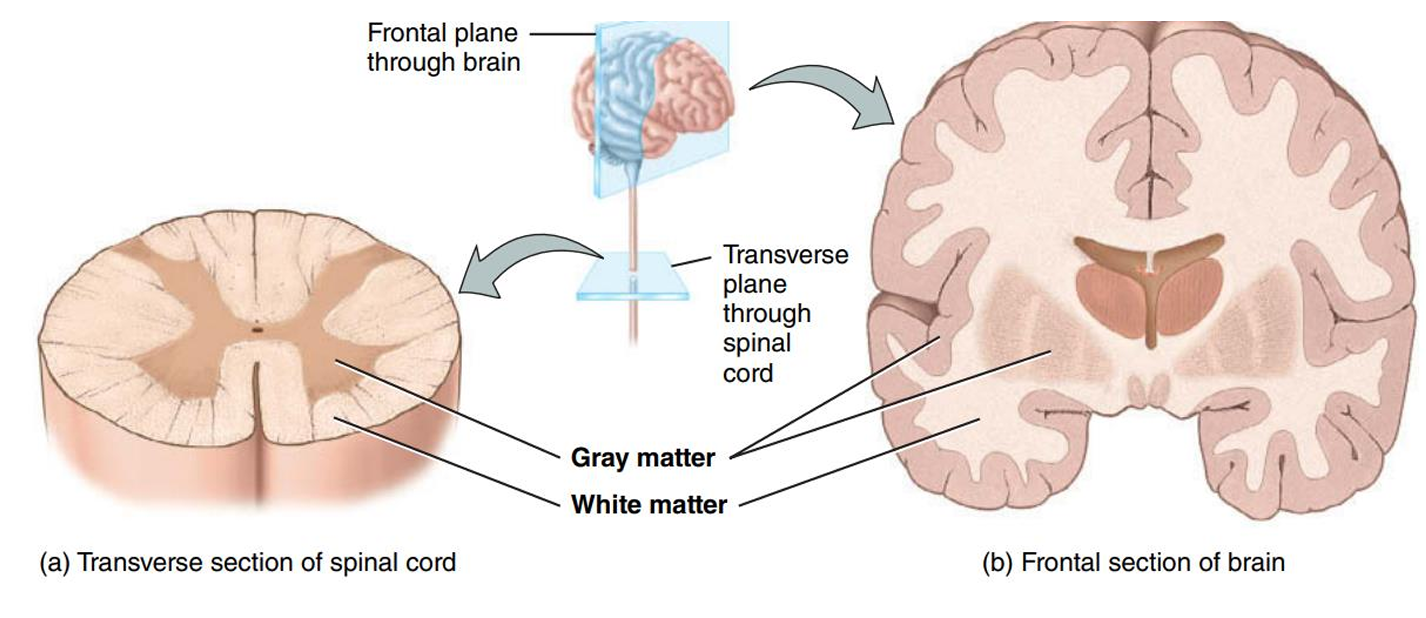
- White matter
- composes of myelinated axons
- whitish color of myelin
- 脑-髓质
- 脊髓-白质
- Gray matter
- contains neuronal cell bodies, dendrites
- Nissl bodies impart a gray color and there is little or no myelin
- 脑-皮质
- 脊髓-灰质
- 图
- Clusters of Neuronal Cell Bodies神经元胞体聚集
- 分类
- Brain
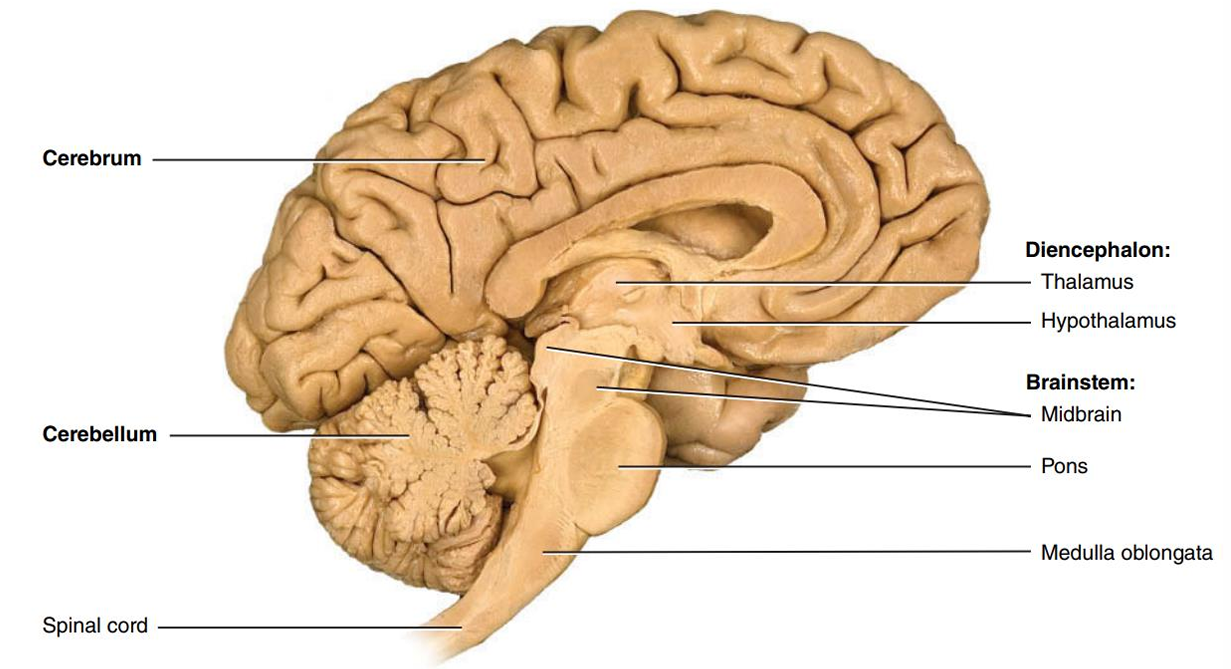
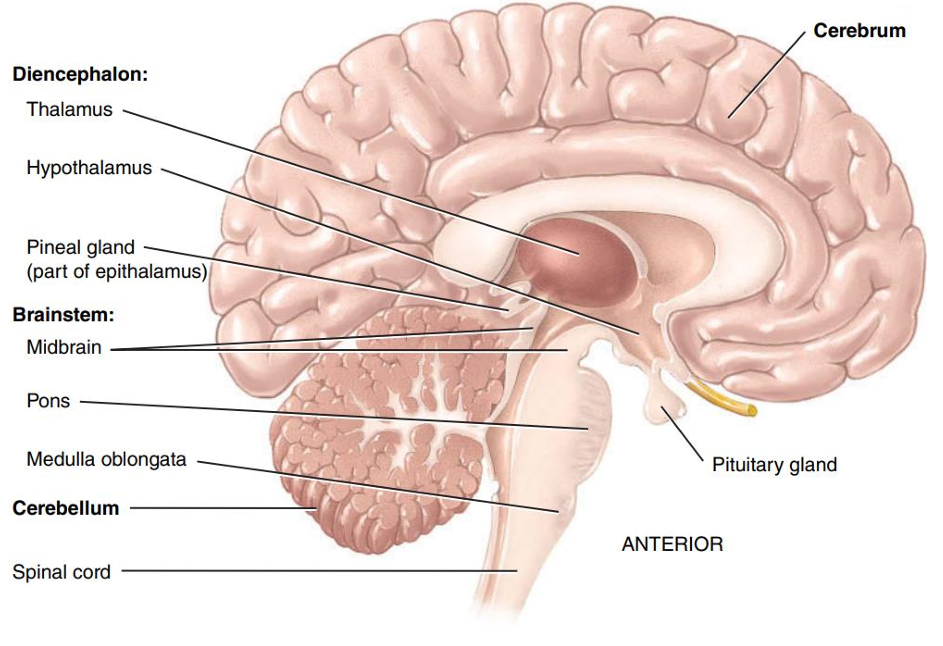
- 结构
- Encephalon/telencephalon 端脑(Cerebrum 大脑)
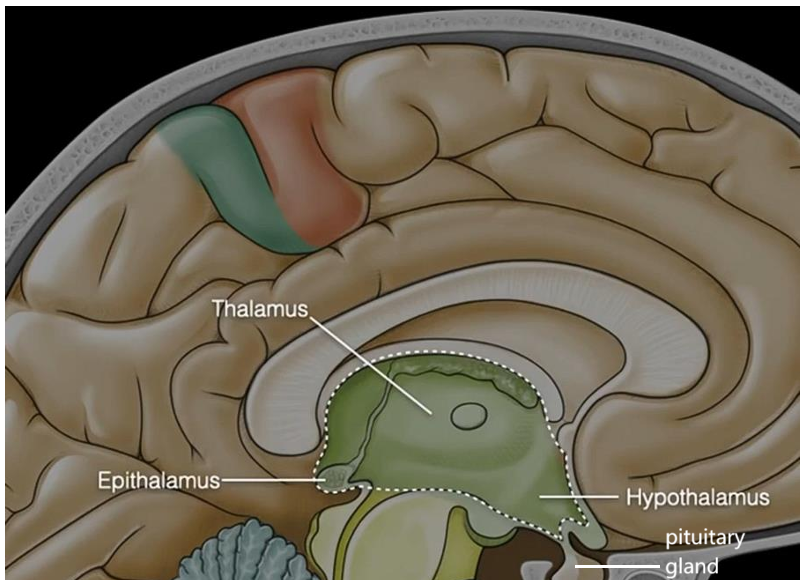
- Diencephalon 间脑
- Epithalamus
- Thalamus
- Hypothalamus
- Cerebellum 小脑
- Brainstem 脑干
- Midbrain 中脑
- Pons 脑桥
- Medulla oblongata 延髓
- 图
- Cerebrum
- Largest part of the brain
- Associated with
- thought and consciousness
- Perception
- Communication
- Understanding
- Memory
- Cerebral hemispheres
- Left cerebral hemisphere
- Right cerebral hemisphere
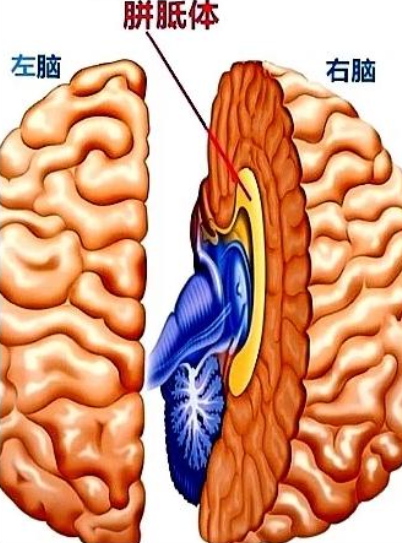
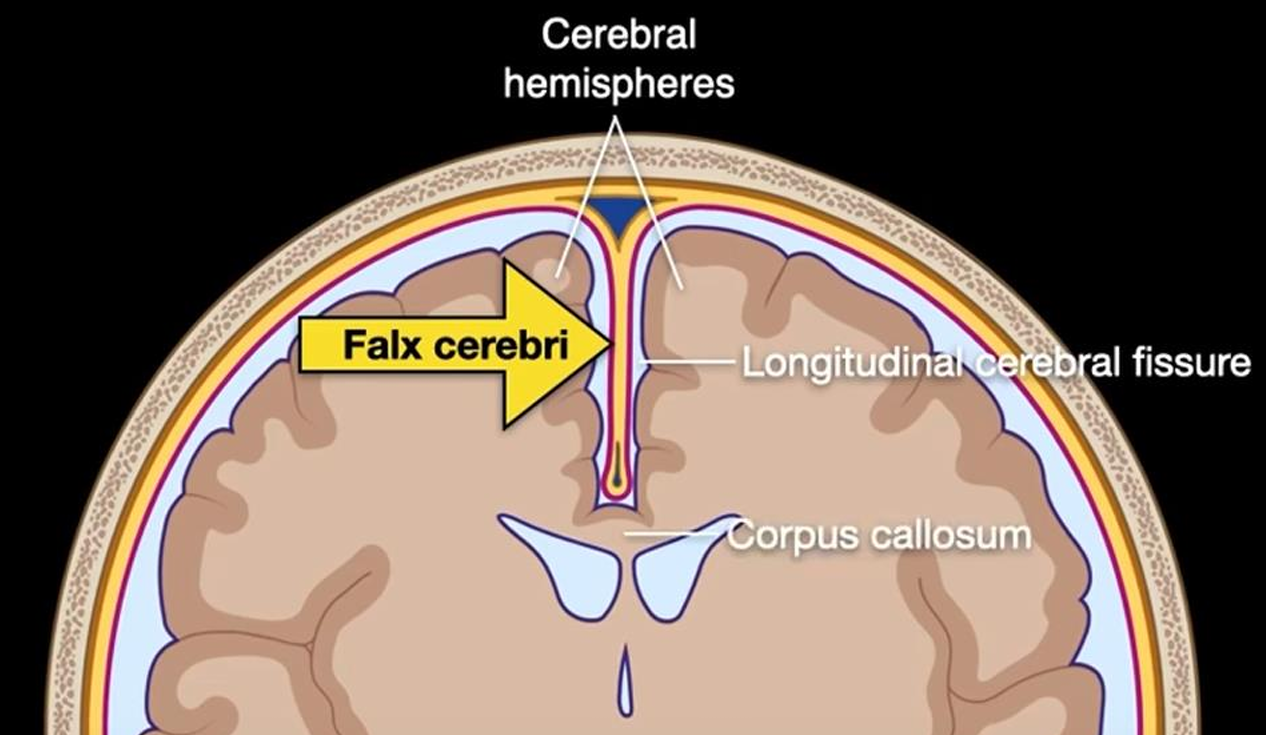
- Divided by longitudinal cerebral fissure 大脑纵裂
- Cerebral hemispheres are connected by corpus callosum 胼胝体
- 沟/回
- Hills - Gyrus (singular), Gyri (pleural) 回
- Valleys - Sulcus (singular), Sulci (pleural) 沟
- Deepest valleys between hills - fissures 裂
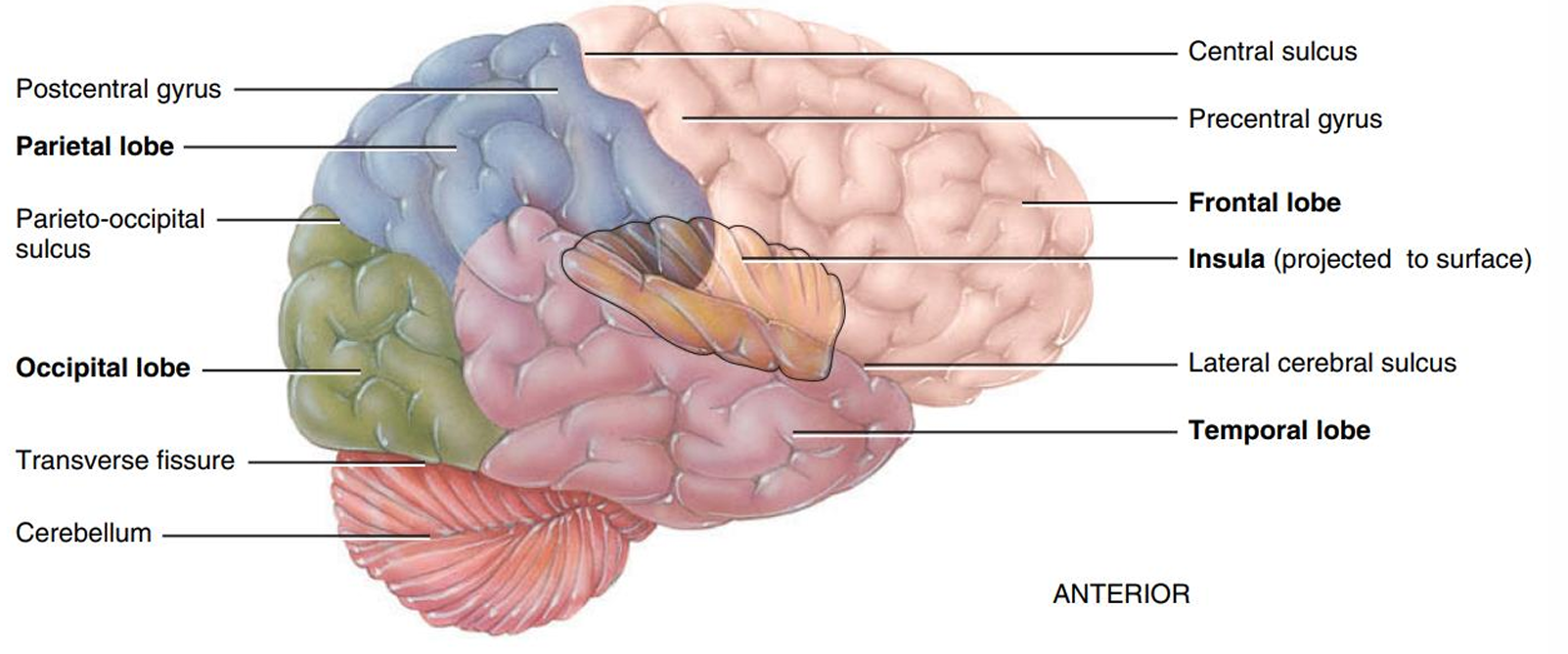
- Lobes of the Cerebrum
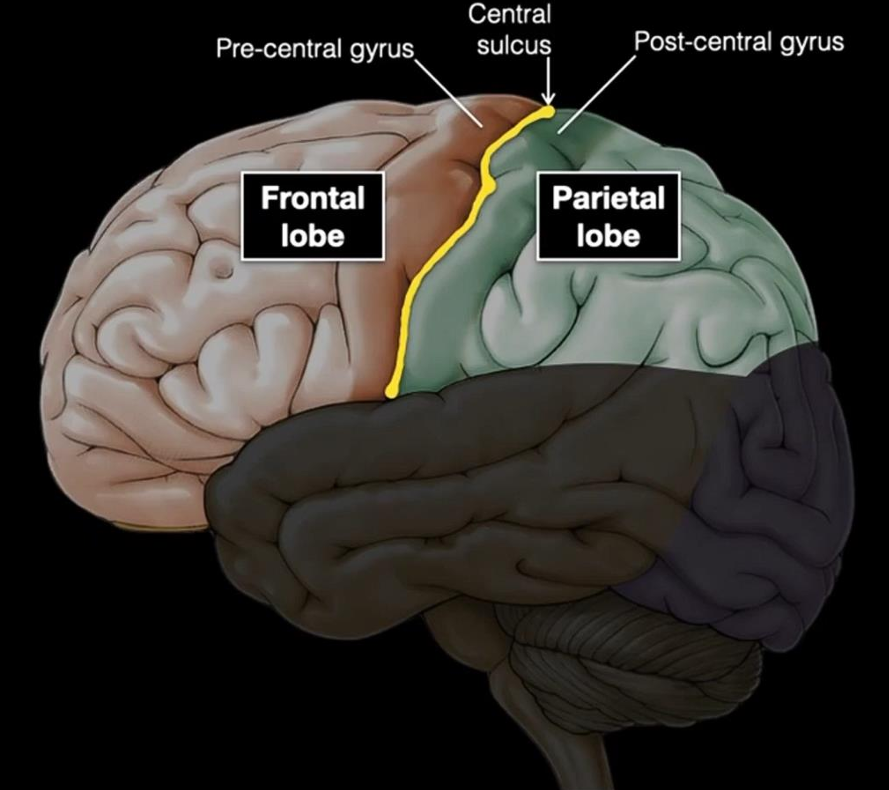
- Frontal lobe
- — central sulcus —
- 中央沟
- separates the frontal lobe from the parietal lobe
- Pre-central gyrus 中央前回
- locates immediately anterior to central sulcus, and contains primary motor area
- Post-central gyrus 中央后回
- locates immediately posterior to the central sulcus, and contains primary somatosensory area 初级躯体感觉区
- 图
- Parietal lobe
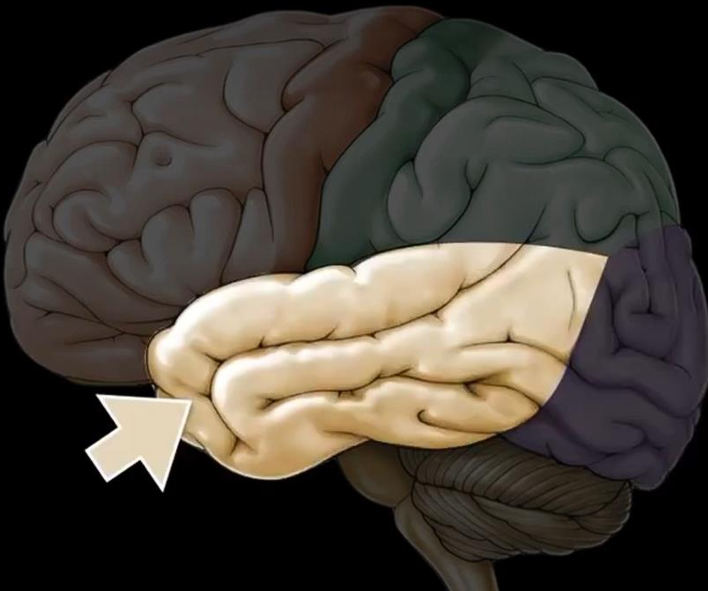
- Temporal lobe
- Auditory processing, language and memories
- Auditory processing, language and memories
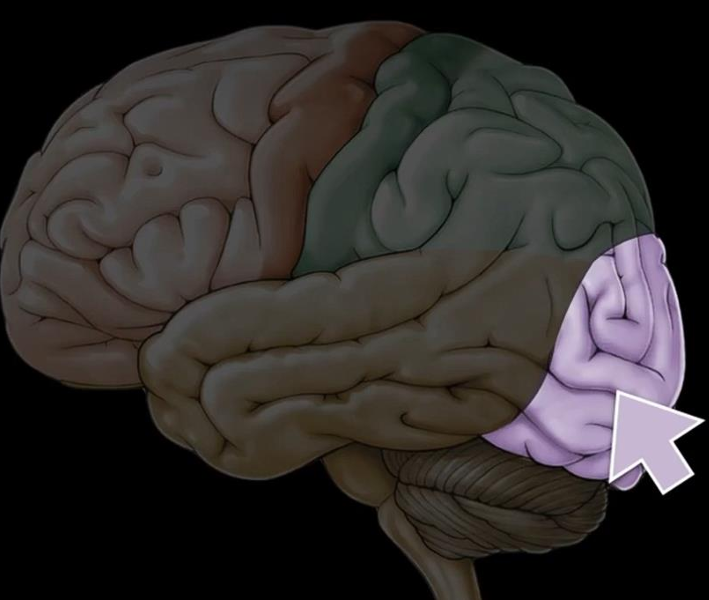
- Occipital lobe
- Primary visual cortex 初级视皮质
- Primary visual cortex 初级视皮质
- Insula 岛叶
- 图
- Diencephalon 间脑
- 左右对称,有两个
- Thalamus 丘脑
- Hypothalamus 下丘脑
- Epithalamus 上丘脑
- 图
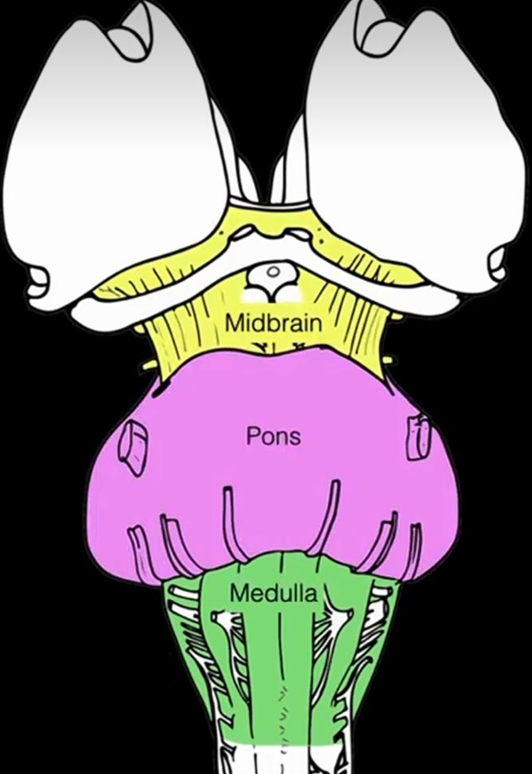
- Brainstem
- Midbrain
- Pons
- Anterior to the cerebellum
- 2.5 cm long
- Anterior to the cerebellum
- Medulla oblongata
- 3 cm long
- Starts at the inferior border of the pons
- ends at the foramen magnum
- continuous with the superior part of the spinal cord
- Decussation of pyramids 锥体交叉
- Pyramids 锥体束
- formed by corticospinal tracts that control voluntary movements of the limbs and trunk
- Superior to the junction of the medulla with the spinal cord
- 90% of the axons in the left pyramid cross to the right side
- 90% of the axons in the right pyramid cross to the left side
- Each side of the brain controls voluntary movements on the opposite side of the body.
- 图
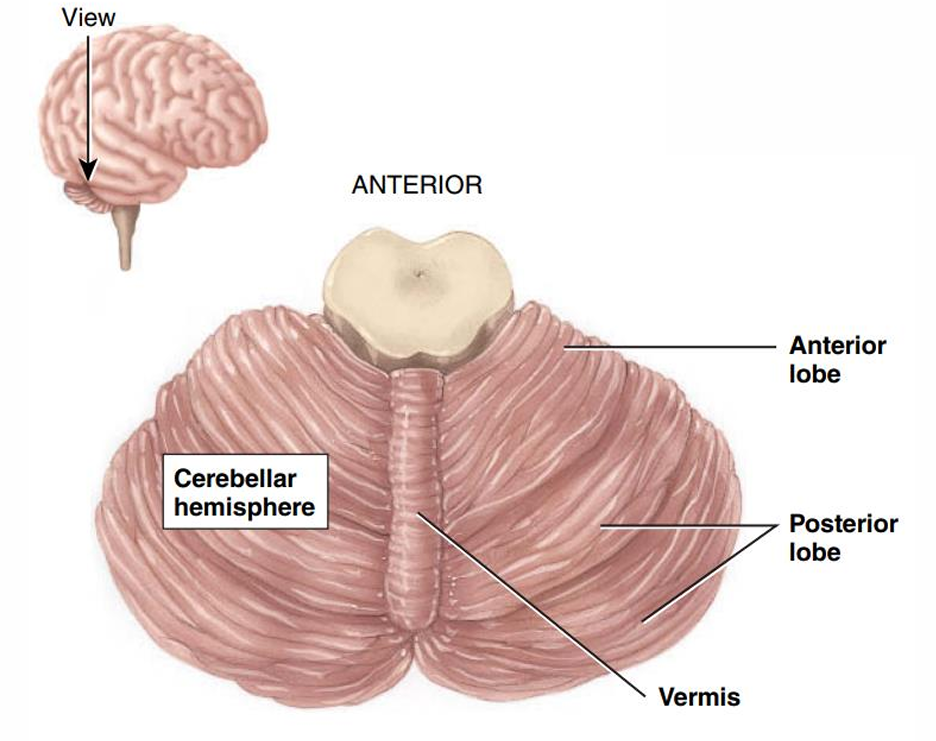
- Cerebellum
- Central area is the vermis (= worm) 小脑蚓
- lateral lobes are cerebellar hemispheres
- 小脑前面正好是 fourth ventricle
- 结构
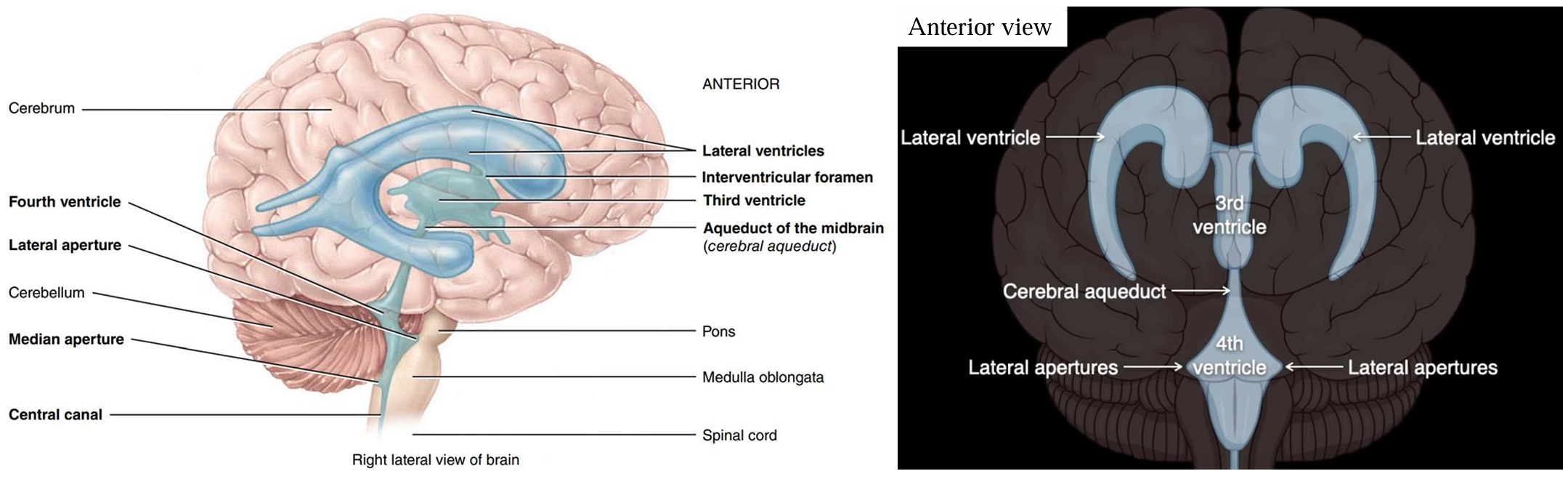
- Ventricular system of the brain
- ventricles
- Lateral ventricles/Ventricles 1 and 2
- Paired C-shaped chamber in each cerebral hemisphere
- Largest of the ventricles
- Below the corpus callosum
- Ventricle 3
- Midline, narrow space b/t L and R diencephalon
- 在间脑中间
- Ventricle 4
- Between the brainstem and the cerebellum
- 1,2是在周围的,所以正中间的截面看到的很小
- Lateral ventricles/Ventricles 1 and 2
- Cerebrospinal fluid
- CSF
- a clear, colorless liquid
- CSF circulates
- Through ventricles
- Around the brain and spinal cord in the subarachnoid space蛛网膜下腔 (the space between the arachnoid mater and pia mater)
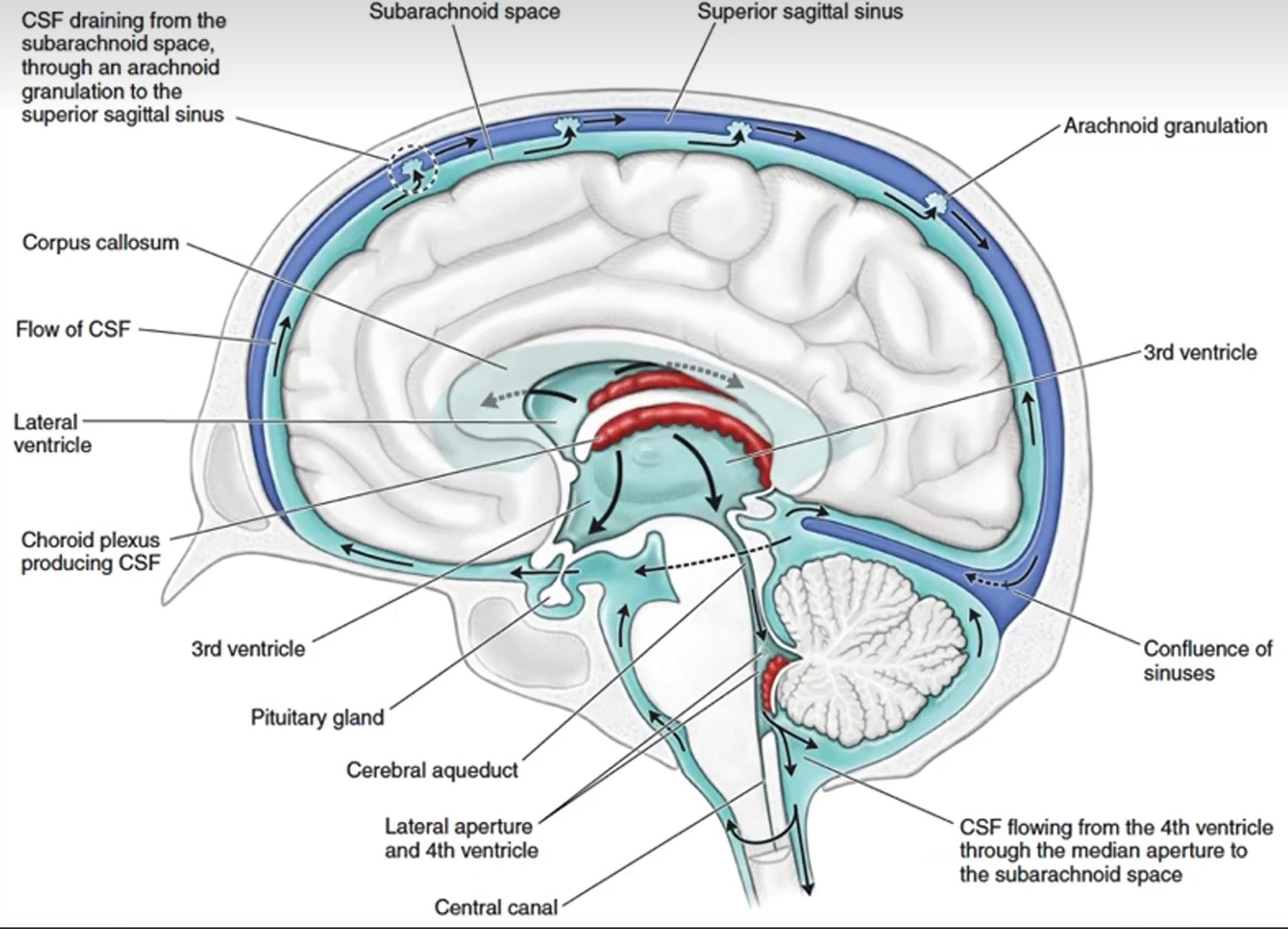
- 侧脑室脉络丛产生的脑脊液经室间孔流至第三脑室,与第三脑室产生的脑脊液汇合,经中脑水管流至第四脑室,再与第四脑室脉络丛产生的脑脊液一起,经第四脑室正中孔和第四脑室外侧孔流入小脑延髓池,并迅速扩散至整个蛛网膜下隙,流向大脑背面,经Arachnoid villus蛛网膜粒渗入到上矢状窦,会流入血液循环中
- Choroid plexus 脉络膜
- 产生Cerebrospinal fluid
- Interventricular foramen
- lateral ventricles →3rd ventricle
- Cerebral aqueduct
- Locates in the midbrain
- 3rd → 4th ventricles
- 图
- ventricles
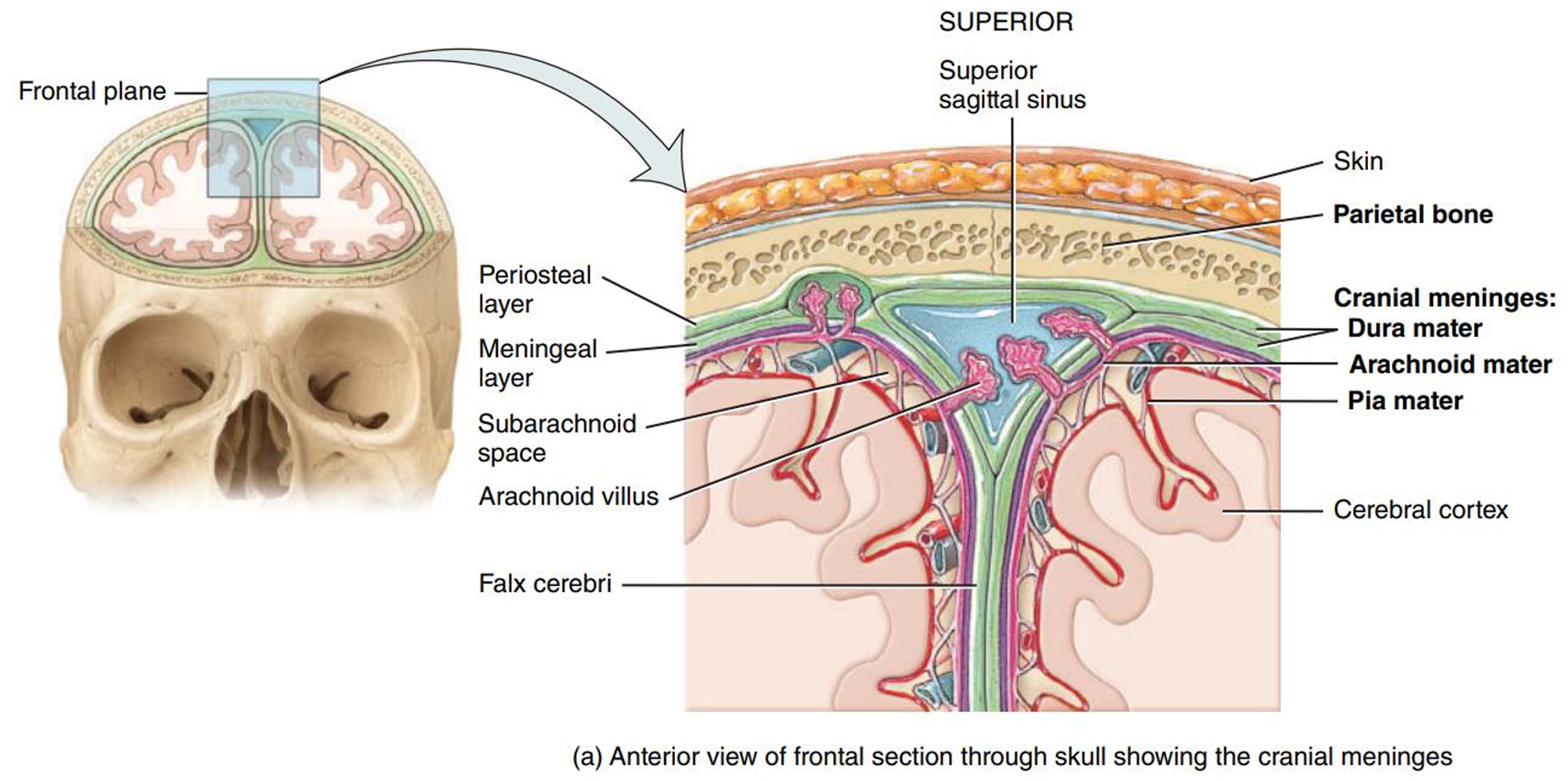
- Protective Coverings of the Brain
- Cranium
- Cranial meninge
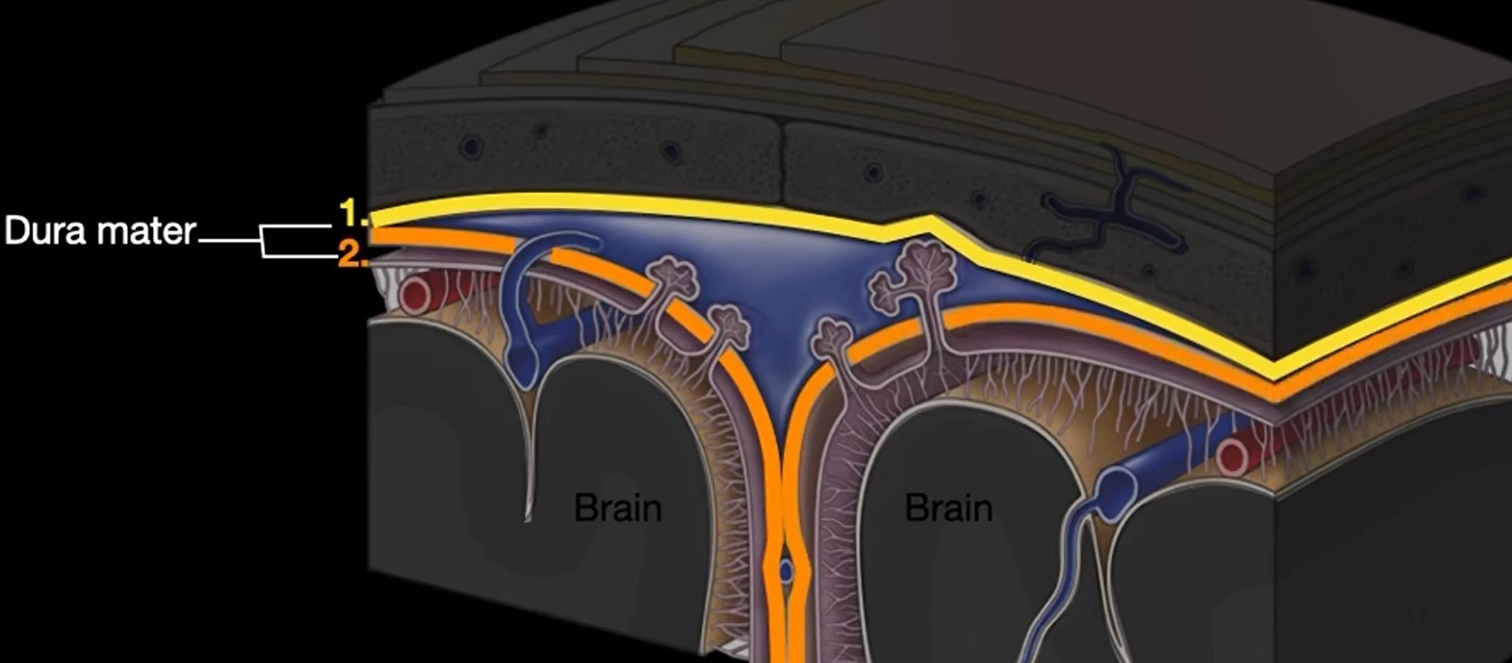
- dura mater 硬脑膜
- Periosteal layer 骨膜层
- Lines internal surface of skull
- ends at the foramen magnum枕骨大孔
- Meningeal layer 脑膜层
- Continuous with spinal meninge 脊膜
- 图
- Restrict displacement of the brain (much like a seat belt) falx cerebri - 大脑镰
- arachnoid mater 蛛网膜
- pia mater 软脑膜
- 图,淡蓝色的是静脉窦
- dura mater 硬脑膜
- Spinal Cord
- 基础
- 45 cm in adults
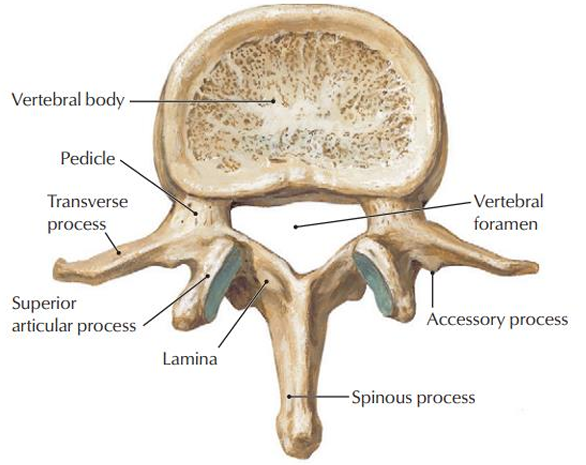
- locates within the vertebral canal 椎管 (All vertebral foramina form the vertebral canal 椎孔)
- Cervical Vertebra
- Cervical Vertebra
- slightly flat anteriorly and posteriorly
- 结构
- 长度
- in adults
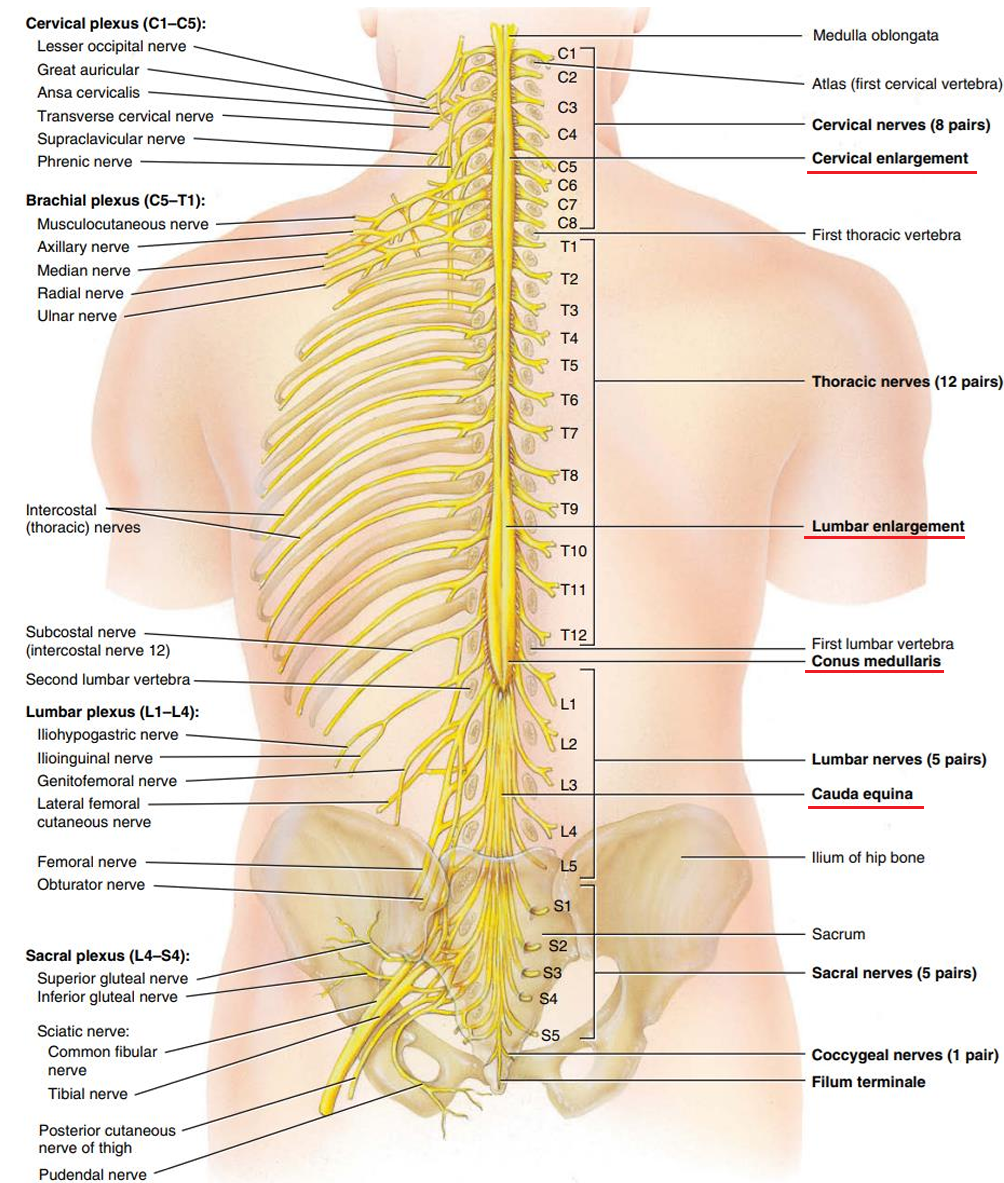
- medulla oblongata - L1
- in newborn infants
- medulla oblongata - L3
- in adults
- 特殊区域
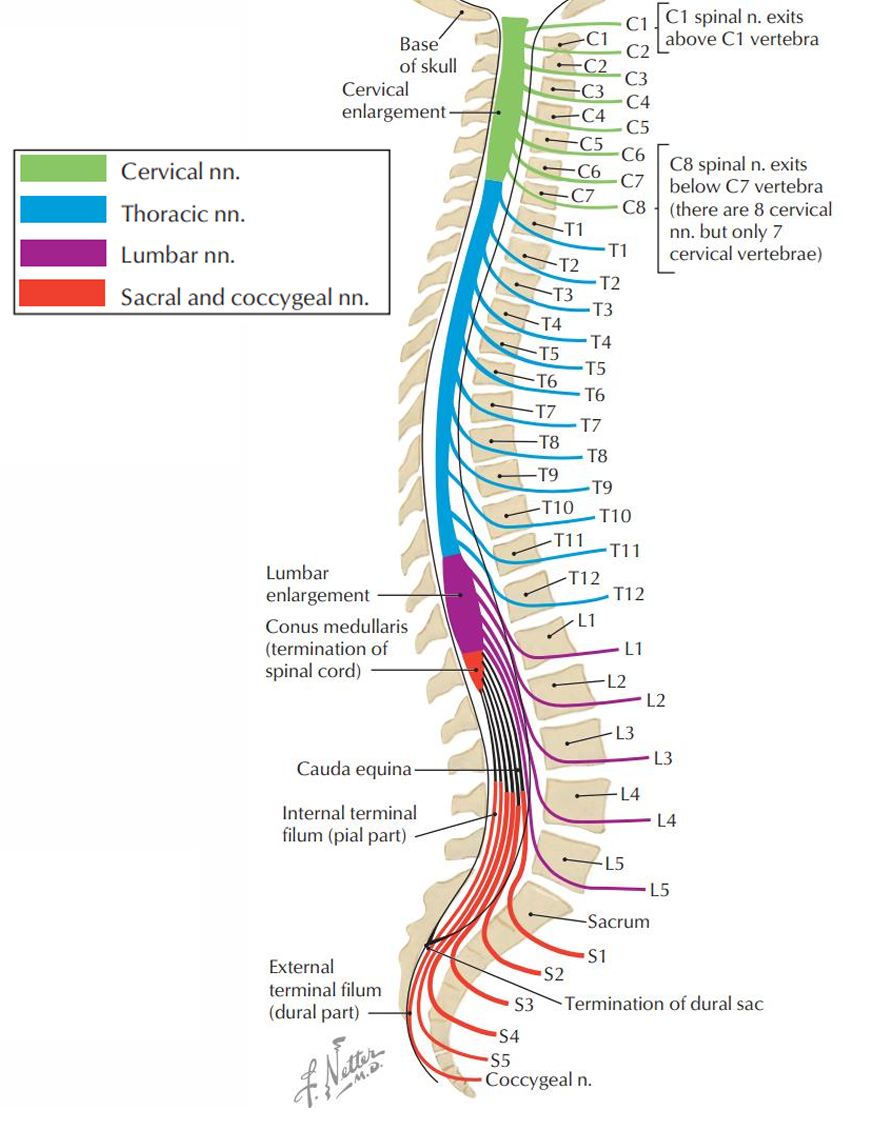
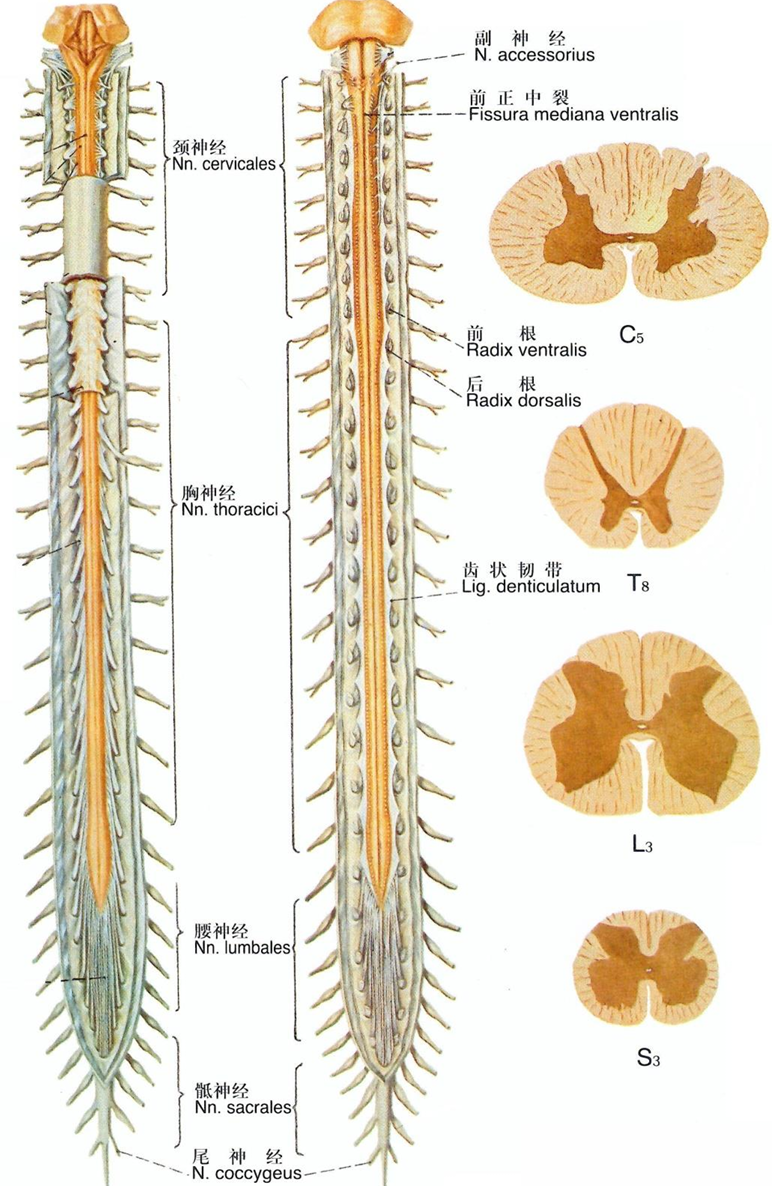
- Cervical enlargement C4-T1
- Lumbar enlargement T9-12
- Conus medullaris 脊髓圆锥
- Cauda equina 马尾神经
- 图
- 长度
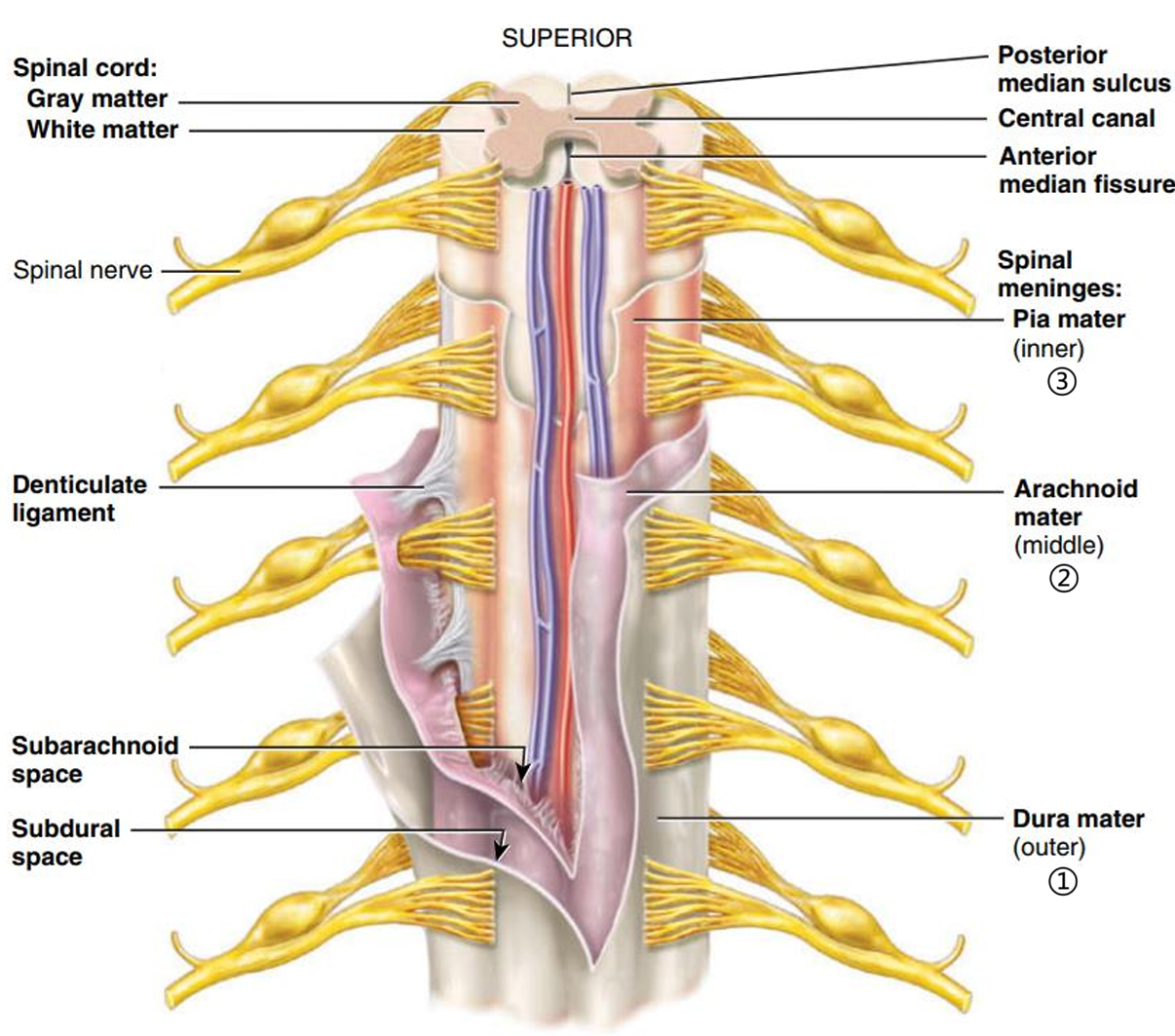
- Meninges
- surround the spinal cord
- continuous with the cranial meninges
- ① dura mater
- ② arachnoid mater
- ③ pia mater
- 图
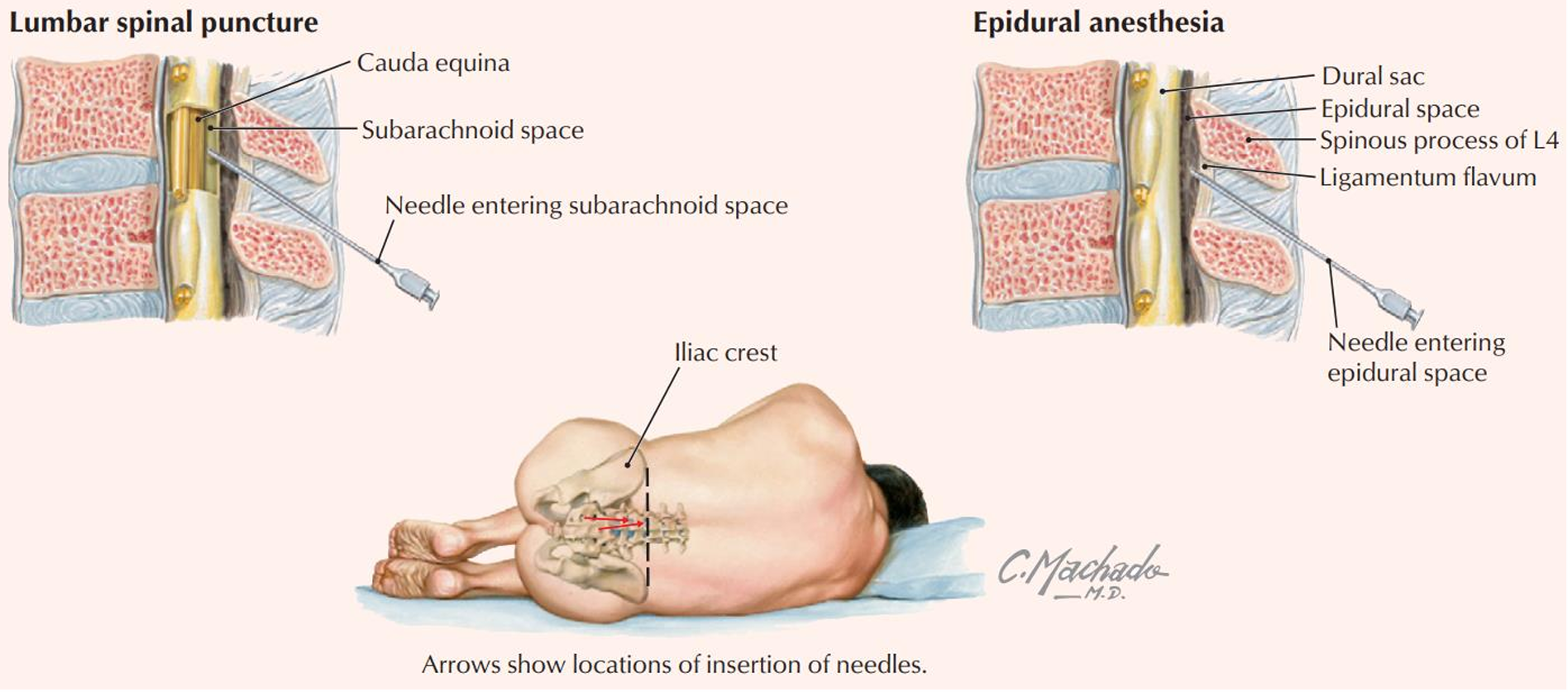
- 病-A Lumbar Puncture and Epidural Anesthesia
- A lumbar puncture 腰椎穿刺
- Undertake a sample of cerebrospinal fluid
- Insert into the subarachnoid space 蛛网膜下腔
- In the midline between the L3 and L4 or the L4 and L5 vertebral spinal processes
- Epidural Anesthesia 硬膜外麻醉
- Inject anesthetic agents into the epidural space (above the dura mater)
- Anesthetize the nerve fibers of the cauda equina
- Commonly used during childbirth
- 图
- A lumbar puncture 腰椎穿刺
- Relationship of Spinal Nerves to Vertebrae
- All of the nerves pass via the intervertebral foramen 椎间孔
- Naming
- C1-C7 name as the vertebra below
- C8 b/t C7 and T1
- T1-Co name as the vertebra above
- 图
- Internal anatomy of the spinal cord
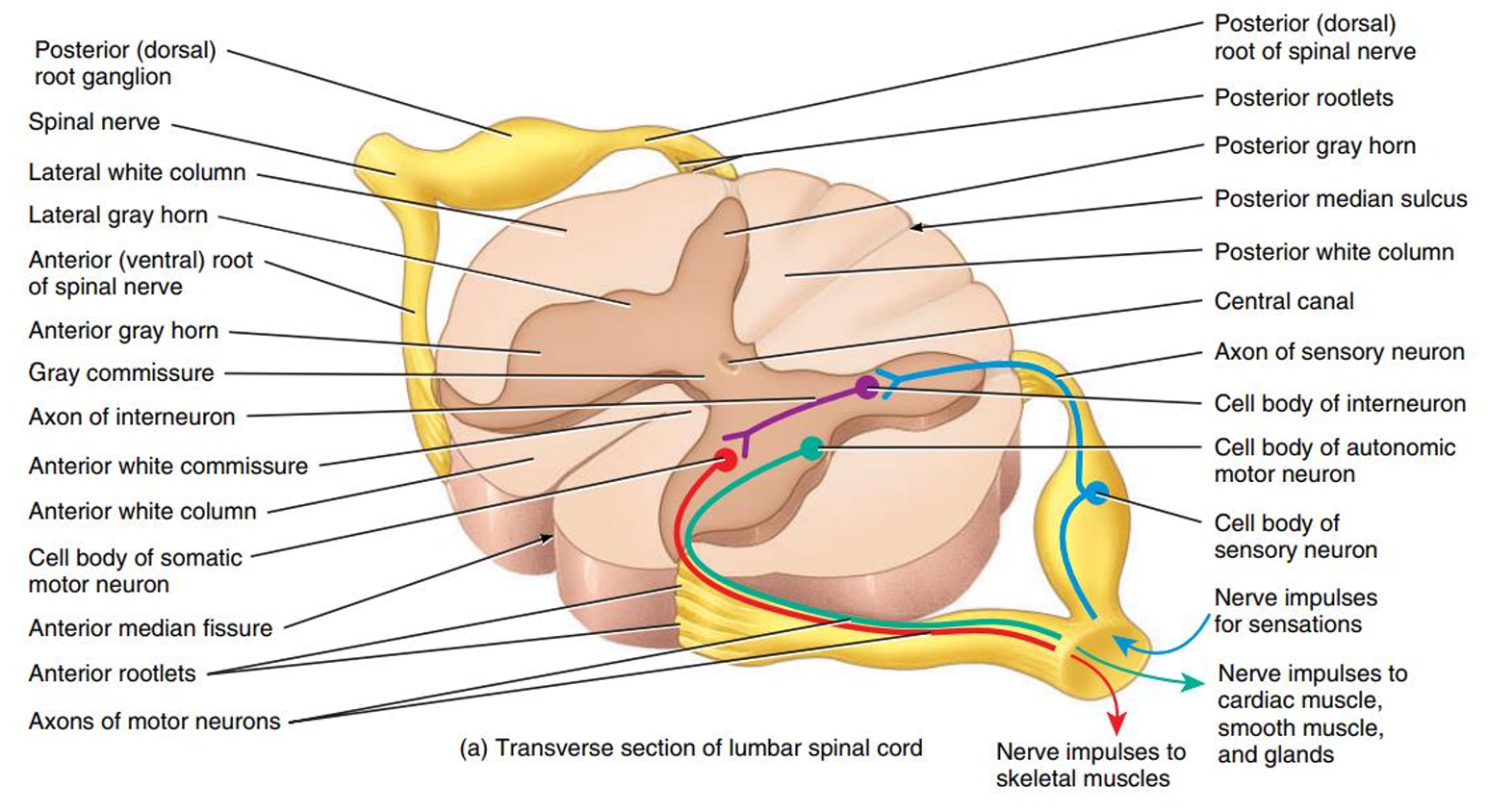
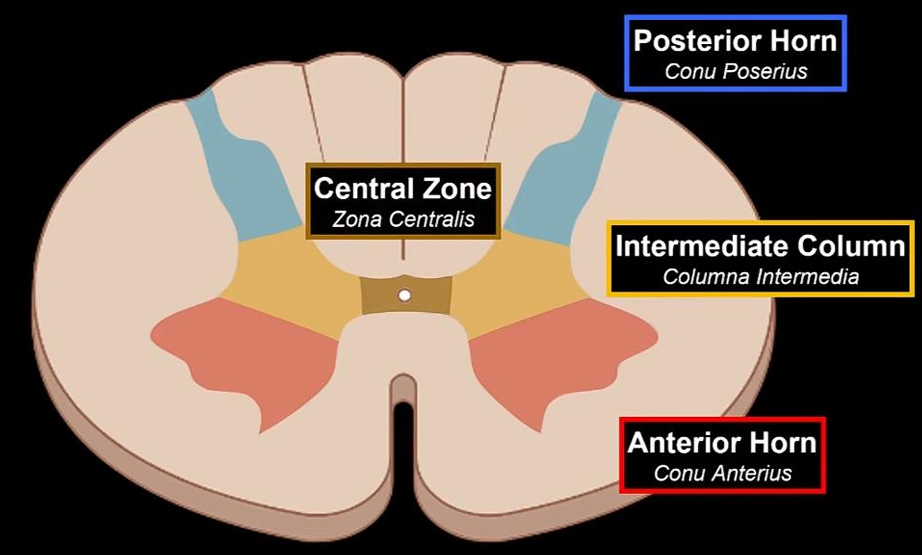
- Gray matter of the spinal cord
- butterfly-shaped
- Clusters of dendrites and cell bodies of neurons
- 结构
- anterior horn
- contain somatic motor nuclei
- posterior horn
- contain axons of incoming sensory neurons
- contain cell bodies of interneurons // 紫色的
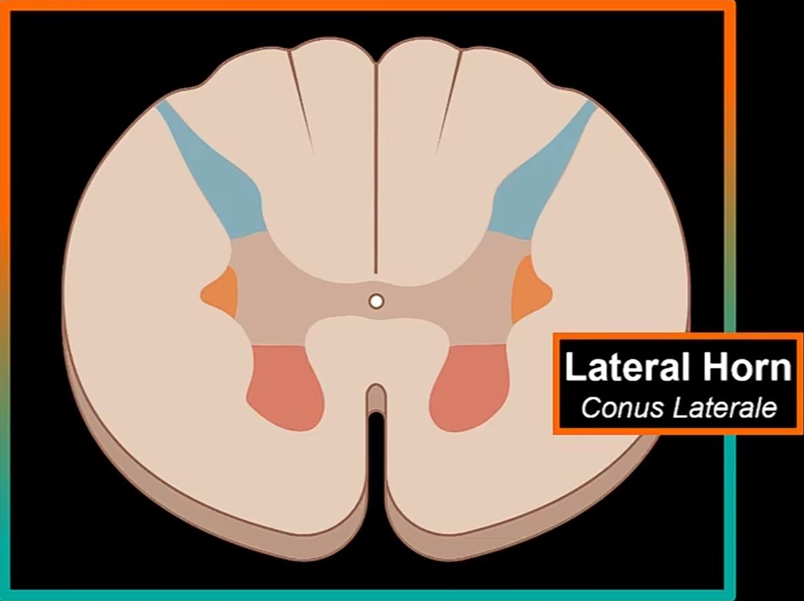
- lateral horn
- contain autonomic motor nuclei
- only in thoracic and upper lumbar segments of the spinal cord
- Intermediate column 中间柱
- Central zone 中心带
- 图
- anterior horn
- White matter of the spinal cord
- Bundles of myelinated axons of neurons
- Rich in lipids
- Two grooves
- anterior median fissure 前正中裂
- posterior median sulcus 后正中沟
- 图
- Gray matter of the spinal cord
- Central Canal 中央管
- extends the entire length of the spinal cord
- continuous with the fourth ventricle
- fills with cerebrospinal fluid
- 基础
- Cranial nerves分类
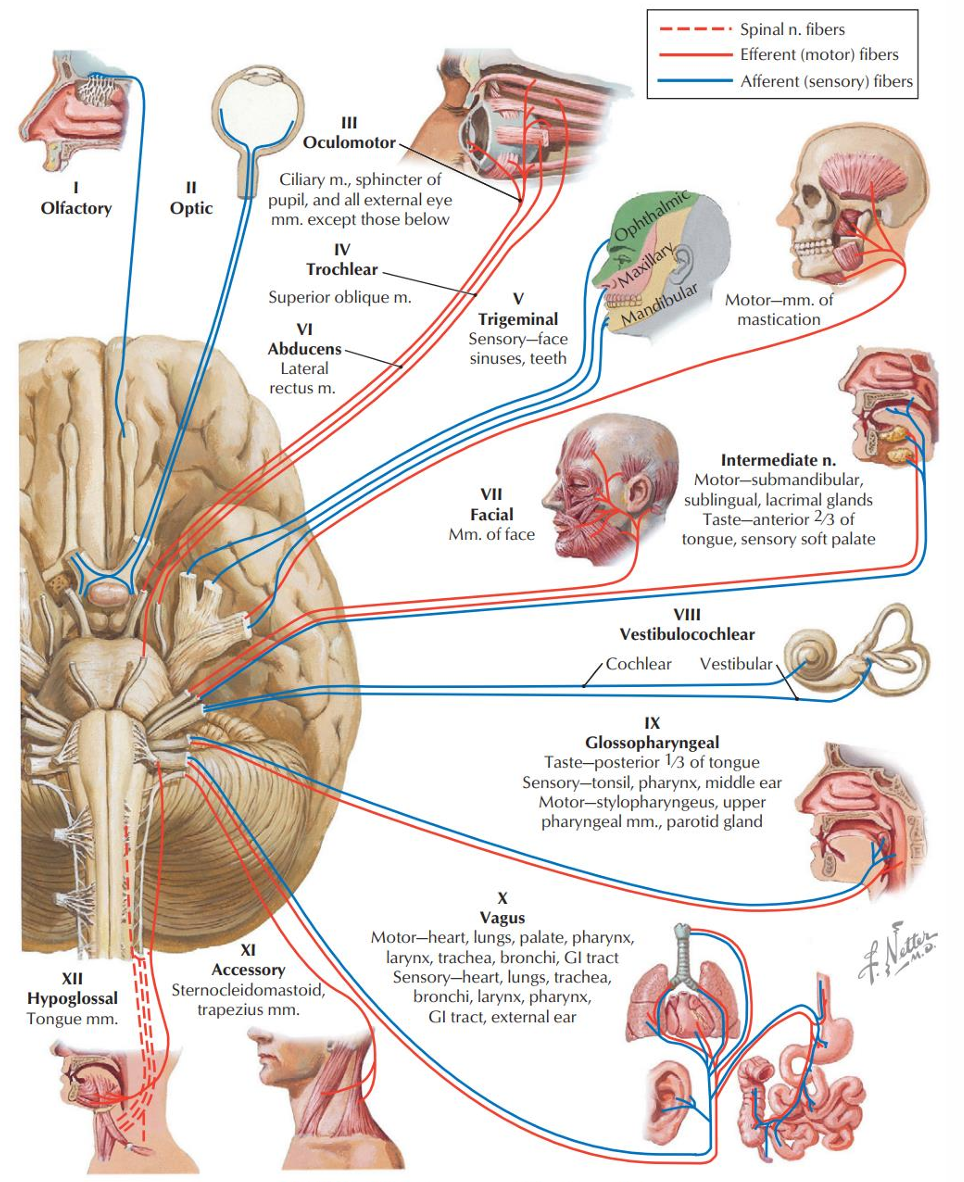
- Cranial nerves I, II, and VIII
- Special sensory (afferent) nerves 特殊感觉神经
- Associated with smelling, seeing, and hearing
- Cranial nerves III, IV, VI, XI, and XII
- Motor (efferent) nerves
- Contain only axons of motor neurons
- Cranial nerves V, VII, IX, and X
- Mixed nerves
- Contain axons both of sensory neurons and motor neurons
- 图
- Cranial nerves I, II, and VIII
- Cranial nerves
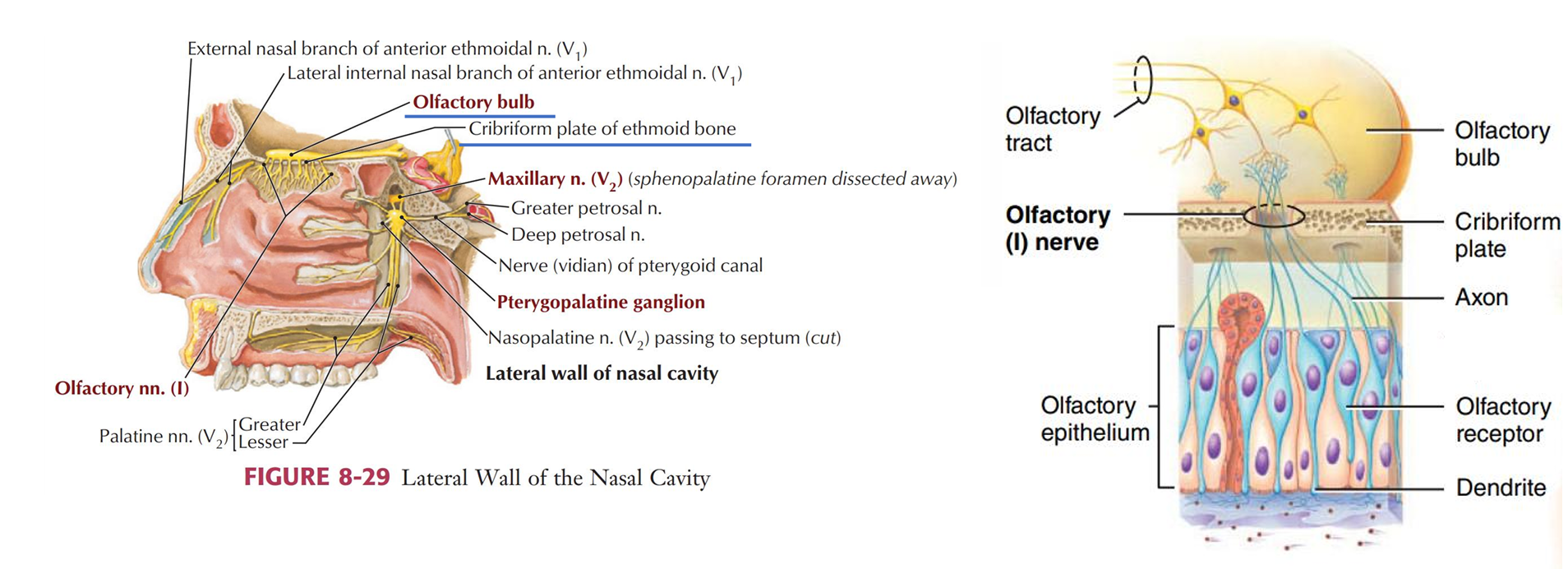
- I. Olfactory 嗅神经 (olfact- = to smell)
- arises from olfactory receptors in nasal cavity which includes superior nasal concha and part of nasal septum
- Pass through the foramina of the ethmoid bone
- Olfactory bulb 嗅球
- Olfactory track
- Connects to cerebrum 连端脑
- Function - special sense of smell
- 病-Anosmia - Loss of the sense of smell
- Infection
- Swelling of nasal mucosa
- Head injury
- 图
- II. Optic 视神经
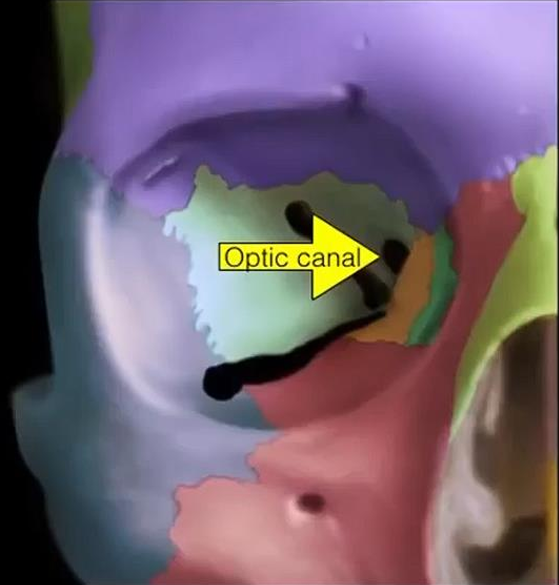
- Retina → Optical nerve through optic canal视神经管 in the orbit
- Visual sensory information courses to the ipsilateral同侧的 and contralateral对侧的 side of the brain at the optic chiasm (an X)
- Connects to diencephalon 连间脑
- Optic tract - pathway to occipital lobe,连接视交叉(间脑)到大脑皮层
- Retina → Optical nerve through optic canal视神经管 in the orbit
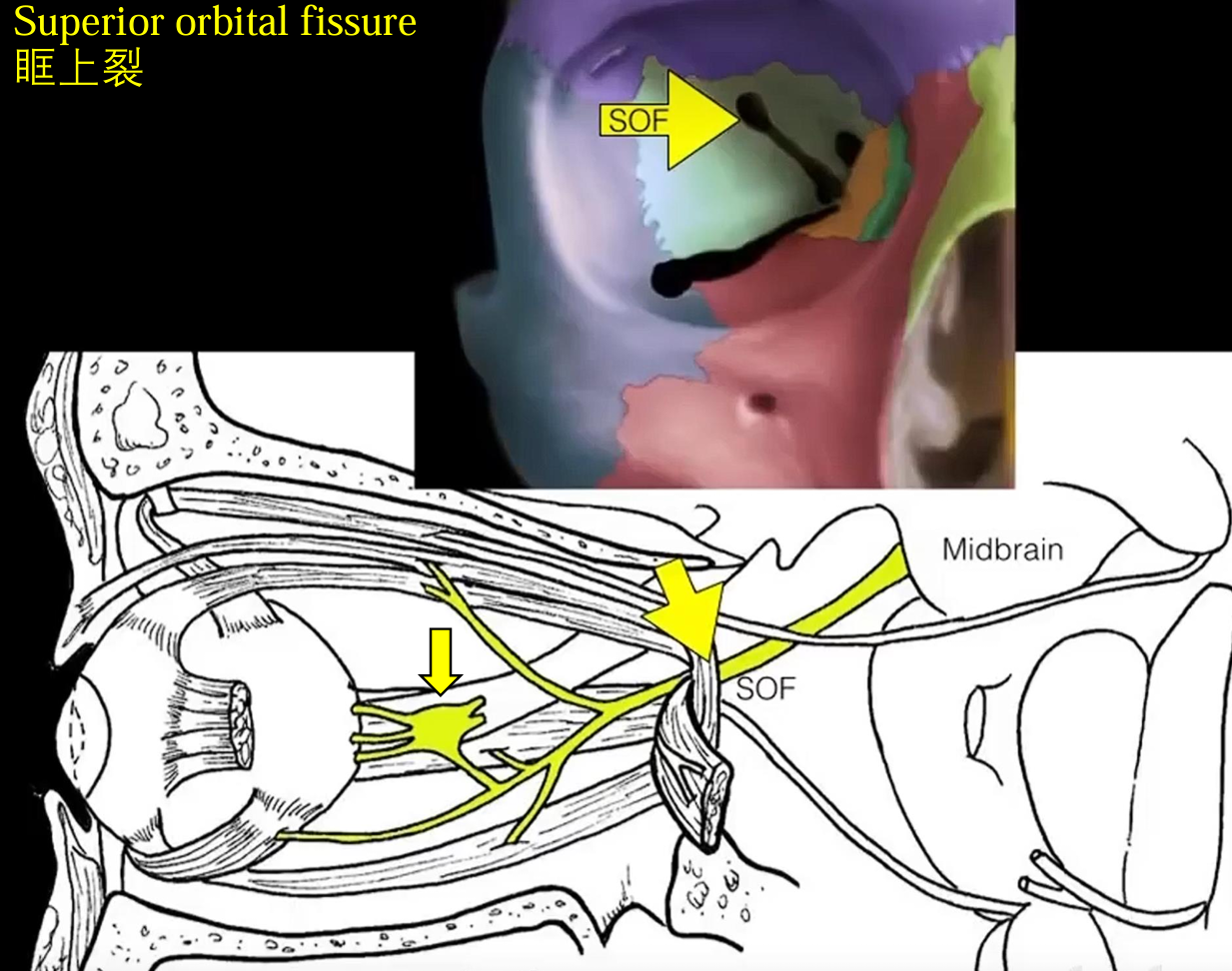
- III. Oculomotor 动眼神经
- Arises from the midbrain
- Function
- Somatic motor to extraocular muscle眼外肌
- Visceral motor to pupillary constrictorand ciliary muscle
- Pupillary constrictor瞳孔括约肌 adjusts the size of the pupil
- Ciliary muscle睫状肌 adjusts the lens
- 通过Superior orbital fissure
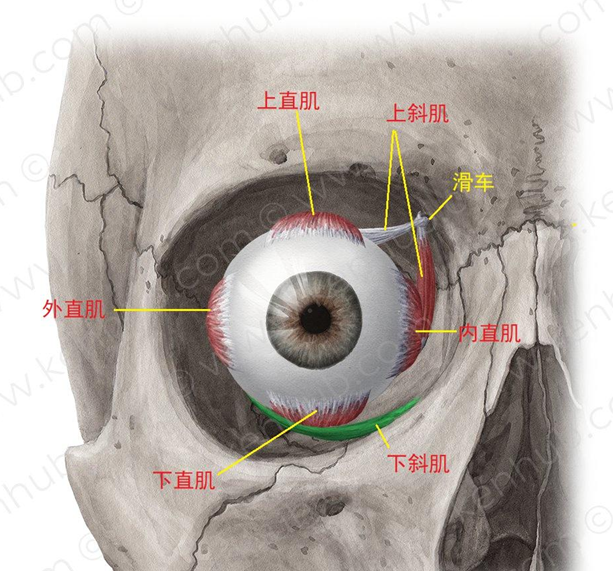
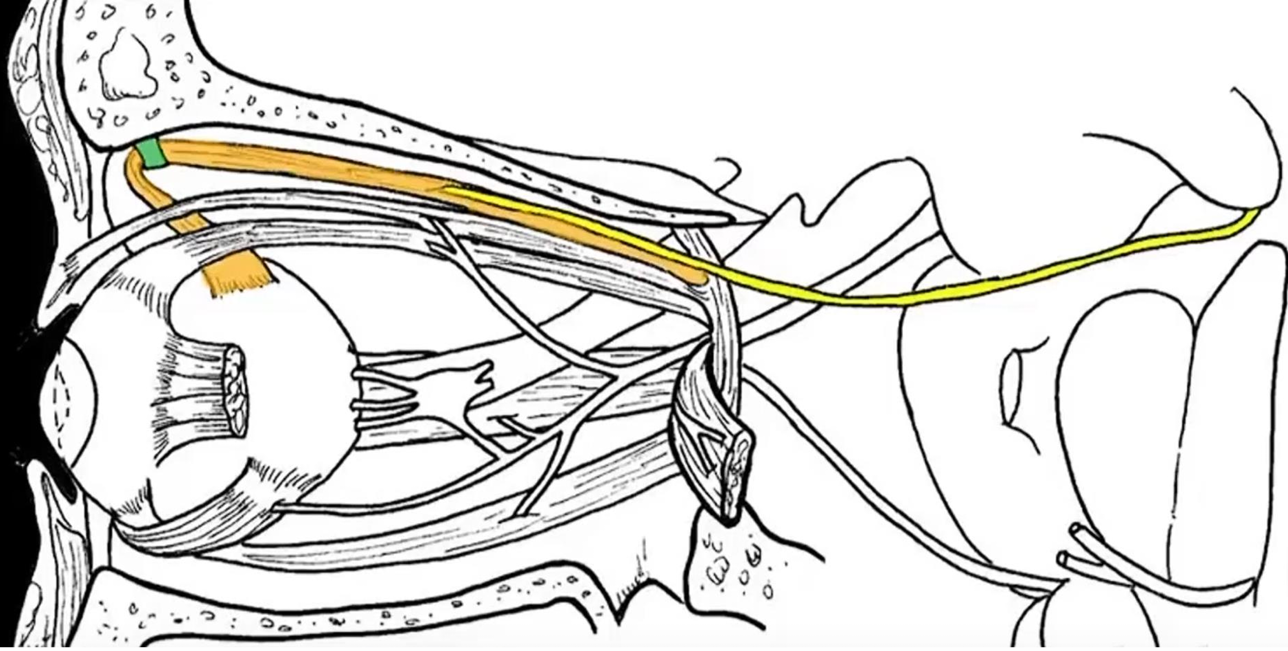
- IV. Trochlear 滑车神经
- Motor to superior oblique muscle 上斜肌
- Control eyeball movement
- 上卖弄这个绿色的是滑车
- Motor to superior oblique muscle 上斜肌
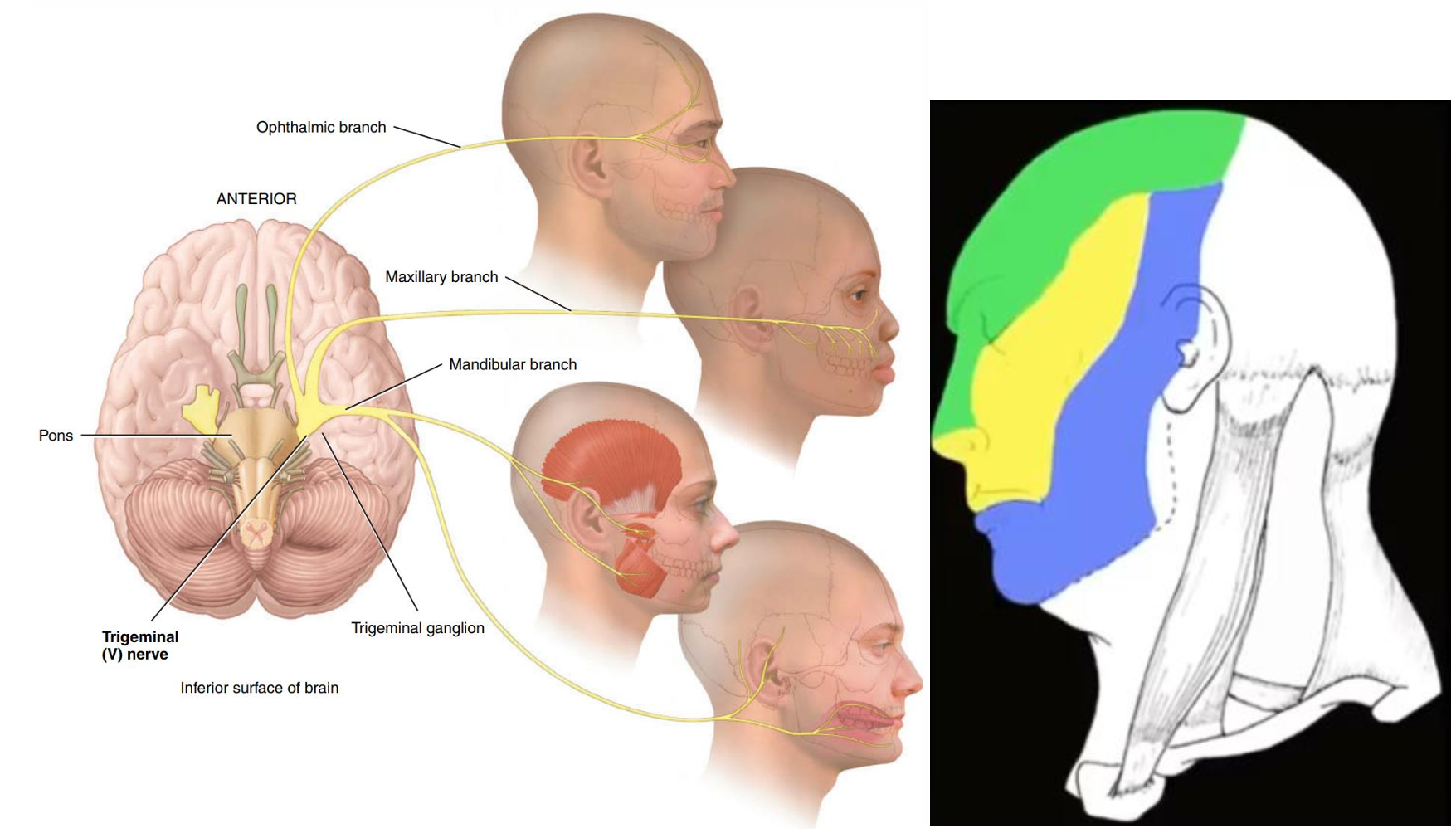
- V. Trigeminal 三叉神经
- Largest cranial nerve
- A swelling一个膨大 - trigeminal ganglion
- Gives rise to 3 branches
- Ophthalmic N 眼神经
- Maxillary N 上颌神经
- Mandibular N 下颌神经
- 图
- Mixed nerve
- Sensory
- to face, orbit, nose, teeth and anterior 2/3 tongue
- Motor
- to muscles of mastication 咀嚼肌
- Control chewing movements
- Motor fibers hitchhike伴随 along mandibular branch下颌神经分支
- Sensory
- VI. Abducens 外展神经
- Motor to lateral rectus muscle of the eyeball 眼球外直肌
- cause abduction (lateral rotation) of the eyeball
- Motor to lateral rectus muscle of the eyeball 眼球外直肌
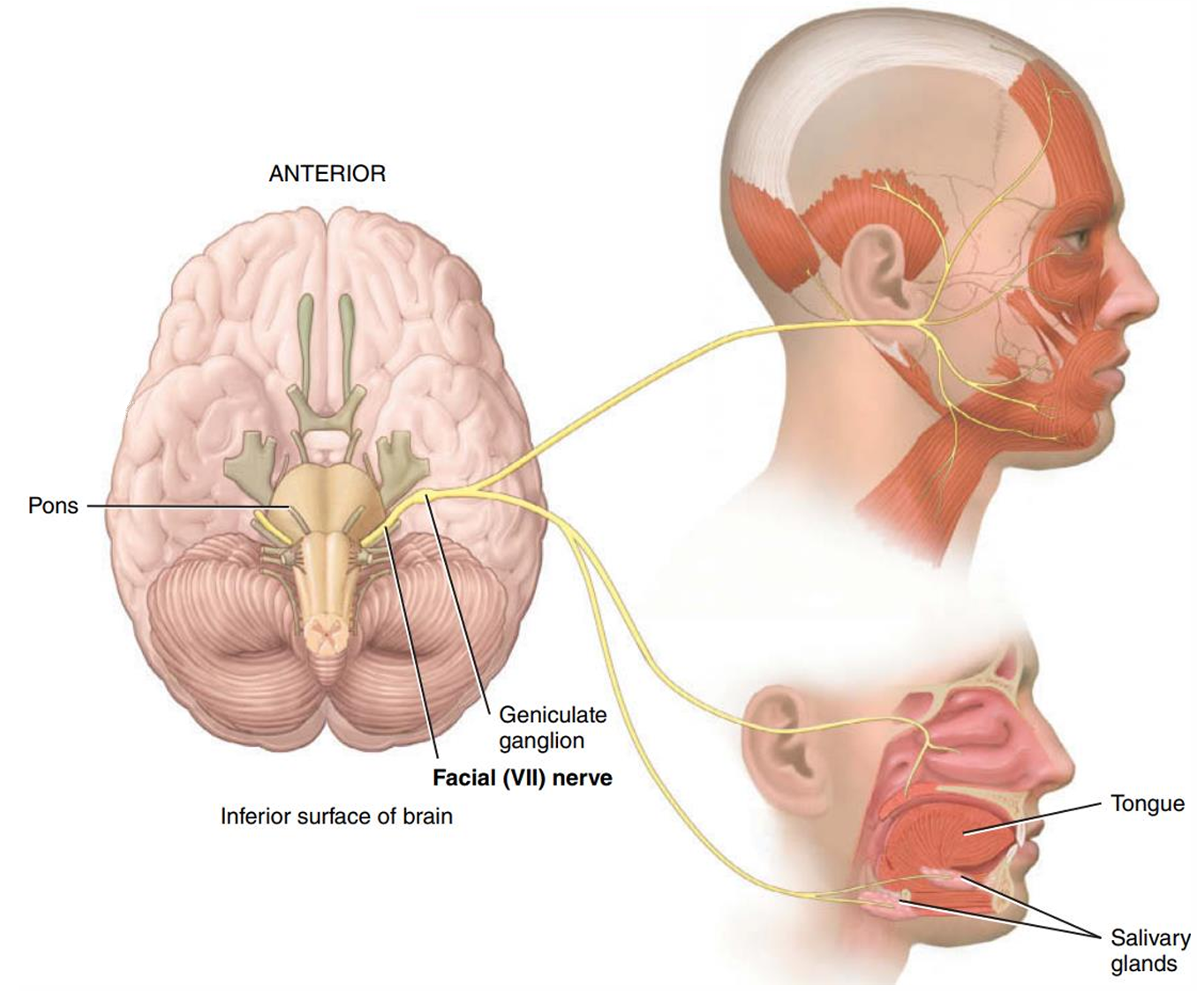
- VII. Facial 面神经
- Arises from the pons
- Mixed nerve
- Gives rise to 3 branches
- Facial nerve proper 面神经主干
- Goes through parotid gland腮腺, but doesn’t innervate it
- Motor to muscles of facial expression
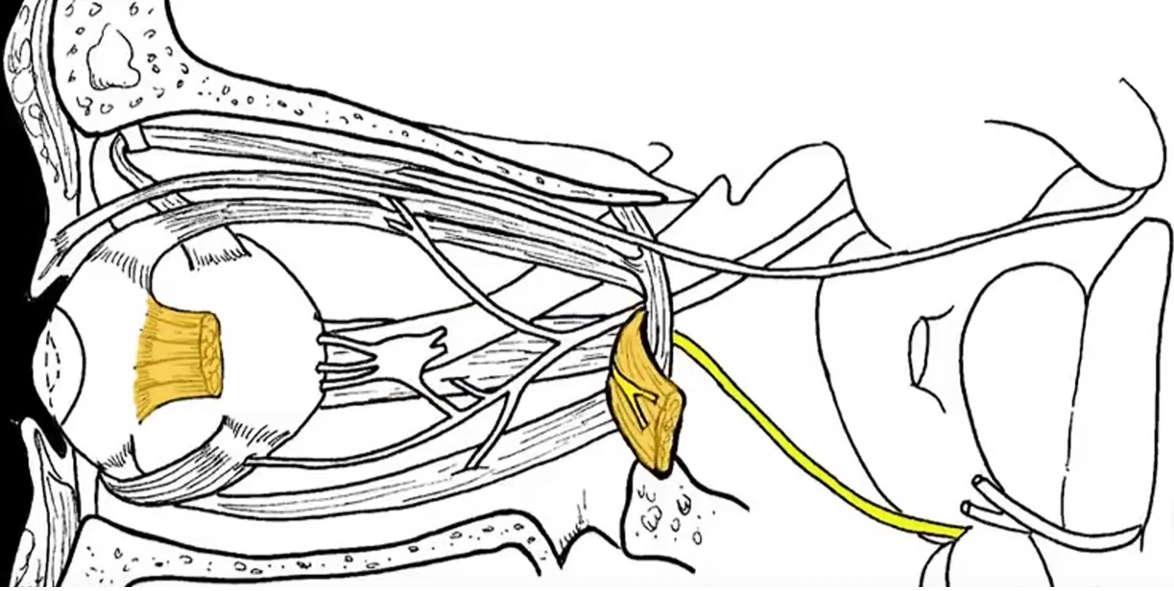
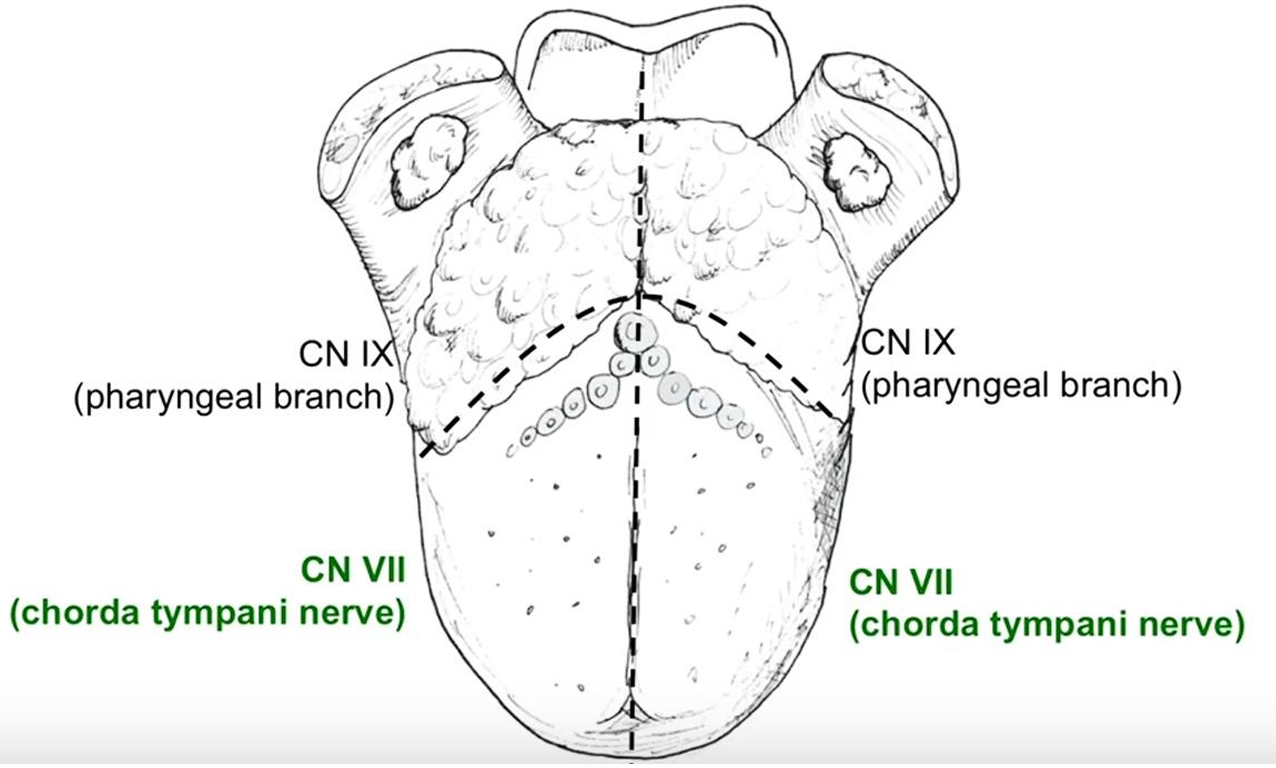
- Chorda tympani nerve 鼓索神经
- Motor to submandibular颌下腺 and sublingual glands舌下腺
- SS特殊感觉 taste from anterior 2/3 of tongue
- Greater petrosal nerve 岩大神经
- Motor to lacrimal, nasal and palatine glands
- Facial nerve proper 面神经主干
- 功能小口诀
- Closes your eye
- Tastes pie
- Makes you cry
- Innervates all glands in head except the one it goes through
- 图
- VIII.Vestibulocochlear 位听神经/前庭蜗神经
- Function - SS. hearing and balance
- vestibular branch for equilibrium
- cochlear branch for hearing
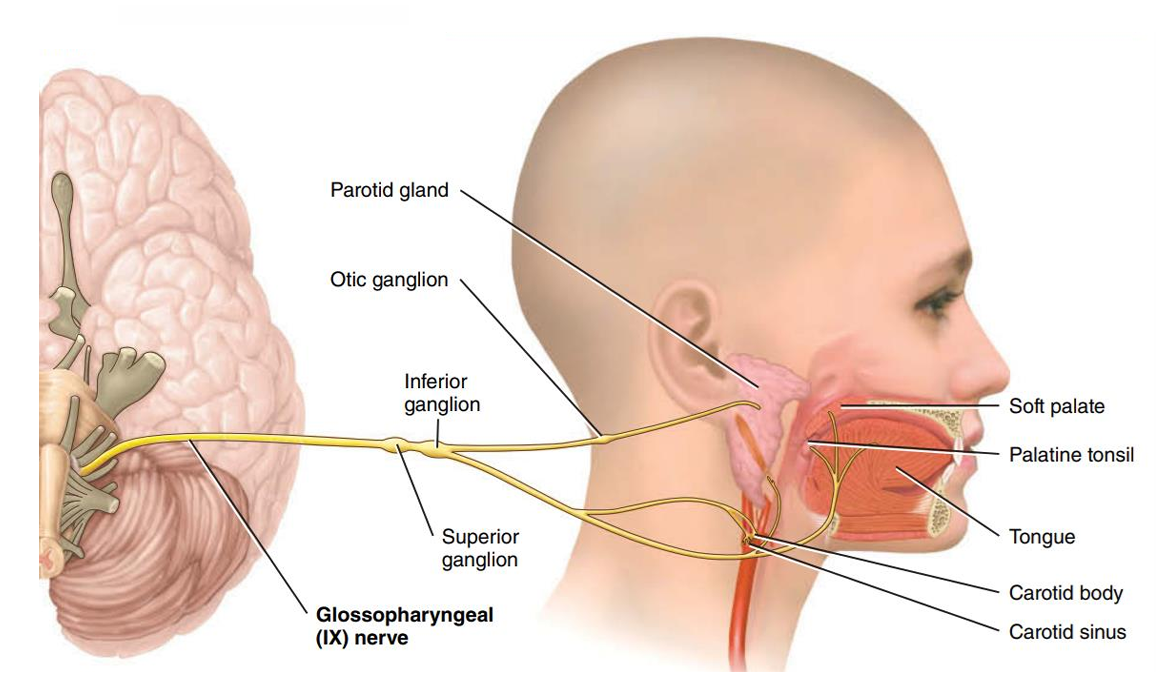
- IX. Glossopharyngeal 舌咽神经
- mixed nerve
- sensory
- Sensory to posterior 1/3 tongue, oropharynx , carotid sinus , carotid body , and auditory tube
- gag reflex 咽反射
- baroreceptors in the carotid sinus
- chemoreceptors in the carotid bodies
- SS. taste - posterior 1/3 tongue
- motor
- Motor to parotid gland to secrete saliva
- Motor to stylopharyngeus muscle 茎突咽肌assists in swallowing
- sensory
- 图
- mixed nerve
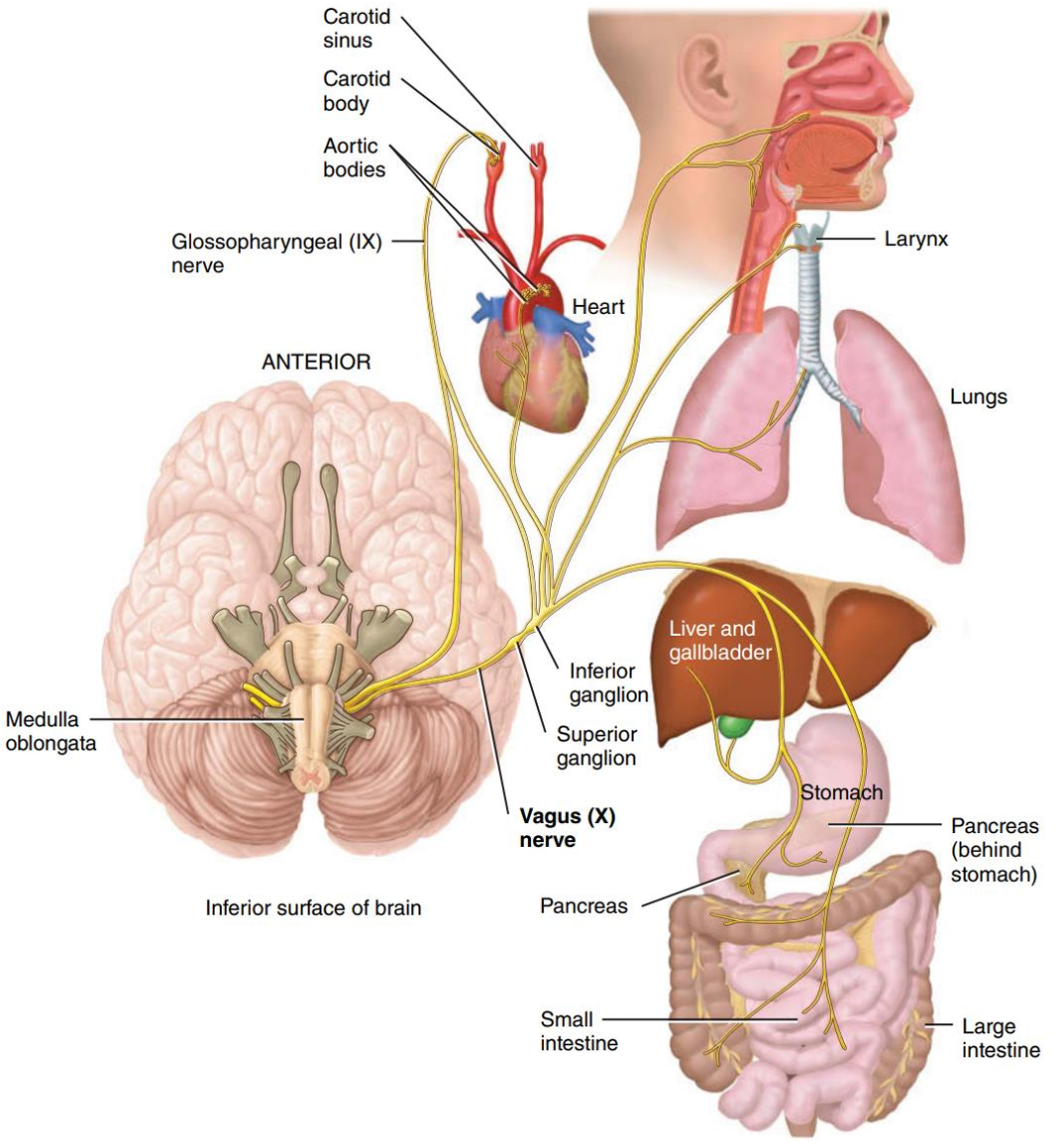
- X. Vagus迷走神经
- Wide distribution - head, neck, thorax and abdomen
- It goes along internal jugular V and common carotid A in the neck region
- Mixed nerve
- sensory
- Sensory to laryngopharynx, larynx
- Sensory to thoracic and abdominal viscera
- e.g. such as hunger, fullness, and discomfort
- motor
- Motor to thoracic and abdominal viscera
- Motor to muscles of soft palate, pharynx and larynx that are used in swallowing, vocalization, and coughing
- Loss of motor function to pharynx, larynx and palate via loss of gag reflex
- sensory
- 图
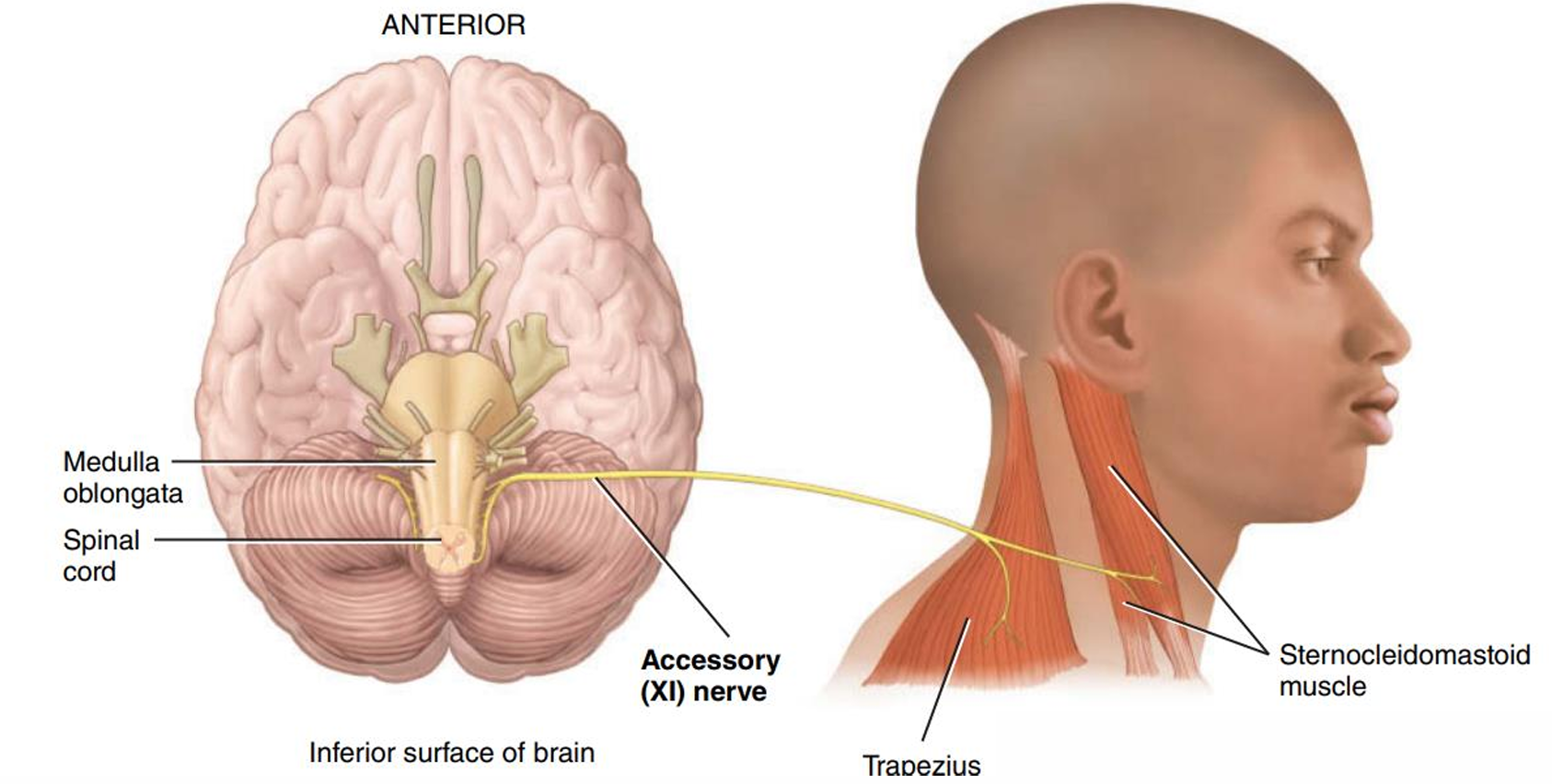
- XI. Accessory 副神经
- origin in upper cervical spinal cord and medulla
- corss foramen magnum and jugular foramen颈静脉孔
- Function
- Motor sternocleidomastoid and trapezius mm
- Motor sternocleidomastoid and trapezius mm
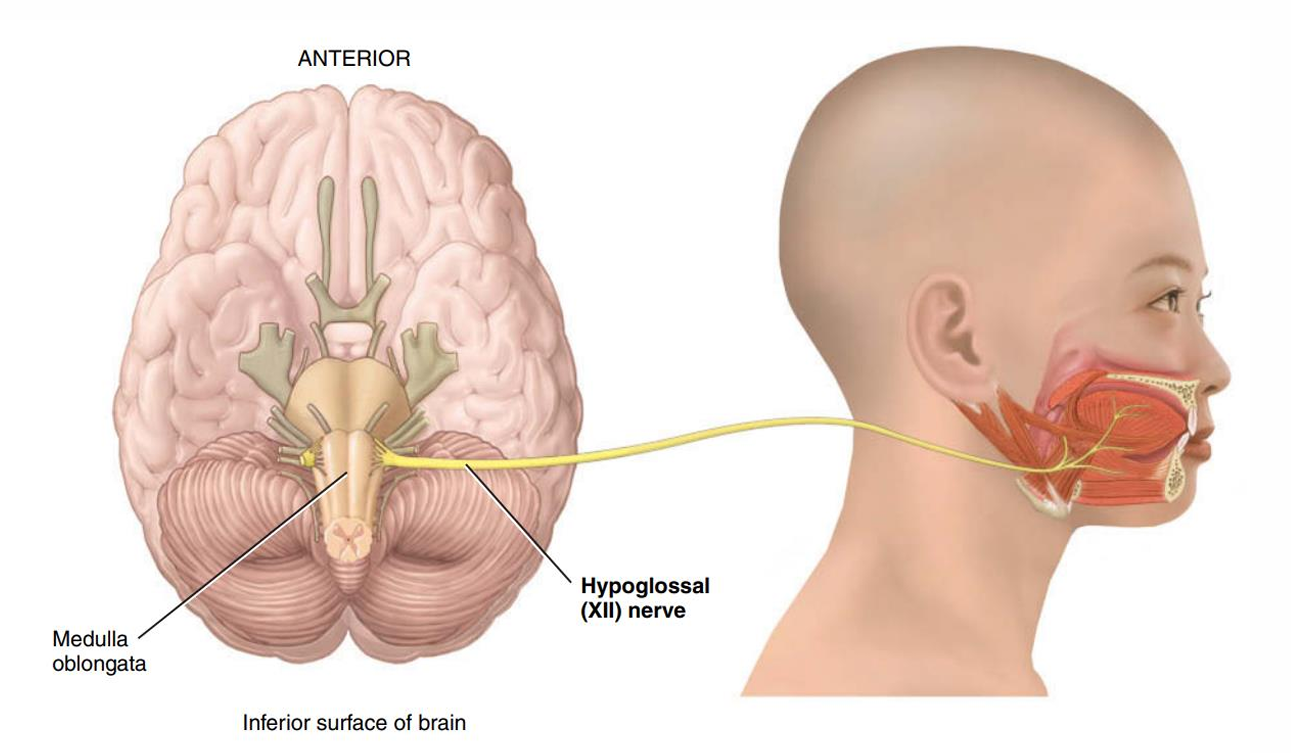
- XII. Hypoglossal 舌下神经
- Origin in medulla oblongata
- Function
- motor to muscles of the tongue
- e.g. genioglossus m.颏ke舌肌
- motor to muscles of the tongue
- I. Olfactory 嗅神经 (olfact- = to smell)
All articles in this blog are licensed under CC BY-NC-SA 4.0 unless stating additionally.