细胞生物学_DNA Replication, Repair, and Recombination
单词
DNA Replication Mechanisms
概念介绍
semiconservative 半保留复制
replication origins 复制起点
specified by DNA sequences several hundred bps in length, which contains
- Short sequences that attract initiator proteins 起始蛋白结合位点
- DNA sequences that are especially easy to open.包含A-T较多,方便打开
Prokaryotic Chromosome Has a Single Ori
原核细胞染色质只有一个复制起点
Eukaryotic Chromosome Contains Multiple Origins of Replication
Replication Fork
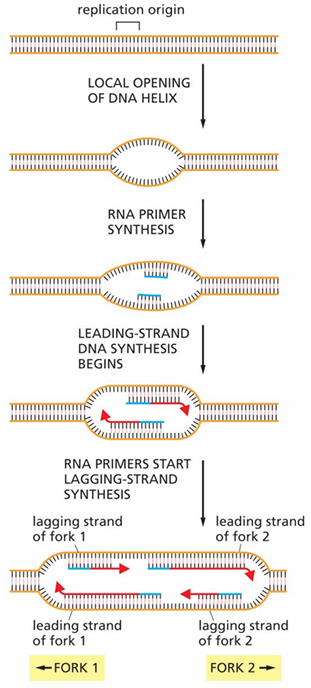
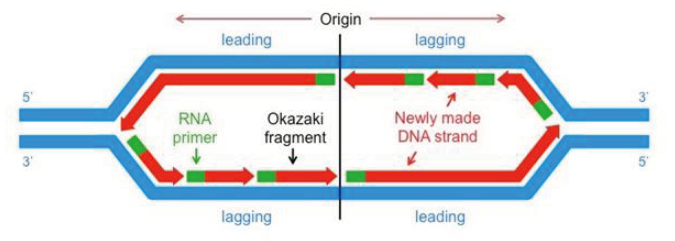
Replication fork (复制叉) grow bi-directionally from the origin.
The replication fork is a Y shaped structure that is formed in a replication bubble (复制泡).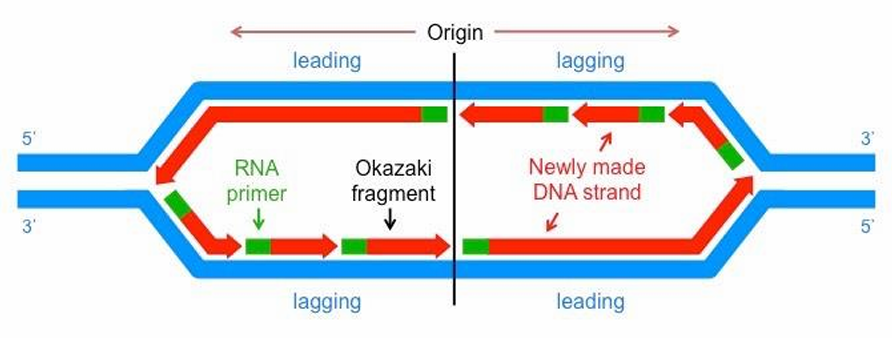
Semi-discontinuous Replication 半不连续复制
有一个leading strand 先导链
有一个lagging strand 后随链,上面带冈崎片段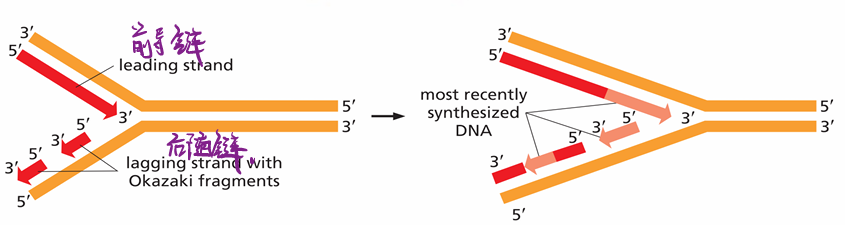
enzyme 酶
先看下总览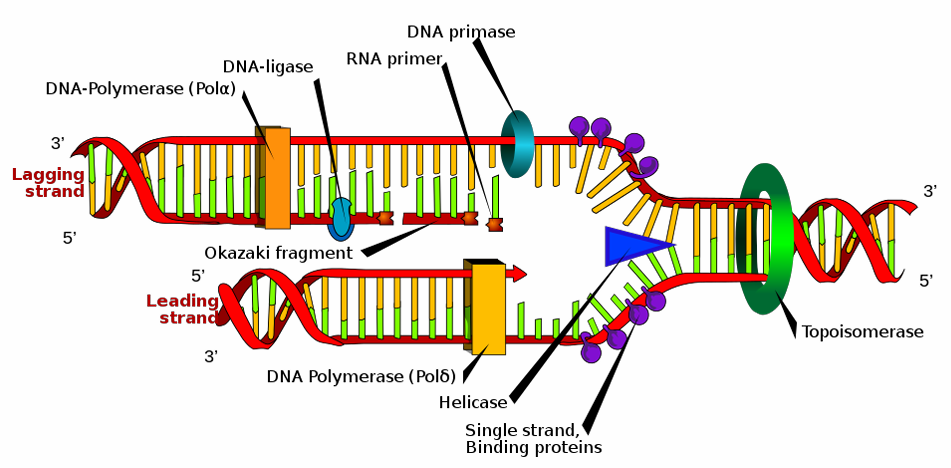
DNA helicase 解旋酶
The separation of a DNA double helix strands use the energy from ATP hydrolysis.
DNA polymerase DNA聚合酶
催化dNTP连接
从5’向3’延伸DNA链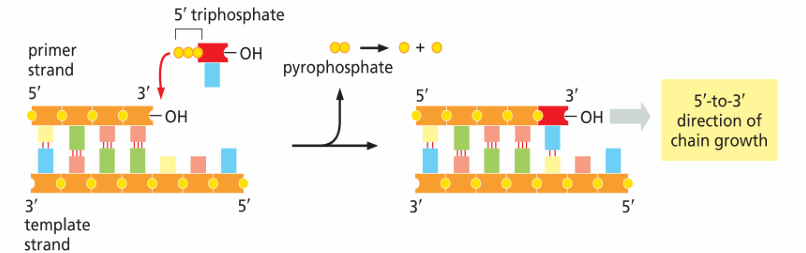
Dissociation of pyrophosphate relaxes the polymerase, allowing the active site of the polymerase ready to receive the next dNTP.
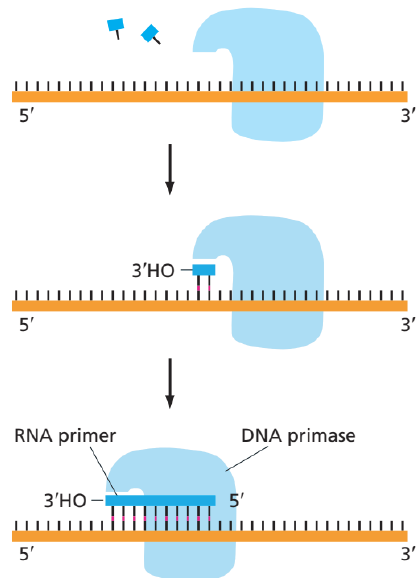
DNA primase DNA引物酶
uses NTPs to synthesize short RNA primers 短RNA引物
DNA ligase 连接酶
冈崎片段的RNA引物切掉之后,DNA连接酶连接DNA之间的空隙
Single-strand DNA-binding (SSB) proteins 单链DNA结合蛋白
这个估计不算酶
stabilizing the unwound, single-strand conformation
用处是防止单链的DNA自己折叠成双链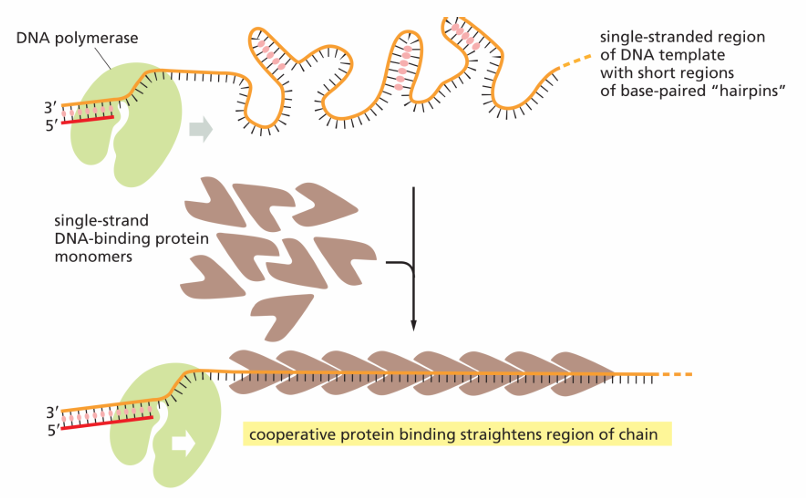
DNA topoisomerases 拓扑异构酶
Two parental strands unwind, the rest of the strands will have “winding problem”
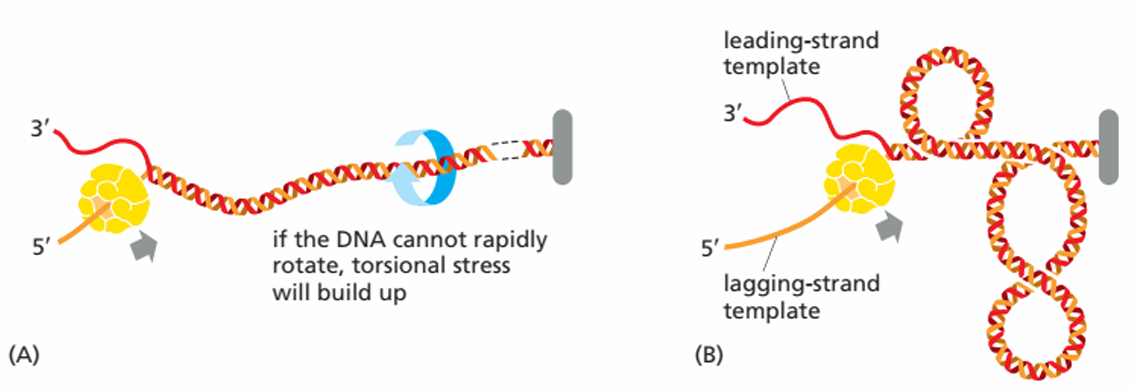
如图,如果DNA不能快速旋转,后面的链就给拧了,参考悠悠球绳
Topoisomerase I, produces a transient single-strand break, then reseal the break.
Topoisomerase II, produces a transient double-strand break in the helix, then reseal the breaks.
DNA Replication-Coupled Nucleosome Assembly 组蛋白组装
组蛋白遗传信息可以传给子代
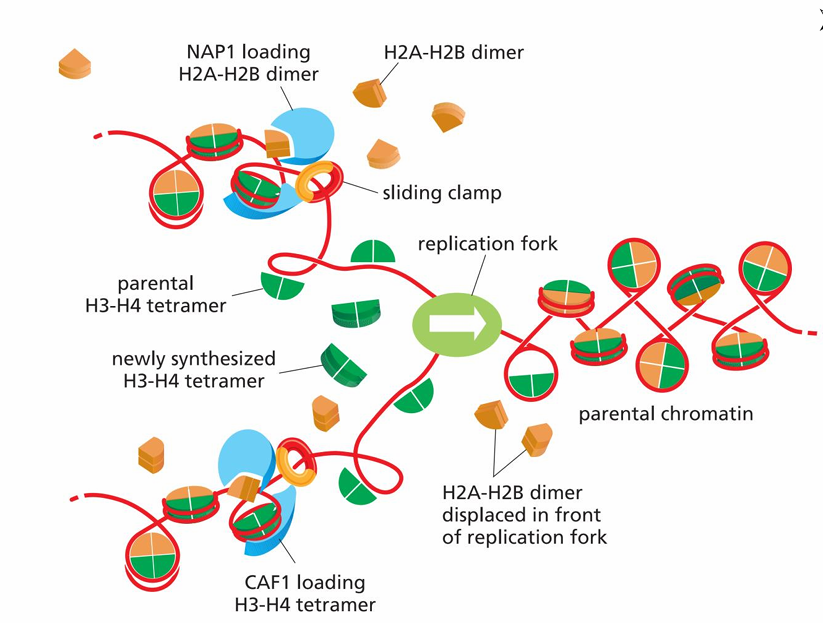
When parental chromosomal DNA unwind, nucleosome core particle broken into an H3-H4 tetramer四聚体 and two H2A-H2B dimers二聚体
New nucleosomes are assembled using both parental histones and newly synthesized histones.
Telomerase 端粒酶
DNA合成到头之后会有一个问题就是后随链的尾巴缺了一块没法合成
最后一段叫端粒
Telomeres contain many tandem repeats of a short sequence
端粒有许多串联的重复的短片段
TTAGGG在一个端粒重复1000多次
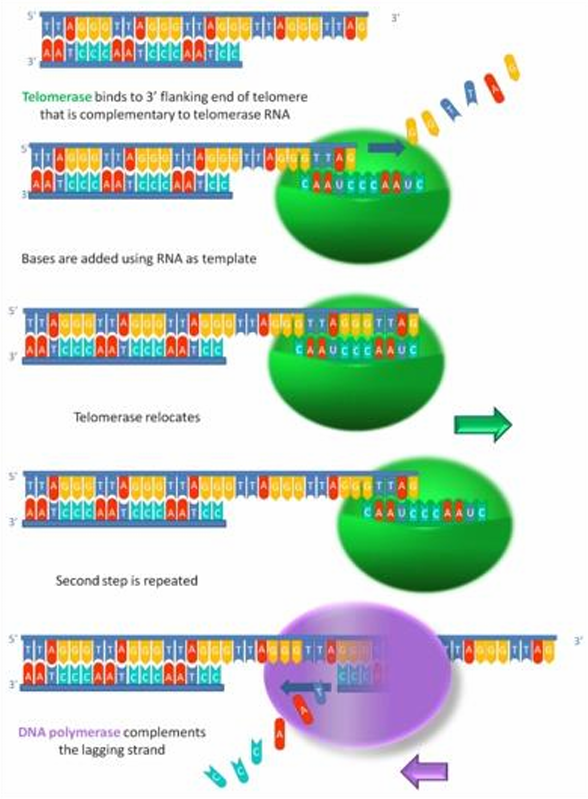
如图,端粒酶先通过自身RNA与DNA配对延长DNA,然后DNA聚合酶合成DNA补全
Telomerase(端粒酶) elongates the parent strand in the 5ʹ-to-3ʹ direction, using an RNA template (5‘NNCCCUAANN-3’) that is a component of the enzyme itself (RNA-templated DNA synthesis)
DNA polymerases use these extensions as a template to synthesize the complementary strand. (DNA-templated DNA synthesis)
DNA lesion & mutation
DNA lesion损伤 refers to a section of a DNA molecule containing a primary damaged site
指的是单个DNA分子受伤
Most DNA lesions are temporary because they are immediately corrected by DNA repair.
Without DNA repair, DNA lesions can be left as a permanent mutation.
DNA repair DNA修复
Excision Repair 切除修复
Base Excision Repair 碱基切除修复
Repair a specific base change
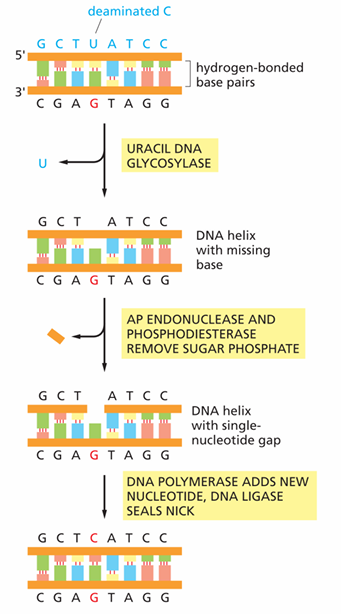
Step1: DNA glycosylase(DNA 糖苷酶) removes an deaminated cytosine in DNA.
切除胞嘧啶
Step 2: The sugar phosphate with the missing base is cut out AP endonuclease (脱嘌呤嘧啶内切核酸酶, AP for apurinic or apyrimidinic).
切除缺碱基的糖磷酸盐
Step 3: The gap of a single nucleotide is then filled by DNA polymerase and DNA ligase.
通过DNA聚合酶&DNA连接酶补上
Nucleotide Excision Repair核苷酸切除修复
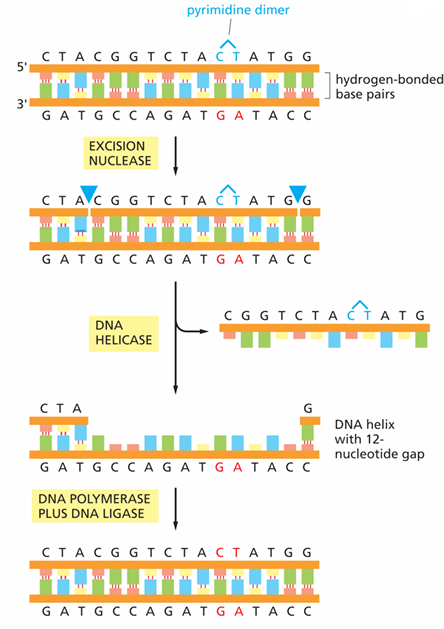
Step1: E.coli UvrABC scans the DNA helix, identify the distorted structure due to a pyrimidine dimer.
Step 2: cleaves the phosphodiester backbone of the abnormal strand on both sides of the dimer.
Step 3: removes the single-strand oligonucleotide containing the lesion. The large gap is then repaired by DNA polymerase and DNA ligase.
DSB修复 double strand break
Both strands of the double helix are broken, if left unrepaired, the breakdown of chromosomes into smaller fragments.
这种损伤也叫DSB
两种修复方式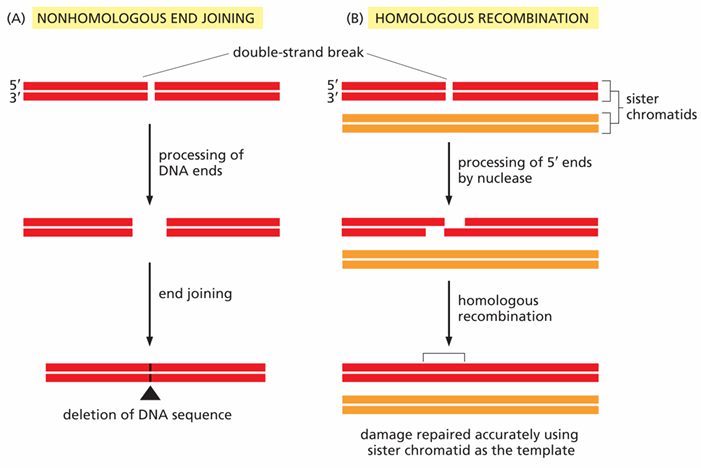
Homologous recombination 同源重组
HR often occurs just after DNA replication,when the two daughter DNA molecules lie close together.
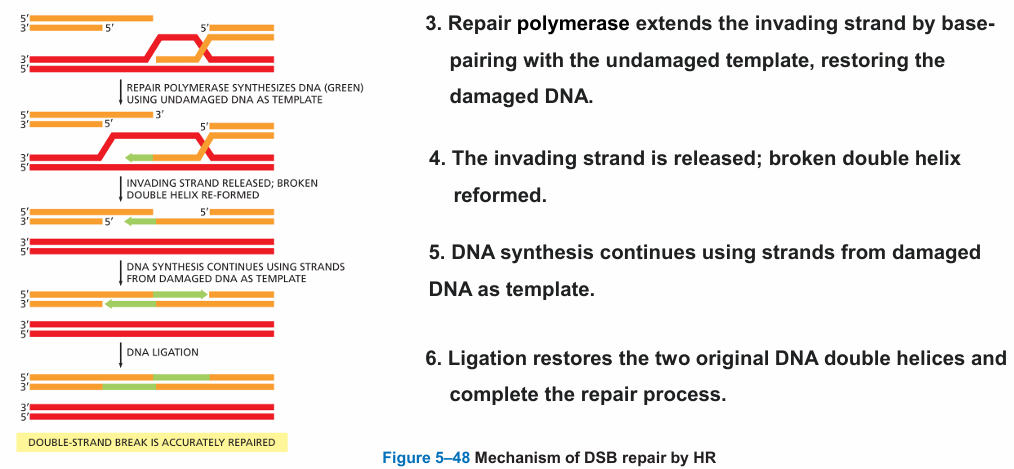
One of the damaged strands can use the complementary strand of the intact DNA duplex as a template for repair.
HR can repair double-strand break DSB, without any loss or alteration of nucleotides at the site of repair.
不想写了直接看图吧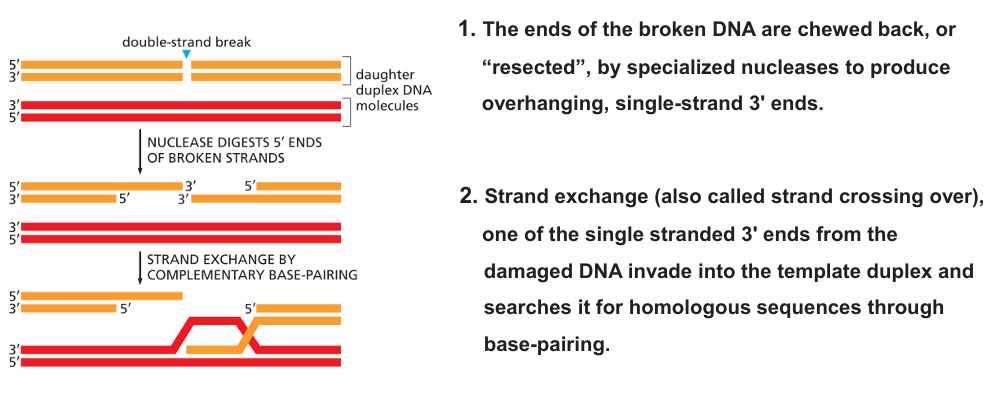
Nonhomologous end joining 非同源末端连接
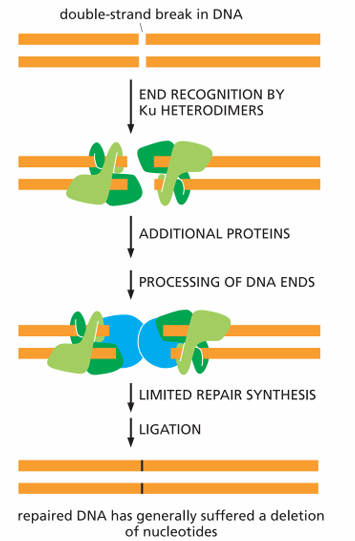
Ku protein recognizes the broken end of DSB. additional proteins are needed to hold the broken ends together while they are processed and eventually joined.
NHEJ occurs without a template and usually leaves a mutation at the site generally with the loss of nucleotides at the site of joining.