
生物化学_enzyme
131415.enzyme
- Kinetics and Specificity
- features
- catalytic power 催化能力
- Enzymes display enormous catalytic power, accelerating reaction rates as much as 10^6 over uncatalyzed levels
- enzymes accomplish these astounding feats in dilute缓冲 aqueous solutions under mild conditions of temperature and pH
- The relative catalytic power of an enzyme is defined as the ratio of the catalyzed rate to the uncatalyzed rate of reaction
- specificity 特异性
- A given enzyme is very specific, both in the substrates 底物 , reaction and products that it catalyzes
- Its specificity comes from the intimate interaction between an enzyme and its substrates occurs through molecular recognition based on structural complementarity.
酶的特异性源于其与底物间的紧密相互作用,这种相互作用是通过基于结构互补性的分子识别实现的 - The specific site on the enzyme where substrate binds and catalysis occurs is called the active site
- regulation 可调节性
- Regulation of enzyme activity is achieved in a variety of ways
- 比如 controls overthe amount of enzyme protein produced by the cell
对细胞产生的酶蛋白量的调控 - 比如 more rapid, reversible interactions of the enzyme with metabolic inhibitors and activators.
酶与代谢抑制剂、激活剂之间更快速的可逆性相互作用
- catalytic power 催化能力
- Nomenclature
- Provides a Systematic Way of Naming Metabolic Reactions
- Kinase
- is a term for enzymes that are ATP-dependent phosphotransferases
- Phosphatase
- for enzymes hydrolyzing phosphoryl groups from organic phosphate compounds
- Provides a Systematic Way of Naming Metabolic Reactions
- Coenzymes and Cofactors
- Coenzymes and Cofactors Are Nonprotein Components Essential to Enzyme Activity
- Many enzyme require nonprotein components,called cofactors辅助因子
- Cofactors may be
- metal ions
- organic molecules referred to as coenzymes辅酶
- Many coenzymes are vitamins or contain vitamins as part of their structure
许多辅酶本身是维生素,或在其结构中包含维生素 - In most cases, a coenzyme is firmly associated with its enzyme, perhaps even by covalent bonds, tightly bound coenzymes are referred to as prosthetic groups 辅基 of the enzyme
- The catalytically active complex of protein and prosthetic group is called the holoenzyme 全酶
蛋白质与辅基共同构成的催化活性复合物,称为全酶 - The protein without the prosthetic group is called the apoenzyme 脱辅基酶蛋白 it is catalytically inactive
失去辅基的蛋白质部分则称为脱辅基酶蛋白,它不具备催化活性
- 化学动力学基础
- 反应可以通过两个方法加速
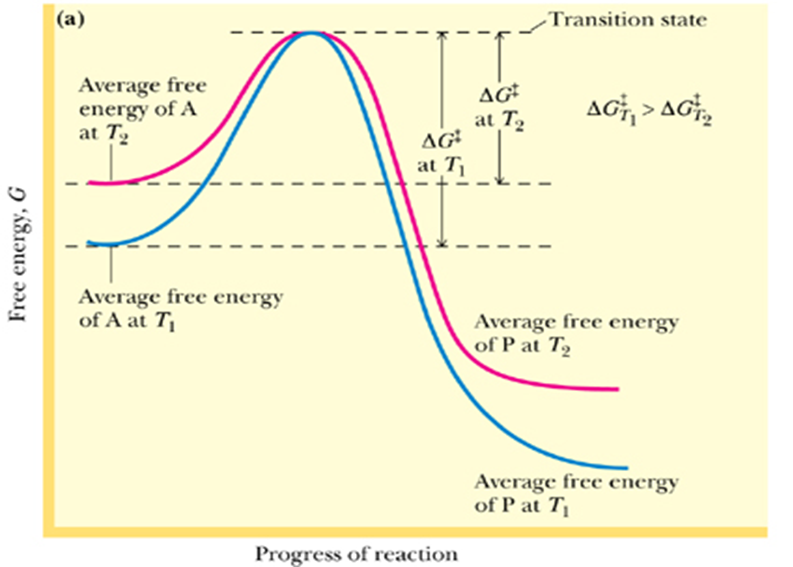
- the temperature can be raised
- The rates of many chemical reactions are doubled by a 10°C rise in temperature
- The rates of many chemical reactions are doubled by a 10°C rise in temperature
- accelerated by catalysts
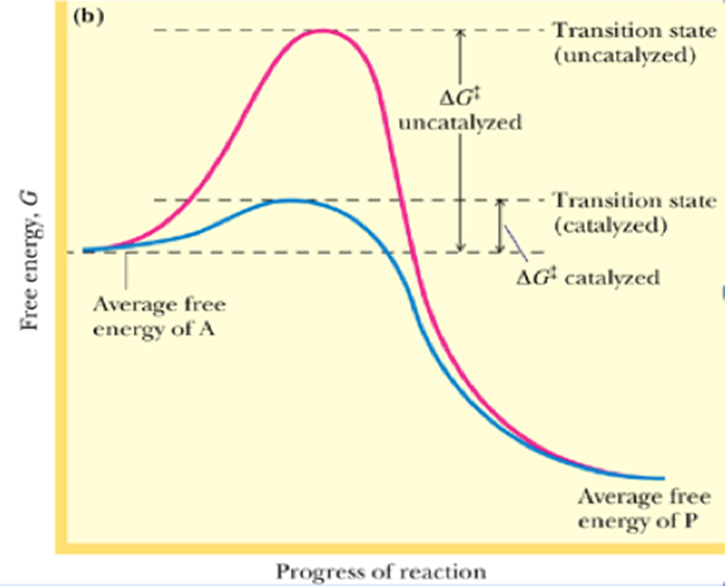
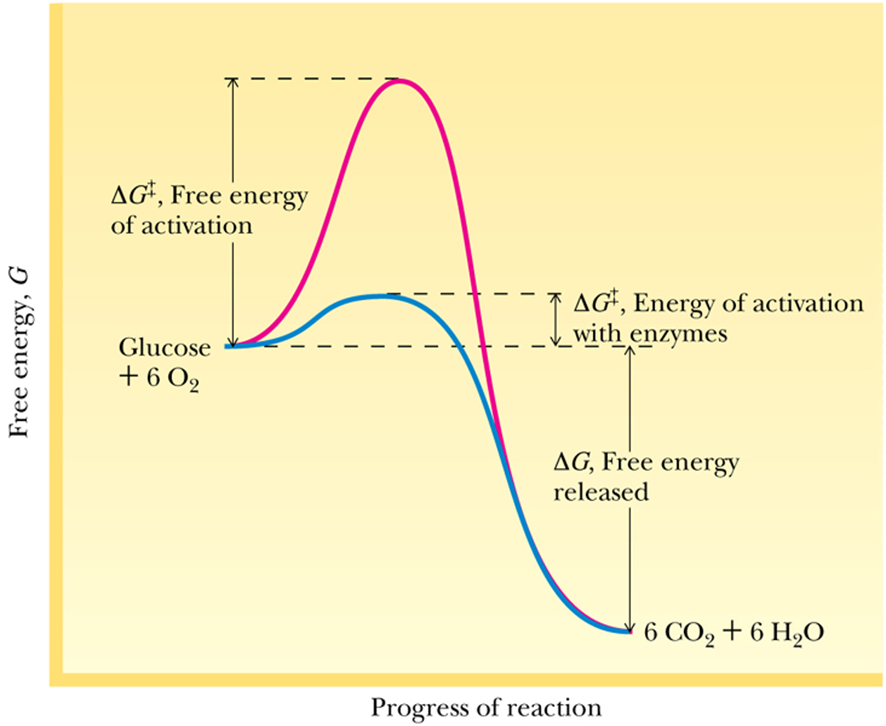
- 降低活化能 lower the free energy of activation ∆G‡ for the reaction
- 降低活化能 lower the free energy of activation ∆G‡ for the reaction
- the temperature can be raised
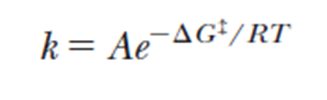
- Arrhenius equation
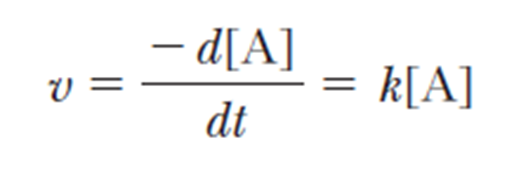
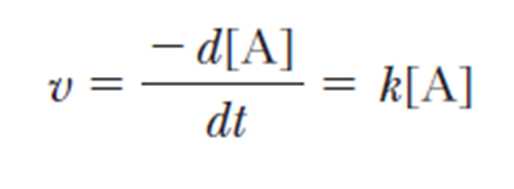
- relationship between activation energy and the rate constant of the reaction k
- k is inversely proportional to e^∆G‡/RT
- if the energy of activation decreases, the reaction rate increases
- relationship between activation energy and the rate constant of the reaction k
- 反应可以通过两个方法加速
- 酶的化学动力学
- The Michaelis–Menten Equation 米氏方程
- 基础
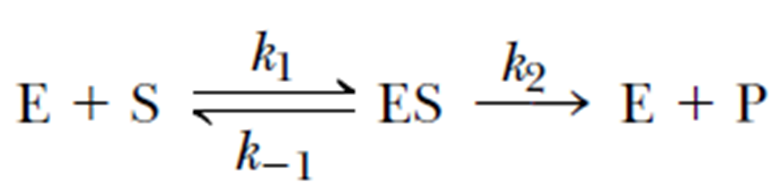
- 酶是E, 底物是S, 酶和底物先结合变成ES, 然后生成产物P
- 前提
- The reaction involves only one substrate, or if the reaction is multisubstrate, the concentration of only one substrate is varied while the concentration of all other substrates is held constant.
只有一种底物
- The reaction involves only one substrate, or if the reaction is multisubstrate, the concentration of only one substrate is varied while the concentration of all other substrates is held constant.
- The reaction ES→E+P is irreversible, or the experiment is limited to observing only initial velocities where [P]=0.
底物生成产品的反应不可逆
- The reaction ES→E+P is irreversible, or the experiment is limited to observing only initial velocities where [P]=0.
- [S0]›[Etotal] and [Etotal] is held constant.
底物初始数量大于酶总量并且酶总量不变
- [S0]›[Etotal] and [Etotal] is held constant.
- All other variables that might influence the rate of the reaction (temperature, pH,ionic strength, and so on) are constant.
反应条件不变
- All other variables that might influence the rate of the reaction (temperature, pH,ionic strength, and so on) are constant.
- 酶是E, 底物是S, 酶和底物先结合变成ES, 然后生成产物P
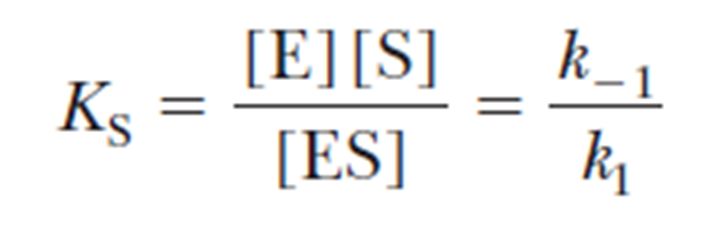
- Ks
- 定义为 enzyme / substrate dissociation constant 酶 / 底物解离常数
- 定义为 enzyme / substrate dissociation constant 酶 / 底物解离常数
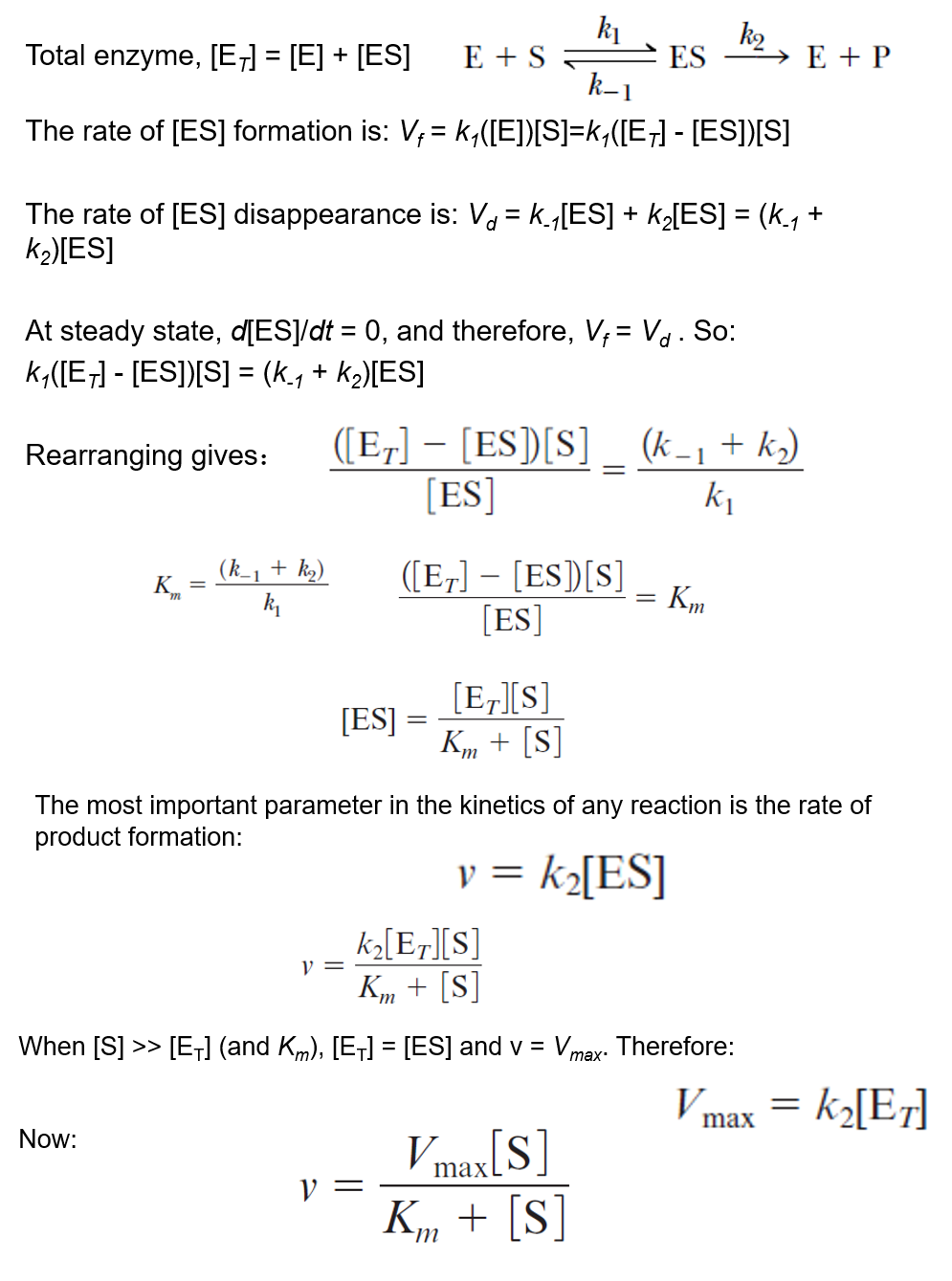
- Michaelis – Menten equation推导
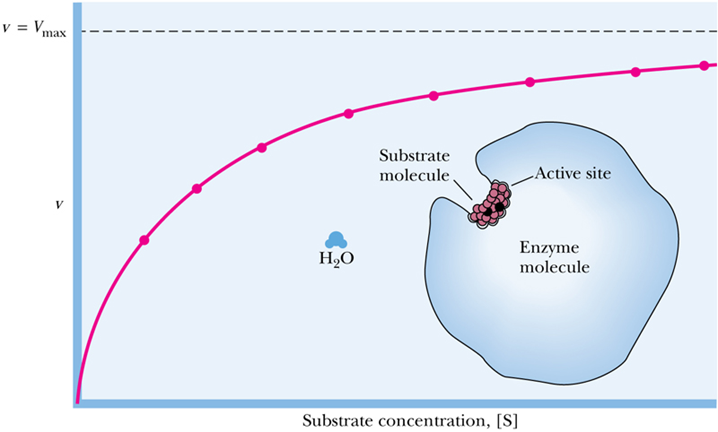
影响v的因素- 图
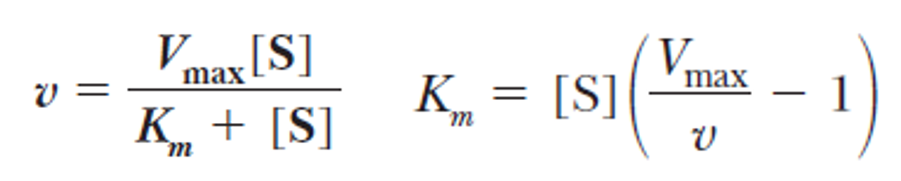
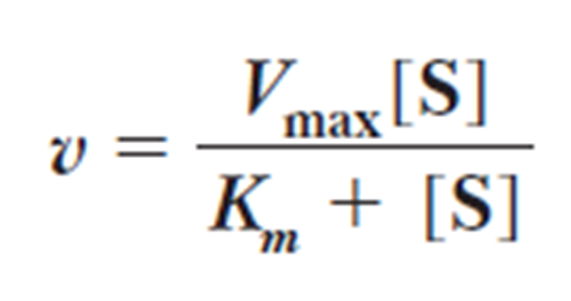
- v, at any moment is determined by two constants, Km and Vmax, and the concentration of substrate at that moment
- 图
- Km
- The Michaelis Constant
- Defined as (k-1+k2)/k1
- at v=Vmax/2, Km=[S]
- Km is defined by the substrate concentration that gives a velocity equal to 1/2 the maximal velocity
- has the units of molarity
- Km 与酶对底物的亲和力呈反比关系, Km 值越小,说明酶与底物的结合能力越强,只需较低浓度的底物就能让酶达到一半的最大催化速率
- 图像
- a rectangular hyperbola 直角双曲线
- 反映了v与[S]关系
- a rectangular hyperbola 直角双曲线
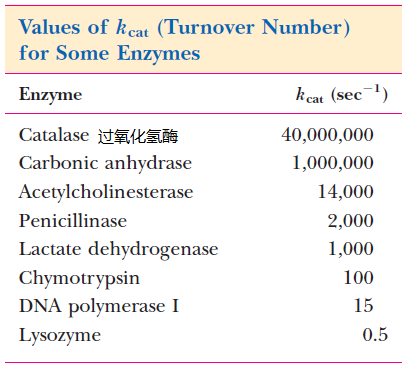
- kcat
- The turnover number of an enzyme
酶的转换数 - a measure of an enzyme maximal catalytic activity
酶最大催化效率的参数 - defined as the number of substrate molecules converted into product per enzyme molecule per unit time when the enzyme is saturated with substrate
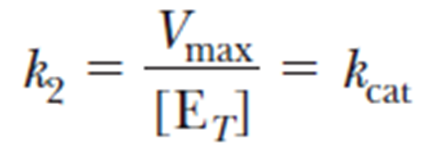
定义为当酶被底物完全饱和(所有酶分子都结合底物形成 ES 复合物)时,每单位时间内,单个酶分子能将底物转化为产物的分子数
- 常见的Kcat
- The turnover number of an enzyme
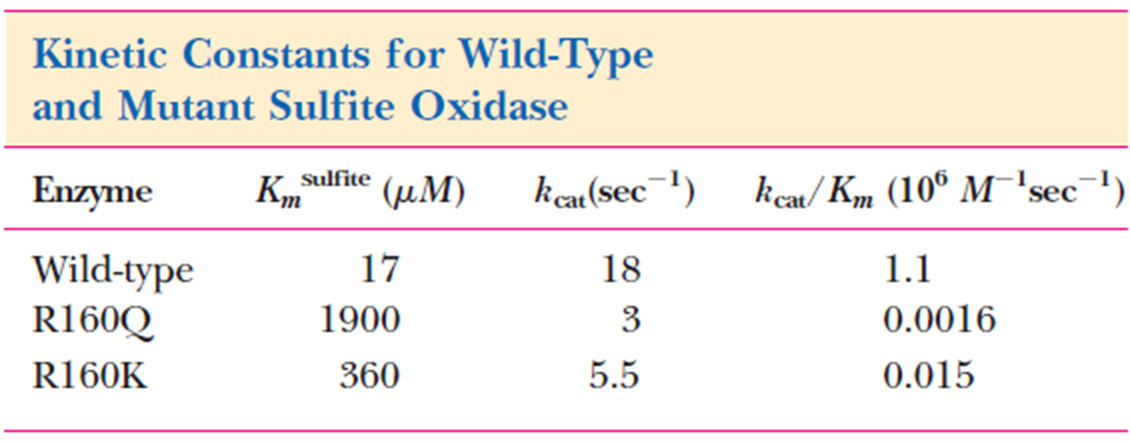
- kcat / Km
- provides an index of the catalytic efficiency of an enzyme operating at substrate concentrations substantially below saturation amounts
为酶在底物浓度远低于饱和量时的催化效率,提供了一个衡量指标 - 常见数值
- provides an index of the catalytic efficiency of an enzyme operating at substrate concentrations substantially below saturation amounts
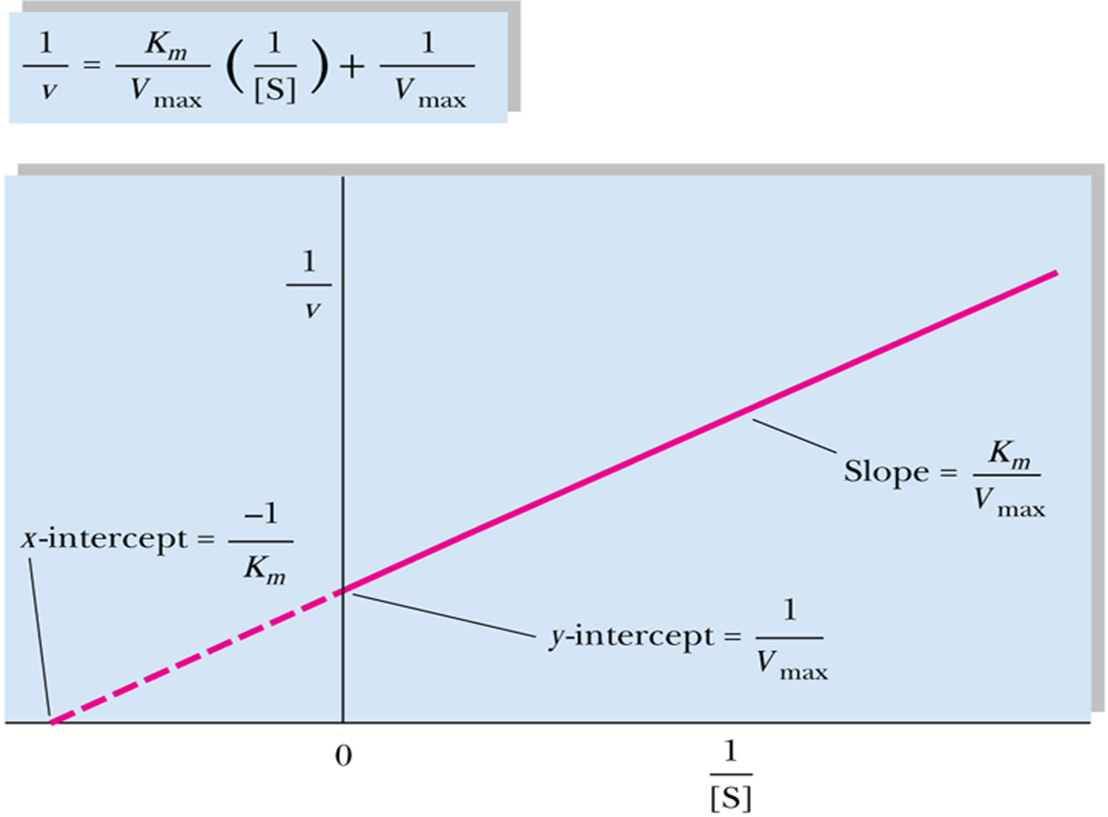
- Lineweaver–Burk double-reciprocal plot 双倒数图
- 符合Michaelis–Menten equation的双倒数是一个直线
- If the kinetics of the reaction disobey the Michaelis–Menten equation, the violation is revealed by a departure from linearity in these straight-line graphs.
若反应动力学不符合米氏方程,这种偏离会通过这些直线图中非线性的特征表现出来 - Such deviations from linearity are characteristic of the kinetics of regulatory enzymes known as allosteric enzymes 变构酶.
这种线性偏离,是一类被称为变构酶的调节酶所具有的动力学特征 - Such regulatory enzymes are very important in the overall control of metabolic pathways
- 符合Michaelis–Menten equation的双倒数是一个直线
- 基础
- pH & 温度的影响
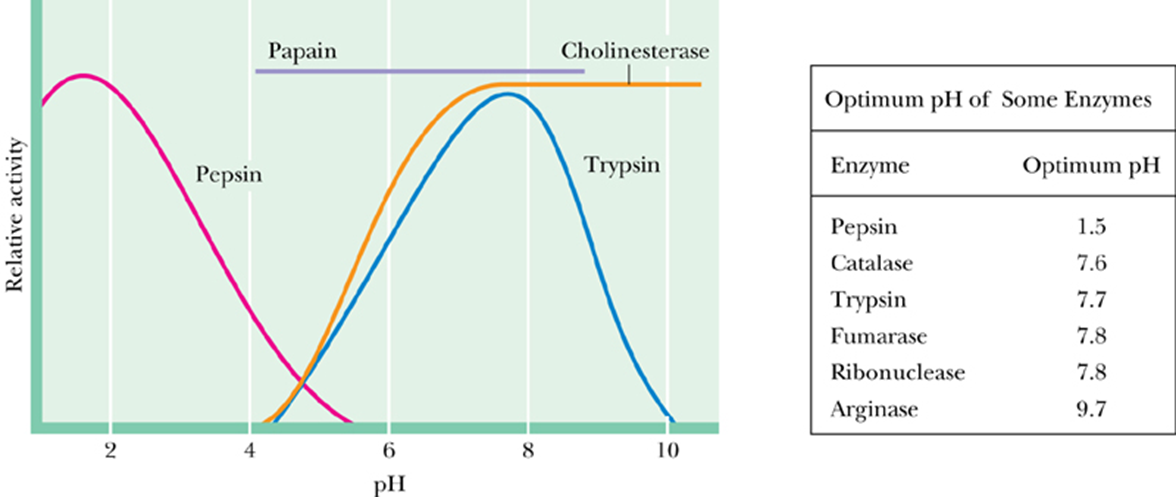
- pH
- have a particular pH at which their catalytic activity is optimal
- have a particular pH at which their catalytic activity is optimal
- 温度
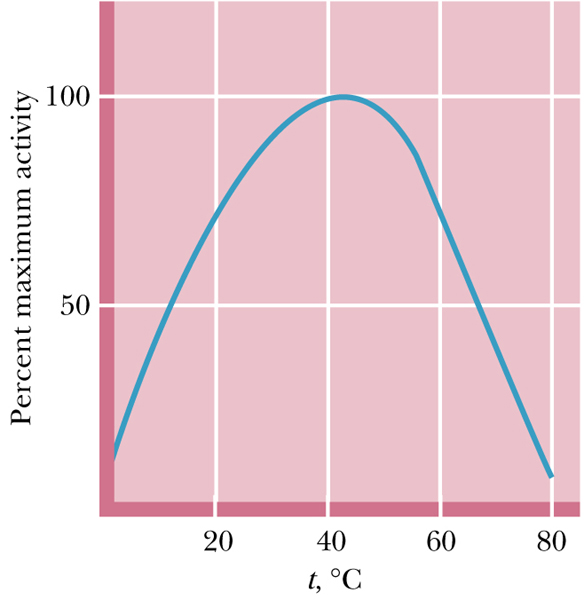
- (a)the characteristic increase in reaction rate with temperature .
- Most enzymatic reactions double in rate for every 10°C rise in temperature as long as the enzyme is stable and fully active.
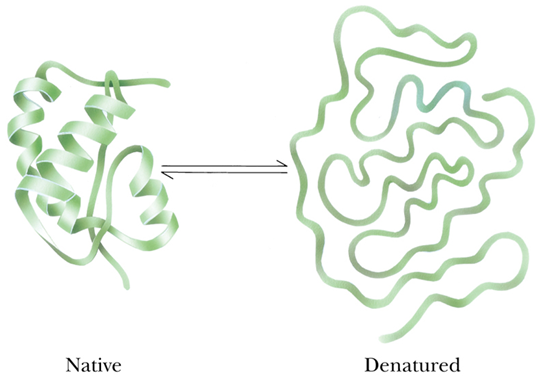
- (b) thermal denaturation of protein structure at higher temperatures
- 基本都符合先上升后下降
- (a)the characteristic increase in reaction rate with temperature .
- pH
- The Michaelis–Menten Equation 米氏方程
- Enzyme Inhibition
- Reversible Inhibition
noncovalent association-dissociation- competitive
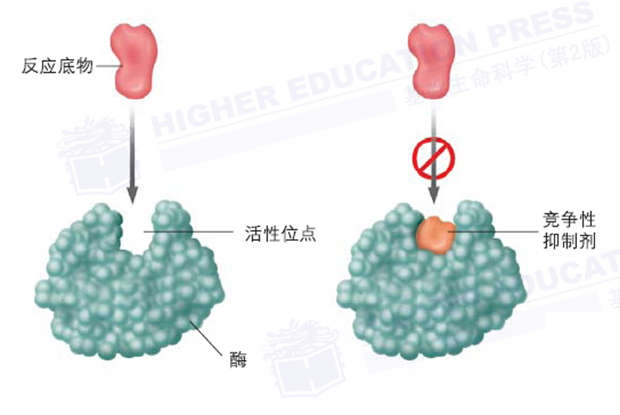
竞争性抑制- Inhibitor combines only with E
- substrate and inhibitor compete for the same binding site on the enzyme, the so-called active site or S-binding site
- high [S] can overcome the effects of Inhibitor
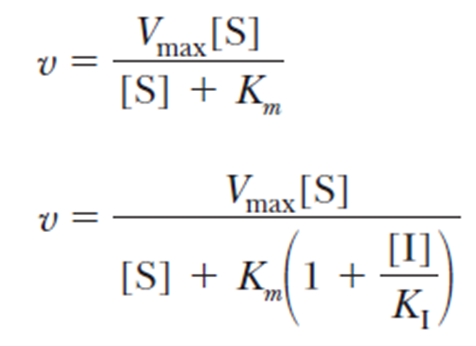
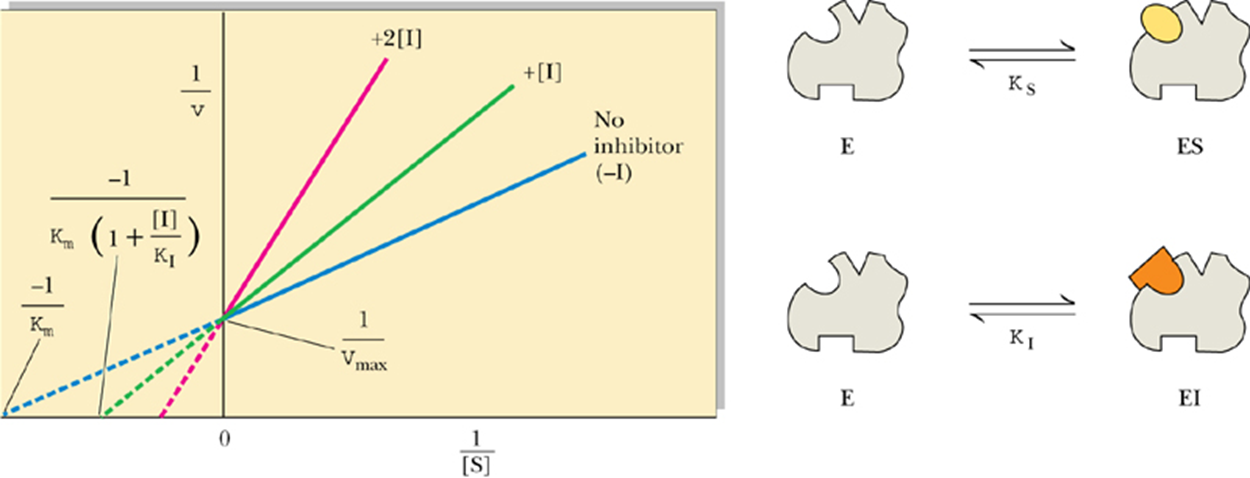
- The Km term in the denominator 分母 in the inhibited case is increased, Vmax is the same whether I is present or not
- S and I must share a high degree of structural similarity because they bind at the same site on the enzyme
- Inhibitor combines only with E
- noncompetitive
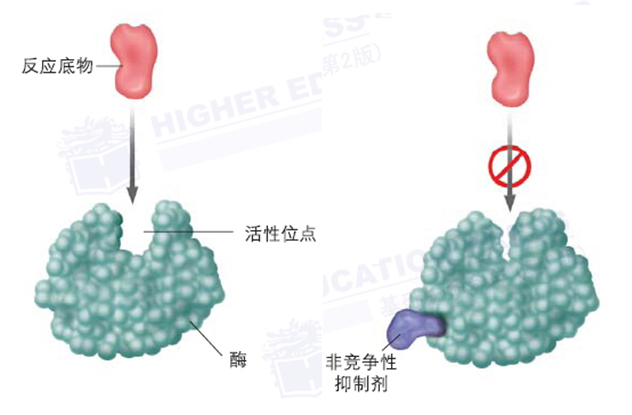
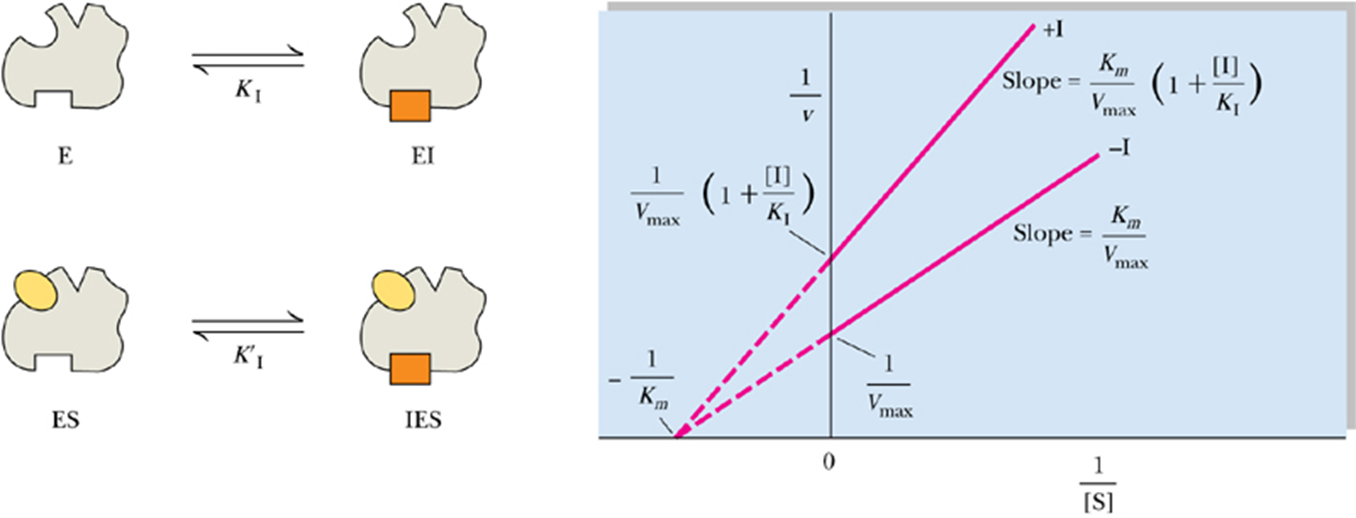
非竞争性抑制- Inhibitor combines with E and ES
- cannot be overcome by increasing [S]
- Pure Noncompetitive Inhibition
- 不结合在S-binding site, 不影响S与E的结合, Km is unchanged by Inhibitor
- Vmax decreases, as if I lowered [E]
- This situation is relatively uncommon
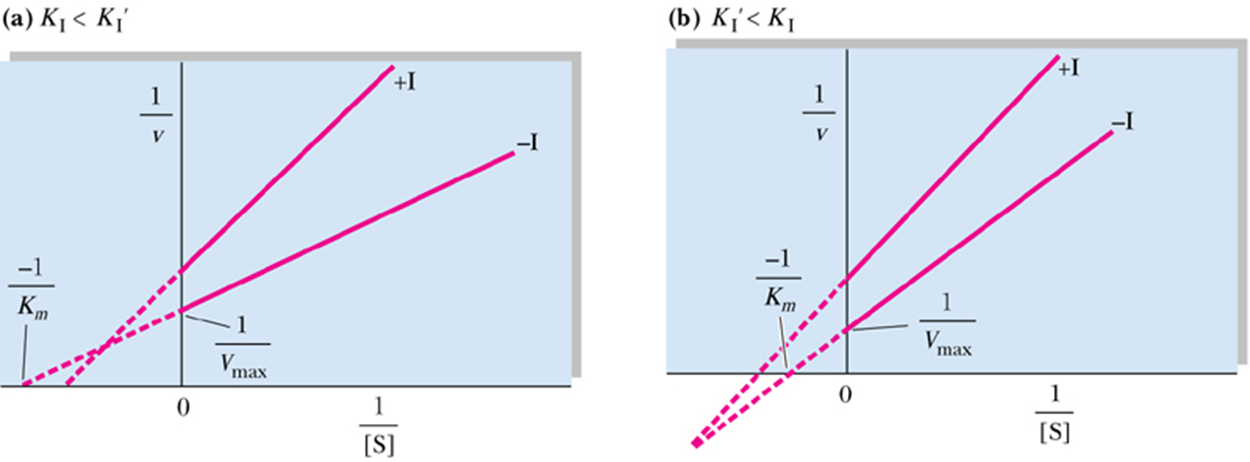
- Mixed Noncompetitive Inhibition
- This inhibitory pattern is commonly encountered
- Both Km and Vmax are altered by the presence of I, and Km/Vmax is not constant
- the binding sites for I and S are near one another or conformational changes in E caused by I affect S binding
- Inhibitor combines with E and ES
- uncompetitive
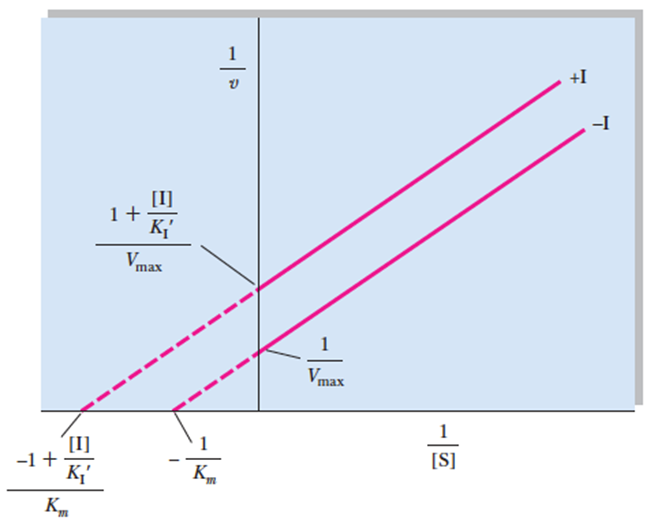
反竞争性抑制- Inhibitor combines only with ES
- Both Km and Vmax are altered by the presence of I, but Km/Vmax is constant
- 总结
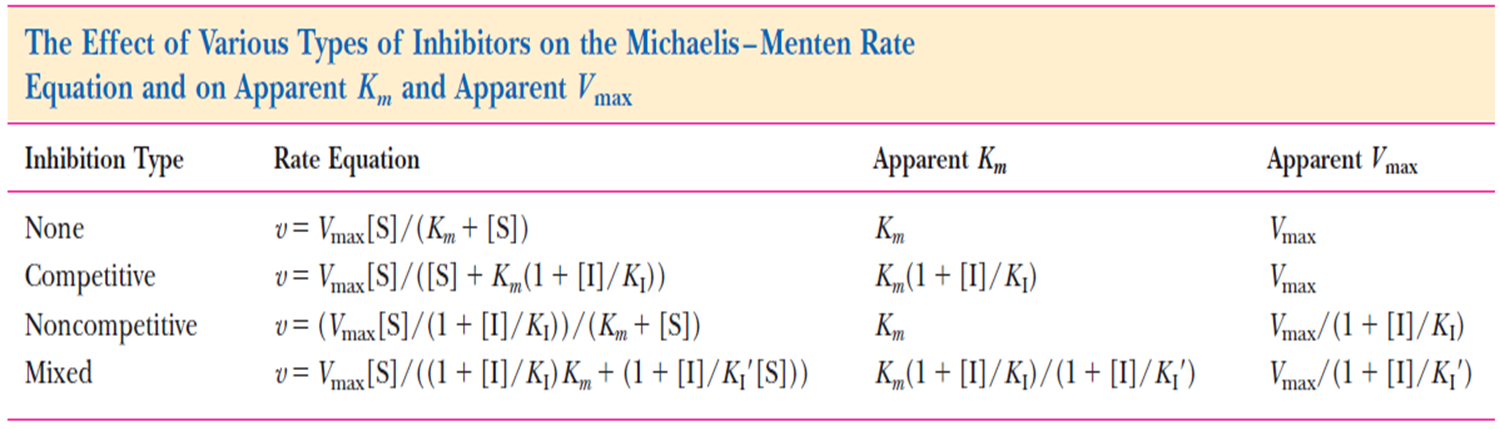
- Competitive inhibition: Km ↑, Vmax no change
- Pure Noncompetitive inhibition: Km no change, Vmax ↓
- Mixed Noncompetitive inhibition: Km ↑, Vmax ↓
- Uncompetitive Inhibition: Km↓,Vmax ↓. Km/Vmax is constant
- 图
- competitive
- Irreversible Inhibition
covalent alterations- usually cause stable, covalent alterations in the enzyme
- the consequence of irreversible inhibition is a decrease in the concentration of active enzyme
- 特征
- there is a time-dependent decrease in enzymatic activity as E+I→EI proceeds, and the rate of this inactivation can be followed
并不是一瞬间就结合完成
- there is a time-dependent decrease in enzymatic activity as E+I→EI proceeds, and the rate of this inactivation can be followed
- Also, unlike reversible inhibitions, dilution or dialysis of the enzyme - inhibitor solution does not dissociate the EI complex and restore enzyme activity
- 应用 - penicillin 青霉素
- covalently reacting with an essential serine residue in the active site of glycoprotein peptidase, an enzyme that acts to cross-link the peptidoglycan chains during synthesis of bacterial cell walls
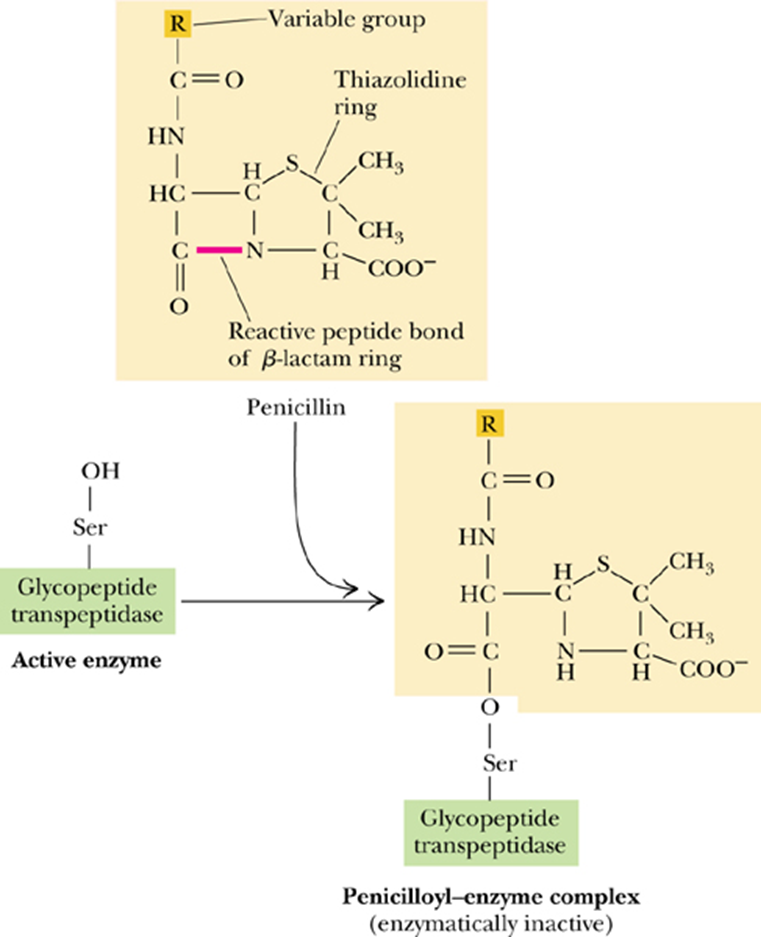
与糖蛋白肽酶活性中心的一个必需丝氨酸残基发生共价反应, 该酶在细菌细胞壁合成过程中负责催化肽聚糖链的交联反应
- Once cell wall synthesis is blocked, the bacterial cells are very susceptible torupture by osmotic lysis, and bacterial growth is halted
一旦细胞壁合成受阻,细菌细胞就极易因渗透裂解而破裂,细菌的生长也会随之停止
- covalently reacting with an essential serine residue in the active site of glycoprotein peptidase, an enzyme that acts to cross-link the peptidoglycan chains during synthesis of bacterial cell walls
- Reversible Inhibition
- specific
- 基础
- Some enzymes show absolute specificity, catalyzing the transformation of only one specific substrate to yield a unique product.
- Other enzymes carry out a particular reaction but act on a class of compounds
- An enzyme molecule is typically orders of magnitude数量级 larger than its substrate.
酶分子的体积通常比其底物大几个数量级 - Its active site comprises only a small portion of the overall enzyme structure.
活性中心仅占酶整体结构的很小一部分 - The active site is part of the conformation of the enzyme molecule arranged to create a special pocket or cleft 裂口 whose three-dimensional structure is complementary to the structure of the substrate.
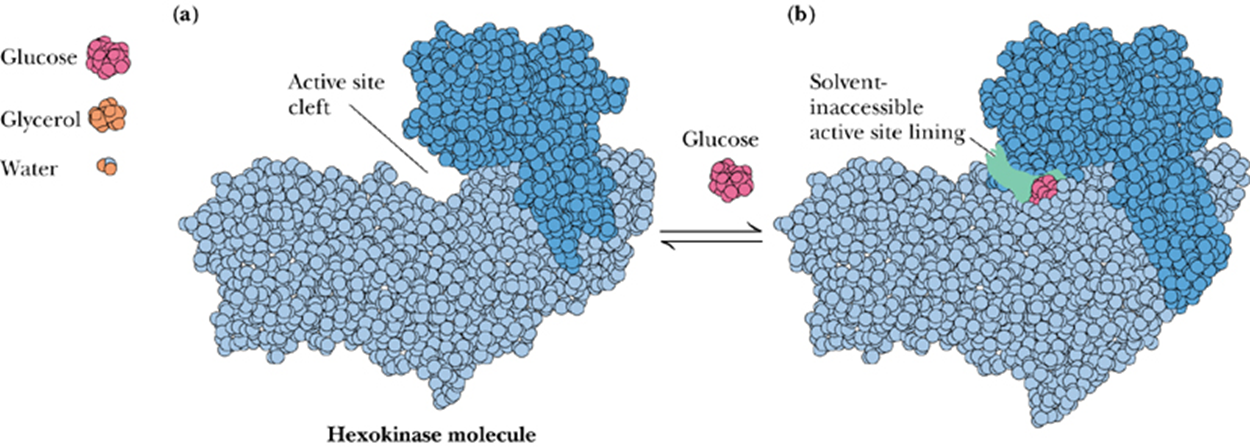
它是酶分子构象的组成部分,形成一个特殊的凹陷或裂口,其三维结构与底物的结构具有互补性
- The enzyme and the substrate molecules “recognize” each other through this structural complementarity.
酶与底物分子通过这种结构互补性实现 “识别” - The substrate binds to the enzyme through relatively weak forces—H bonds, ionic interaction (salt bridges), and van der Waals interactions between sterically 空间 complementary clusters of atoms.
底物与酶的结合依靠相对较弱的作用力 —— 即空间互补的原子团之间形成的氢键、离子键(盐桥)以及范德华力
- Lock and Key Hypothesis
- Induced Fit Hypothesis 诱导契合
more accurate- binding of a substrate (S) by an enzyme is an interactive process
酶与底物(S)的结合是一个相互作用的过程 - the shape of the enzyme’s active site is actually modified upon binding S, in a process of dynamic recognition between enzyme and substrate called induced fit
酶的活性中心在结合底物后,其构象会发生实际改变, 这一酶与底物之间的动态识别过程被称为 “诱导契合” - the substrate also changes as it adapts to the conformation of the enzyme
底物在适应酶构象的同时,自身构象也会发生变化 - the enzyme causes the substrate to adopt a form that mimics the transition-state intermediate of the reaction
酶会促使底物形成一种模拟反应过渡态中间体的构象
- binding of a substrate (S) by an enzyme is an interactive process
- Specificity and Reactivity
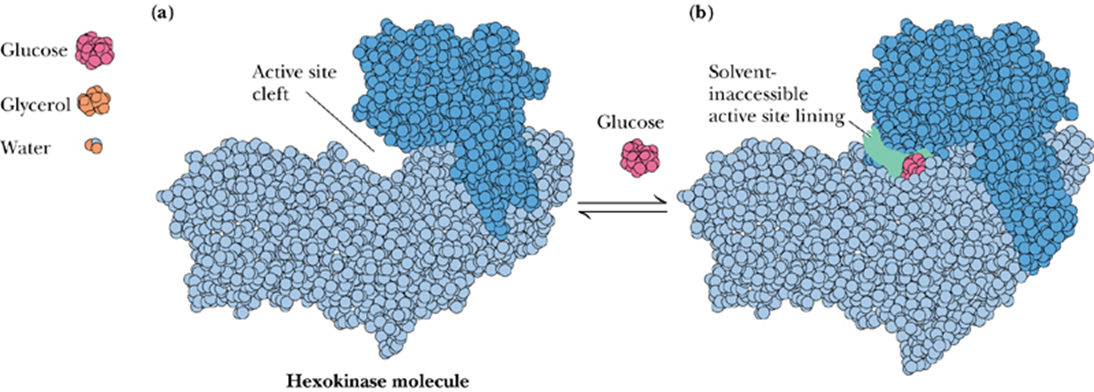
- Consider, for example, why hexokinase己糖激酶catalyzes the ATP-dependent phosphorylation of hexoses but not smaller phosphoryl-group acceptors such as glycerol, ethanol, or even water. Surely these smaller compounds are not sterically 空间上 forbidden from approaching the active site of hexokinase. Indeed, water should penetrate the active site easily and serve as a highly effective phosphoryl-group acceptor. Accordingly, hexokinase should display high ATPase activity. It does not. Only the binding of hexoses induces hexokinase to assume its fully active conformation. The hexose-binding site of hexokinase is located between two protein domains. Binding of glucose in the active site induces a conformational change in hexokinase that causes the two domains to close upon one another, creating the catalytic site.
- 以己糖激酶为例,我们来思考一个问题:为什么它能催化己糖的 ATP 依赖性磷酸化反应,却不能催化甘油、乙醇甚至水等更小的磷酸基团受体?显然,这些小分子化合物在空间上并非无法接近己糖激酶的活性中心. 事实上,水分子本应能轻易进入活性中心,并成为高效的磷酸基团受体. 照此推测,己糖激酶理应表现出很高的 ATP 酶活性,但实际情况并非如此. 只有当己糖与己糖激酶结合时,才能诱导其形成完全的活性构象. 己糖激酶的己糖结合位点位于两个蛋白质结构域之间,葡萄糖在活性中心的结合会引发己糖激酶的构象变化,使这两个结构域相互闭合,进而形成催化位点
- 图
- 基础
- 非蛋白的酶
- catalytic RNAs / ribozymes
- Most ribozymes act in RNA processing, cutting the phosphodiester backbone at specific sites and religating needed segments to form functional RNA strands while discarding extraneou spieces
大多数核酶参与 RNA 的加工过程, 在特定位点切割磷酸二酯键主链,然后将所需片段重新连接以形成功能性 RNA 链,同时丢弃多余的片段 - The Ribosome核糖体 Is a Ribozyme
- peptidyl transferase reaction can be catalyzed by the 23S rRNA of 50S ribosomal subunits from which virtually all of the protein has been removed
- Difference between protein enzymes and RNA enzymes
- RNA enzymes often do not fulfill the criterion 标准 of catalysis in vivo because they act only once in intramolecular events such as self-splicing
RNA 酶(核酶)往往不满足体内催化的标准,因为它们在分子内反应(如自剪接)中仅发挥一次作用 - the catalytic rates achieved by RNA enzymes in vivo and in vitro are significantly enhanced by the participation of protein subunits
无论在体内还是体外,RNA 酶的催化速率都需要蛋白质亚基的参与才能显著提高 - the fact that RNA can catalyze certain reactions is experimental support for the idea that a primordial 原始world dominated by RNA molecules existed before the evolution of DNA and proteins
RNA 能够催化特定反应这一事实,为 “在 DNA 和蛋白质进化出现之前,存在一个由 RNA 分子主导的原始世界” 这一观点提供了实验依据
- RNA enzymes often do not fulfill the criterion 标准 of catalysis in vivo because they act only once in intramolecular events such as self-splicing
- Most ribozymes act in RNA processing, cutting the phosphodiester backbone at specific sites and religating needed segments to form functional RNA strands while discarding extraneou spieces
- abzymess
- Antibodies that have catalytic activity are called abzymes
- hemophilia血友病 A is a bloodclotting disorder due to lack of the factor VIII, an essential protein for formation of a blood clot. Serum from some sufferers of hemophilia A contained antibodies with proteolytic activity against factor VIII. Thus, some antibodies may be proteases
- A型血友病是一种凝血功能障碍性疾病,其病因是缺乏凝血因子 Ⅷ—— 一种凝血过程必需的蛋白质. 部分A型血友病患者的血清中,存在对凝血因子 Ⅷ 具有蛋白水解活性的抗体. 因此,有些抗体可能具备蛋白酶的功能
- catalytic RNAs / ribozymes
- features
- regulation
- The Availability of Substrates and Cofactors Usually Determines How Fast the Reaction Goes
- 可以理解为底物浓度
- In general, enzymes have evolved such that their Km values approximate 接近 the prevailing 最普通的 in vivo concentration of their substrates
- As Product Accumulates, the Apparent Rate of the Enzymatic Reaction Will Decrease
- ① Enzymes have no influence on the thermodynamics of a reaction, 反应到达平衡时候, [P]/[S] = Keq, 不再进行
- ② Some enzymes are actually inhibited by the products of their action
- Genetic Regulation of Enzyme Synthesis and Decay Determines the Amount of Enzyme Present at Any Moment
- 通过基因表达调控酶数量
- Induction, which is the activation of enzyme synthesis
- Repression, which is the shutdown of enzyme synthesis
- Enzyme Activity Can Be Regulated Allosterically
- 定义
- 别构调节
- noncovalent interaction of the enzyme with small molecules (metabolites) other than the substrate
- 非催化部位与某些分子可逆结合
- 特点
- Their kinetics do not obey the Michaelis–Menten equation. 不遵循米氏方程
- Their v versus [S] plots yield sigmoid- or S-shaped curves rather than rectangular hyperbolas
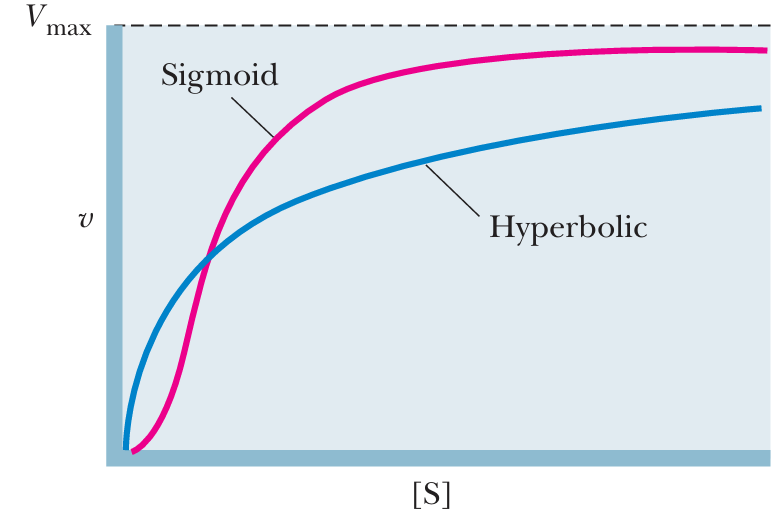
它们的反应速率 v 对底物浓度 [S] 的曲线图呈 S 形,而非矩形双曲线
- Such curves suggest a second-order (or higher) relationship between v and [S], that is, v is proportional to [S]^n, where n > 1.
类曲线表明 v 与 [S] 之间存在二级或更高阶关系, 即 v 与 [S] 的 n 次方成正比,其中 n > 1 - A qualitative description of the mechanism responsible for the S-shaped curves is that binding of one S to a protein molecule makes it easier for additional substrate molecules to bind to the same protein molecule.
对 S 形曲线形成机制的定性描述是, 一个底物分子 S 与蛋白质分子结合后,会使更多底物分子更容易与同一个蛋白质分子结合 - In the jargon of allostery, substrate binding is cooperative.
用别构效应的术语来说,底物结合具有协同性
- 可以被别构抑制, 可以被别构激活
- Allosteric enzymes typically have an oligomeric organization 寡聚体结构
- They are composed of more than one polypeptide chain (subunit), and each subunit has a binding site for substrate, as well as a distinct binding site for allosteric effectors.
它们由一条以上的多肽链 (亚基) 组成,每个亚基都含有一个底物结合位点,以及一个独立的别构效应物结合位点 - Thus, allosteric enzymes typically have more than one S-binding site and more than one effector-binding site per enzyme molecule
每个别构酶分子通常含有多个底物(S)结合位点和多个效应物结合位点
- the regulatory effects exerted on the enzyme’s activity are achieved by conformational changes occurring in the protein when effector metabolites bind
当效应代谢物结合时,蛋白质发生构象变化,从而实现对酶活性的调节作用
- the regulatory effects exerted on the enzyme’s activity are achieved by conformational changes occurring in the protein when effector metabolites bind
- Enzyme Activity Can Be Regulated Through Covalent Modification
- 共价修饰
- reversible covalent attachment of a chemical group
- Enzymes susceptible to such regulation are called interconvertible enzymes
- 比如kinase可以给酶一个pi, phosphatase可以remove pi
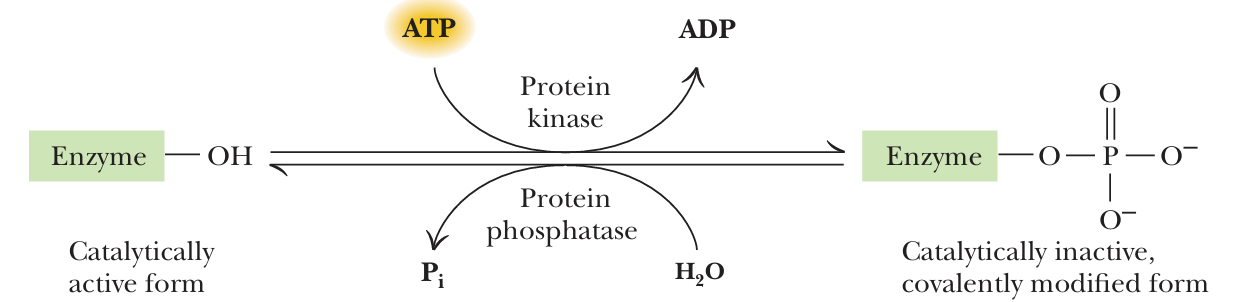
这两种酶的作用是相反的, 所以必须对他们进行调控, 不能同时作用
- Zymogens/proenzymes Are Inactive Precursors of Enzymes
- 酶原
- only acquire full activity upon specific proteolytic cleavage ofone or several of their peptide bonds
- 酶原在特定位置被水解然后激活的过程是不可逆的 irreversible
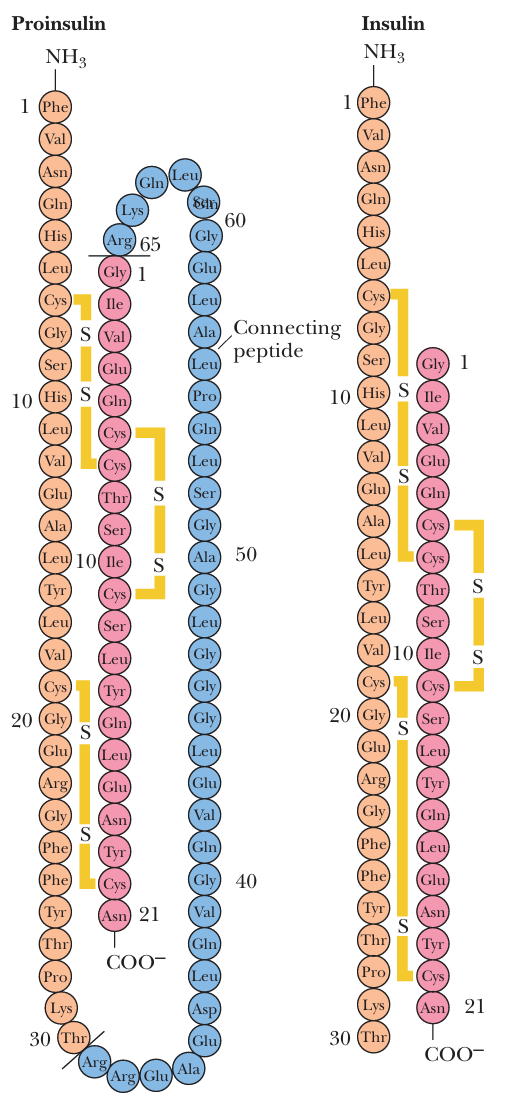
- 例 - insulin
- Proteolytic removal of residues 31 to 65 yields insulin, 剩下的部分由 disulfide bridges 二硫键连着
- Proteolytic removal of residues 31 to 65 yields insulin, 剩下的部分由 disulfide bridges 二硫键连着
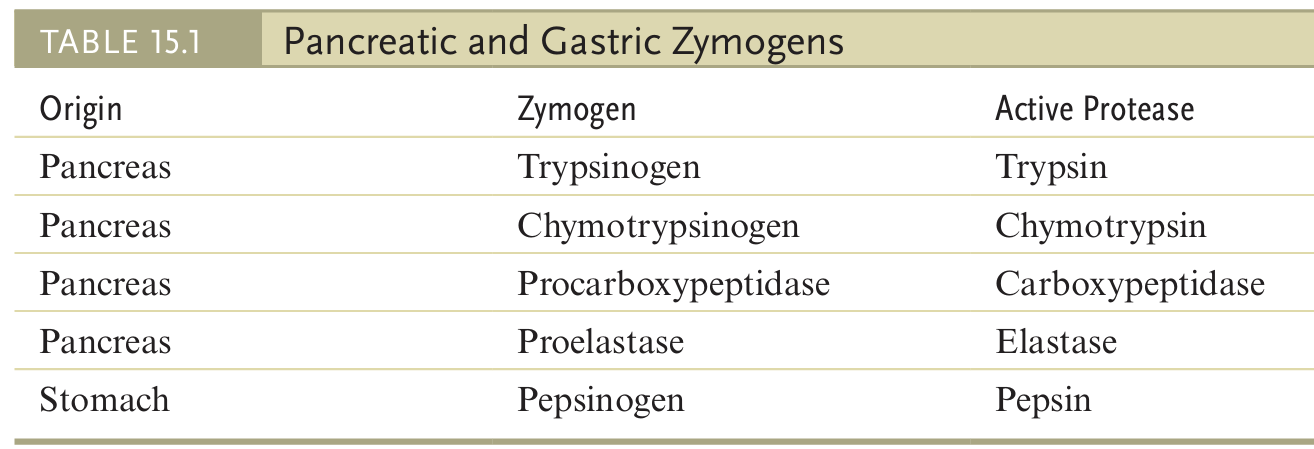
- 例 - Proteolytic Enzymes of the Digestive Tract
- 消化道的水解酶都用这种方式调控, 以酶原形式在胃和胰腺中合成
- 消化道的水解酶都用这种方式调控, 以酶原形式在胃和胰腺中合成
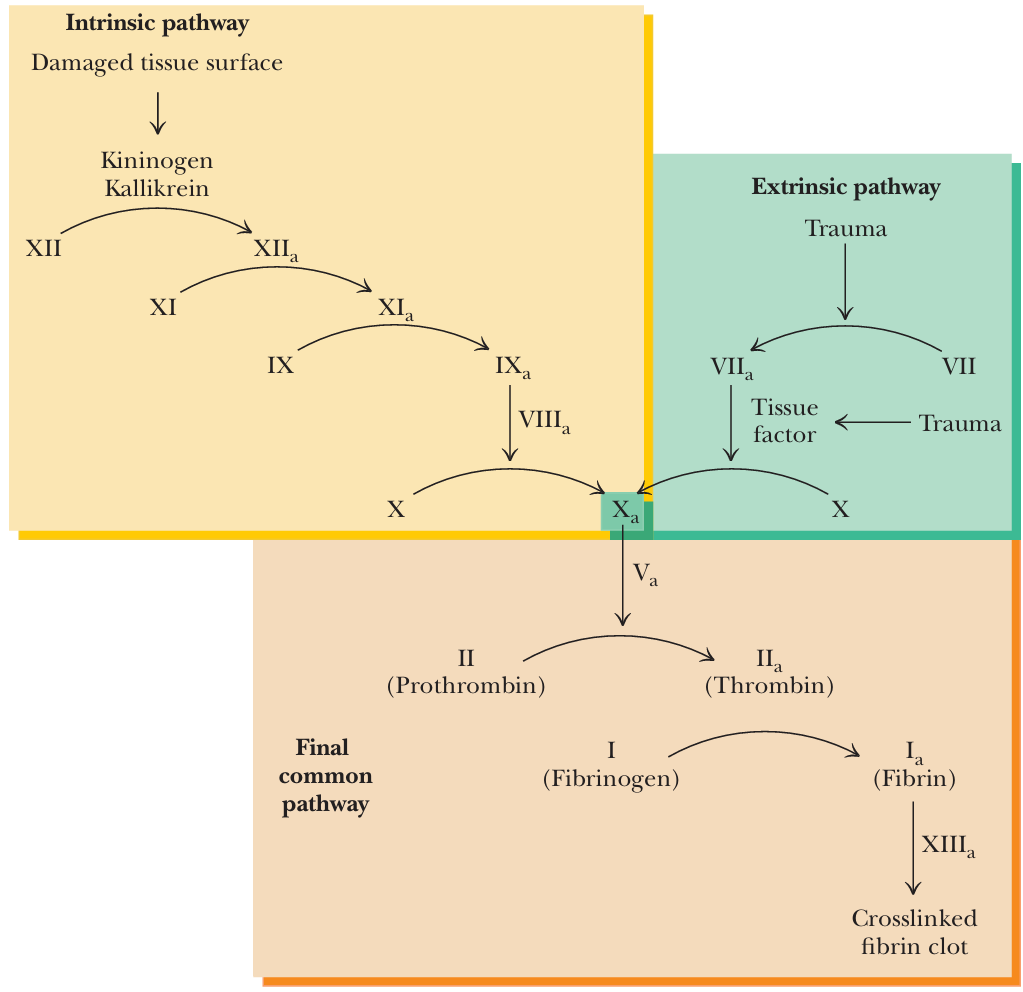
- 例 - Blood Clotting
- The formation of blood clots is the result of a series of zymogen activations
- The cascade of activation steps leading to blood clotting
- Isozymes Are Enzymes with Slightly Different Subunits
- 例 - 酶 - lactate dehydrogenase 乳酸脱氢酶 LDH
- 有的酶 Controlled by Both Allosteric Regulation and Covalent Modification 酶 - glycogen phosphorylase 糖原磷酸化酶
All articles in this blog are licensed under CC BY-NC-SA 4.0 unless stating additionally.