解剖学_骨骼
骨骼
- Directional Terms
- 图
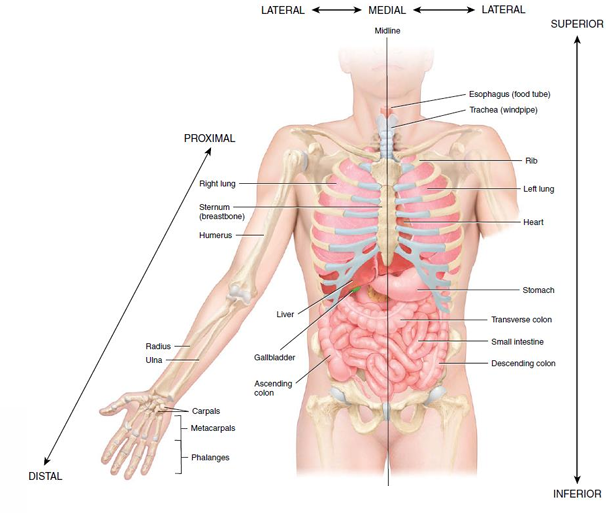
- 上下
- Superior: upper
- Inferior: lower
- The heart is superior to the liver.
- The stomach is inferior to the lungs.
- 前后
- Anterior: front
- Posterior: back
- The sternum is anterior to the heart.
- The esophagus is posterior to the trachea.
- 中外
- Medial: towards the midline
- Lateral: away from the midline
- The ulna is medial to the radius.
- The lungs are lateral to the heart.
- 近远
- Proximal: towards the truck 靠近躯干
- Distal: away from truck 远离躯干
- The humerus articulates proximally with the scapula and distally with two bones, the ulna and the radius
- 深浅
- Superficial: on the surface
- Deep: away from the surface
- The ribs are superficial to the lungs.
- The ribs are deep to the skin of the chest and back
- 图
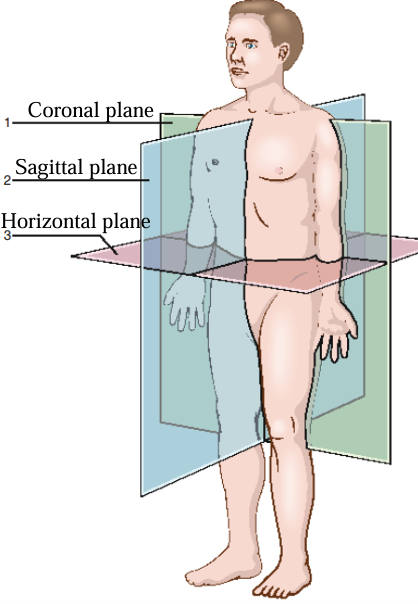
- planes of the body
- 图
- Frontal (coronal) plane 切开前后
- coronal suture
- Sagittal plane 切开左右
- sagittal suture
- Transverse (horizontal) plane 切开上下
- 图
- Functions of Bone and the Skeletal System
- Support
- Protection
- Assistance in movement
- Mineral矿物 storage and release
- Blood cell production
- Triglyceride甘油三酯 storage
- Bone tissue
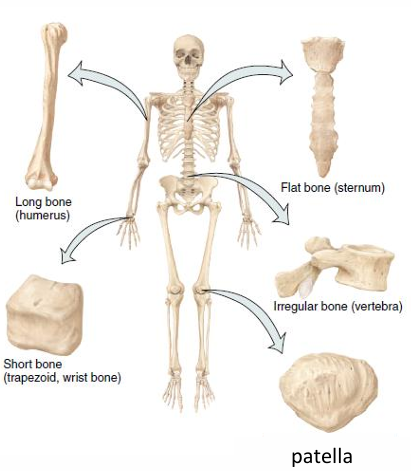
- Types of Bones
- Long bones
- femur, tibia, fibula, humerus, ulna, radius, phalanges
- Short bones
- cube-shaped, carpal bones, most tarsal bones
- Flat bones
- cranial bone, sternum, rib, scapula
- Irregular bones
- vertebra, hip bone, certain facial bones, calcaneus
- 图
- Long bones
- Structure of long bone
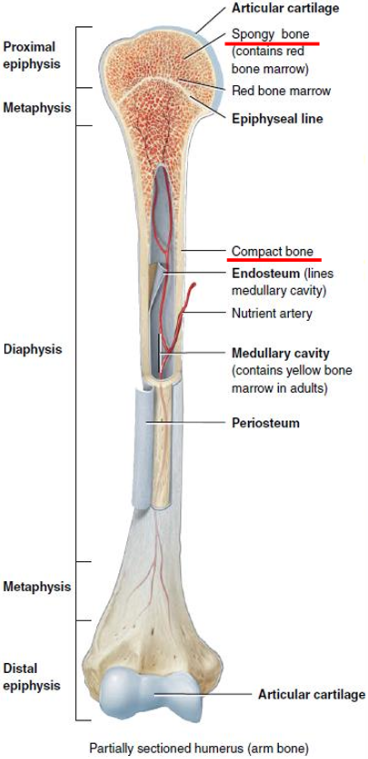
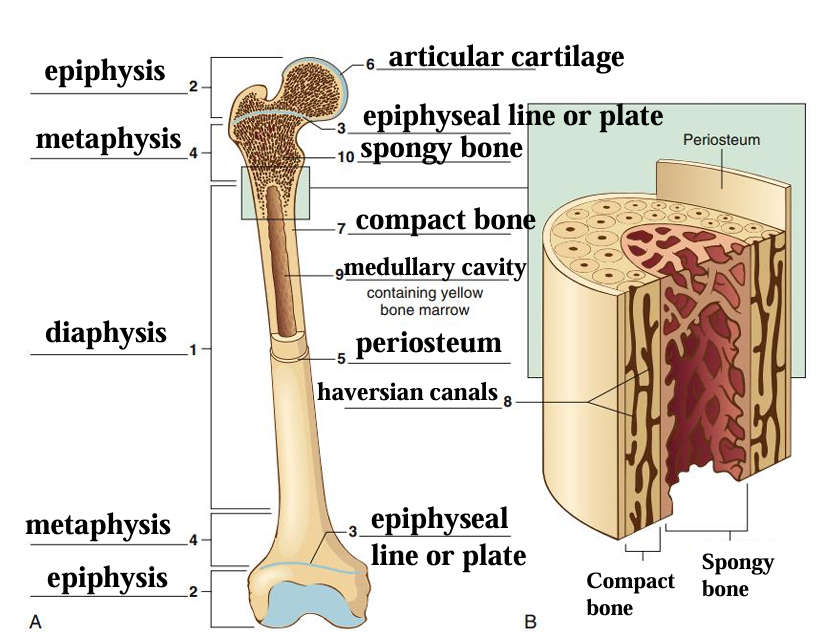
- 骨干Diaphysis: the shaft轴 region of a long bone
- 骨骺Epiphysis: the end of the bone
- 干骺端Metaphysis: between the epiphysis and the diaphysis.
- 关节软骨Articular cartilage: a thin layer of cartilage软骨 covering the part of the epiphysis where the bone forms a joint with another bone
- 骨外膜Periosteum: membrane that covers the most surface of long bones. Osteoblasts and osteoclasts
- 骨髓腔Medullar cavity
- 致密骨Compact bone: a hard external layer 外层
- 骨松质Spongy bone: a soft internal layer 内层
- 图
- 骨骺生长板Epiphyseal plate (growth plate): cartilage cells at the edges of the epiphyseal plate form new bone, which is responsible for lengthening bones. The plate calcifies钙化 to epiphyseal line when the bone has achieved its full growth.
- 看图说话
- division of skeleton
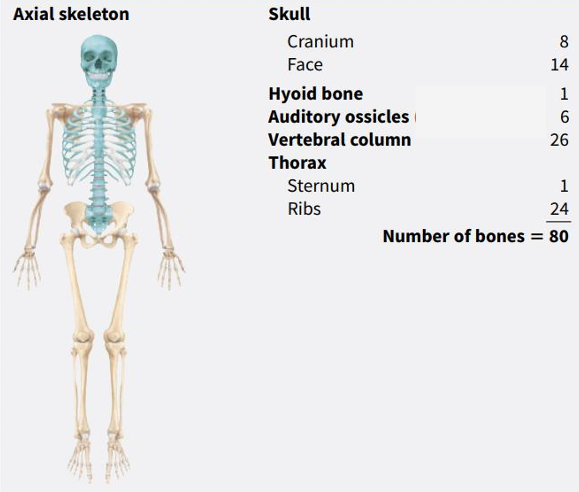
- axial skeleton 中轴骨骼
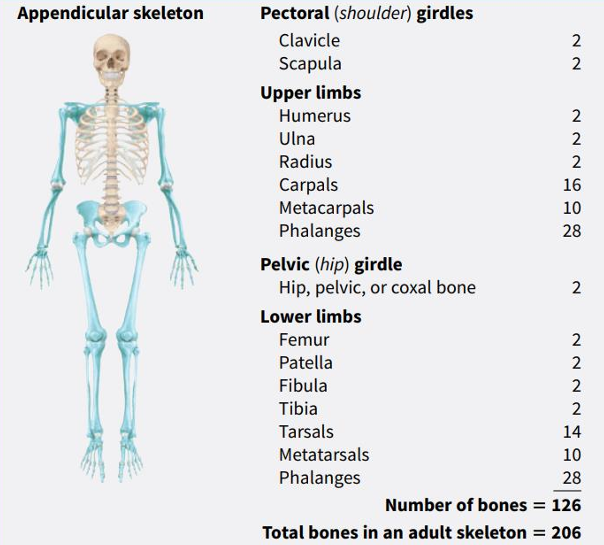
- appendicular skeleton 附肢骨骼
- axial skeleton 中轴骨骼
- Types of Bones
- Skull
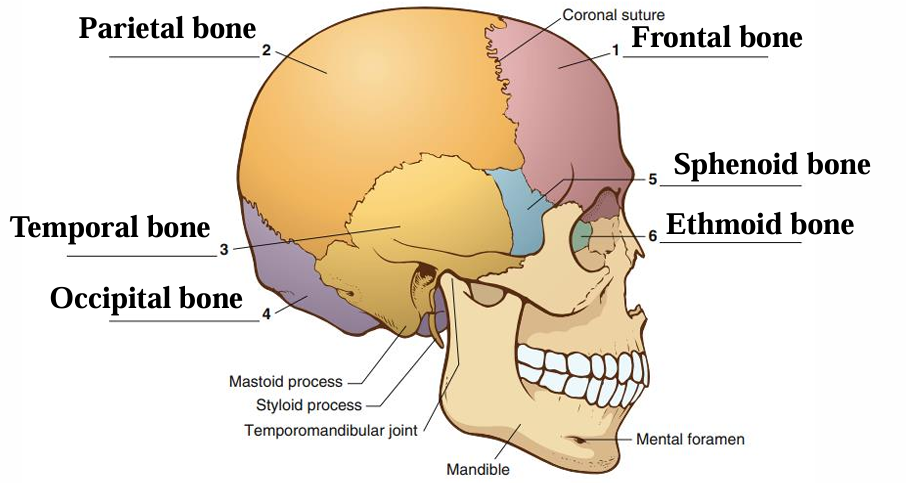
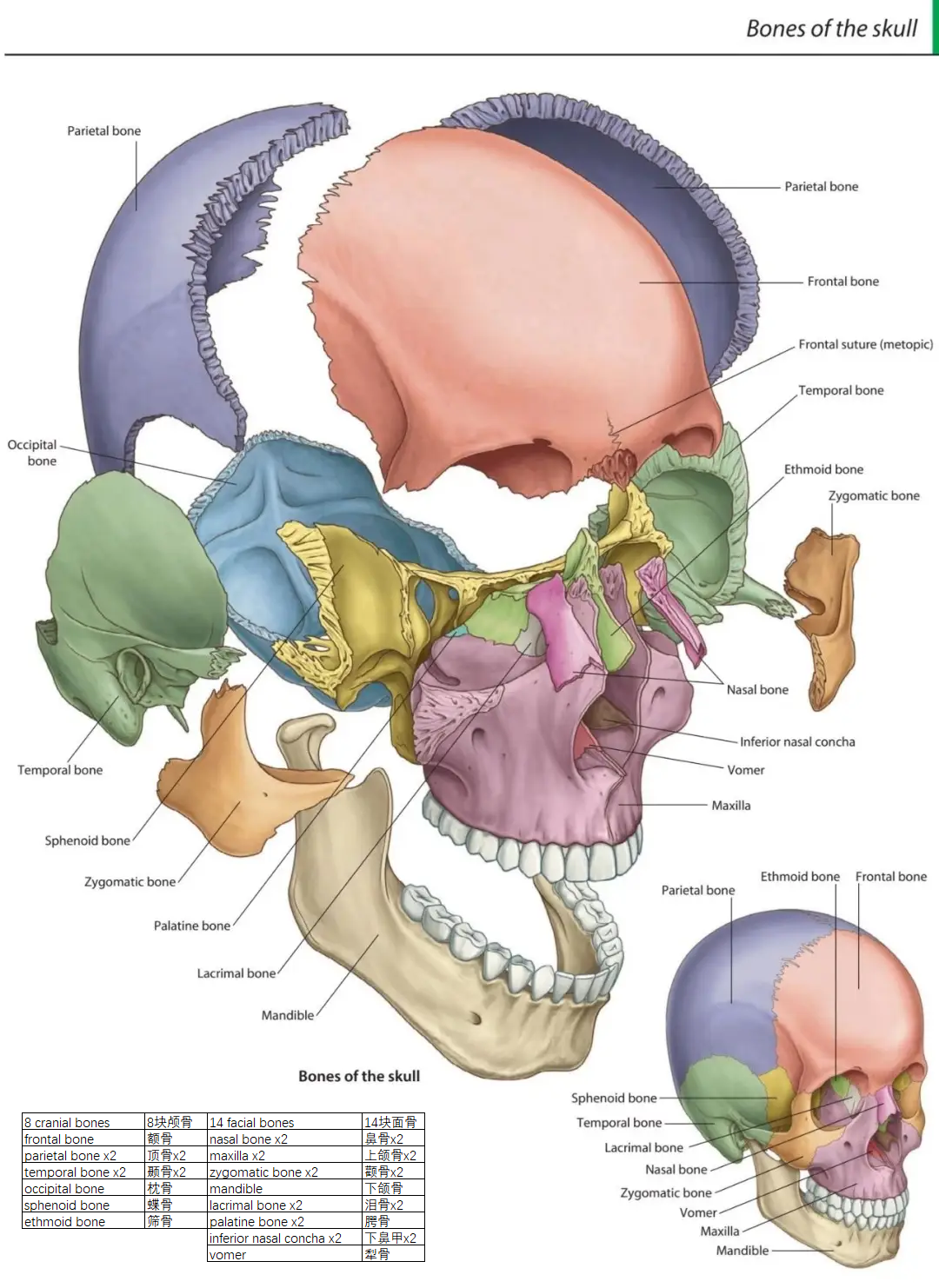
- 8 cranial bones
- frontal bone
- forms the forehead, the roofs of the orbits (eye sockets)
- parietal bone x2
- form the greater portion of the sides and roof of the cranium
- temporal bone x2
- form the inferior lateral aspects of the cranium颅骨 and part of the cranial颅骨的 floor. (Note: temple)
- occipital bone
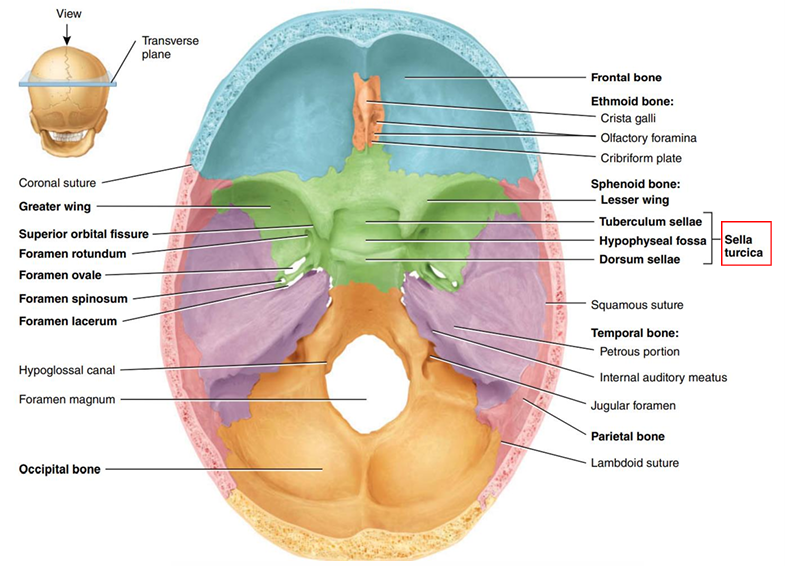
- forms the posterior part and most of the base of the cranium
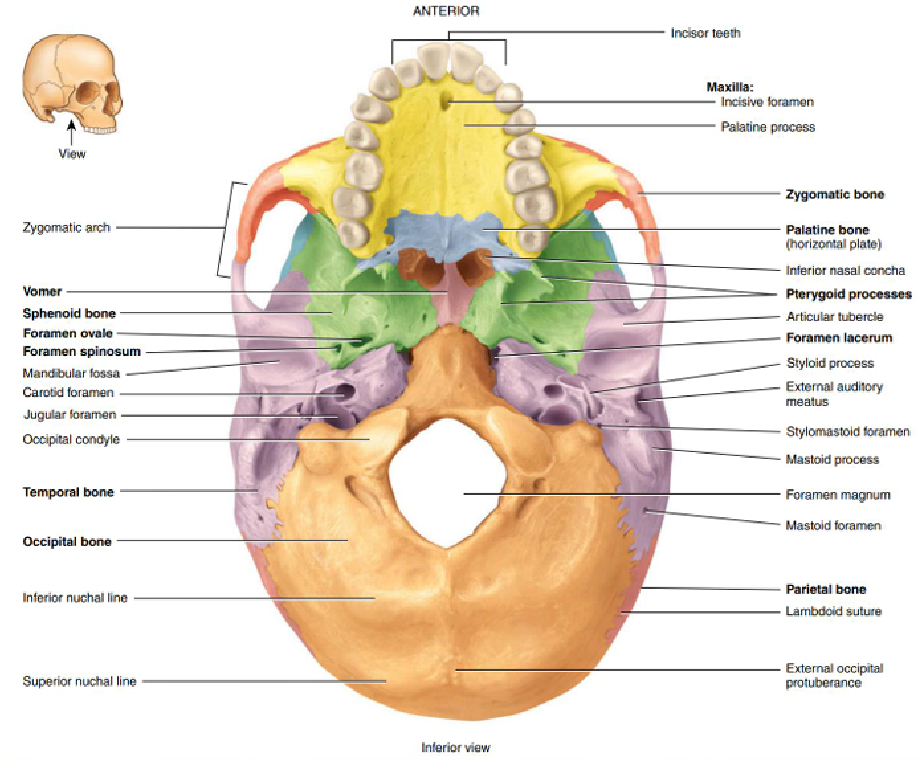
- The foramen magnum枕骨大孔 (= large hole) is in the inferior part of the bone.
- The medulla oblongata延髓 connects with the spinal cord脊髓 within this foramen
- The occipital condyles髁突 articulate连接 with atlas第1颈椎-寰椎
- sphenoid bone
- lies posterior to the nasal cavity鼻腔
- It contains air cavities that are lined with mucous membranes黏膜 and open into the nasal cavity
- The sphenoid bone articulates with all the other cranial bones, holding them together
- Sella turcica is a depression in the sphenoid bone in which pituitary gland is located 蝶鞍是蝶骨上的一个凹陷,垂体腺位于其中
- ethmoid bone
- 图
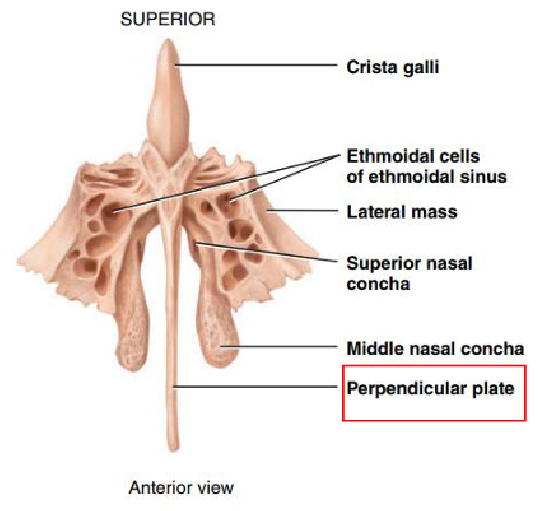
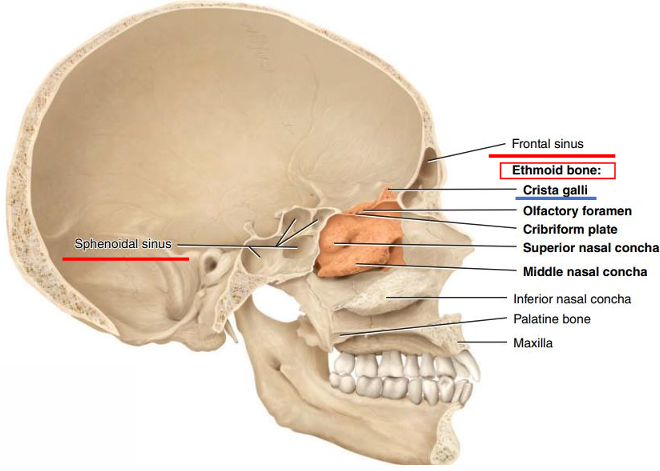
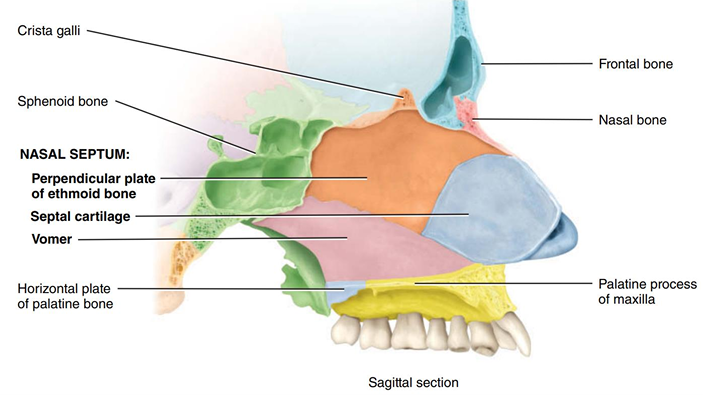
- forms the medial wall of the orbits, the superior portions of the nasal septum鼻中隔, and most of the side walls of the nasal cavity腔
- 鸡冠Crista galli: attachment point of the membrane that separates the two sides of the brain
- Perpendicular plate forms the superior portion of the nasal septum
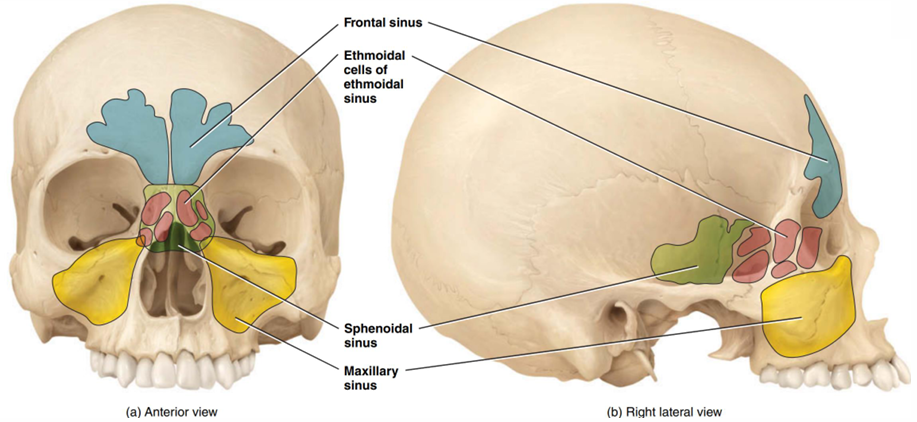
- sinus 窦
- 图
- Paranasal sinuses are air cavities in the frontal, sphenoid, ethmoid, and maxillary bones that connect to the nasal cavity.
- 图
- 图
- 看图说话
- frontal bone
- 14 facial bones
- nasal bone x2
- The paired nasal bones are small bones that form the bridge of the nose
- The major structural portion of the nose consists of cartilage软骨
- inferior nasal concha x2
- Each inferior nasal concha (concha = shell-shaped) is inferior to the middle nasal concha of the ethmoid bone.
- These paired bones form a part of the inferior lateral wall of the nasal cavity
- vomer
- forms the inferior portion of the bony nasal septum
- 鼻中隔组成
- The three components of the nasal septum are the vomer, septal cartilage, and the ethmoid bone
- 图
- zygomatic bone x2
- forms each cheek and part of each orbit.
- AKA cheek bone
- maxilla x2
- The paired maxillae form the upper jawbone.
- The maxillae form part of the floors of the orbits, part of the lateral walls and floor of the nasal cavity, and most of the hard palate硬上颚
- palatine bone x2
- form the posterior portion of the hard palate
- 关于硬上颚
- The hard palate is the bony roof of the mouth. The hard palate separates the nasal cavity from the oral cavity
- 图,蓝的
- lacrimal bone x2
- The paired lacrimal bones resemble a fingernail in size.
- These bones, the smallest bones of the face, form a part of the medial wall of the orbits
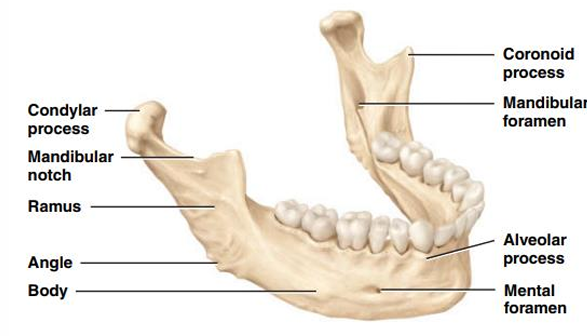
- mandible
- The mandible (lower jawbone) is the largest, strongest facial bone.
- It is the only movable skull bone
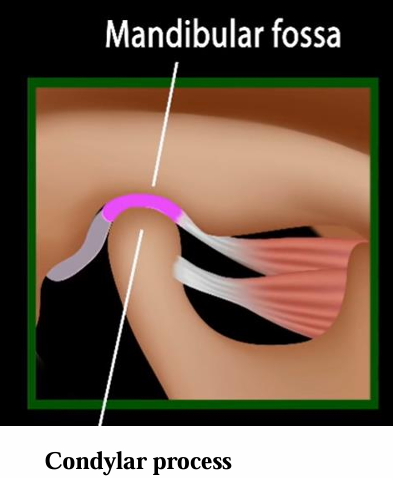
- has two condylar processes that articulate with the mandibular fossa of temporal bone 下颌骨有两个髁突,它们与颞骨的下颌骨窝相连
- nasal bone x2
- 其他
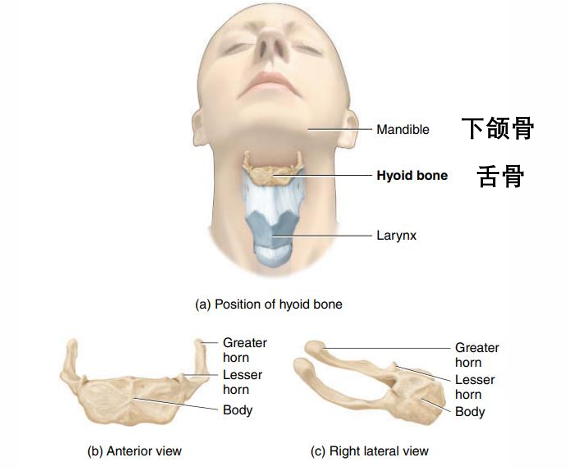
- Hyoid bone
- AKA “tongue” bone
- U-shaped bone
- It does not articulate with any other bone.
- It provides attachment sites for muscles of the tongue.
- 图
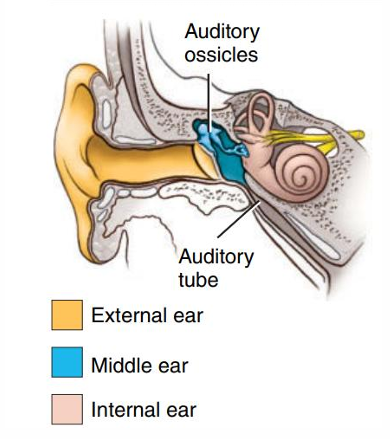
- Auditory ossicles (3 ear bones in the middle ear)
- 图
- 图
- Hyoid bone
- 总结
- 图
- 图
- 8 cranial bones
- Vertebral segments
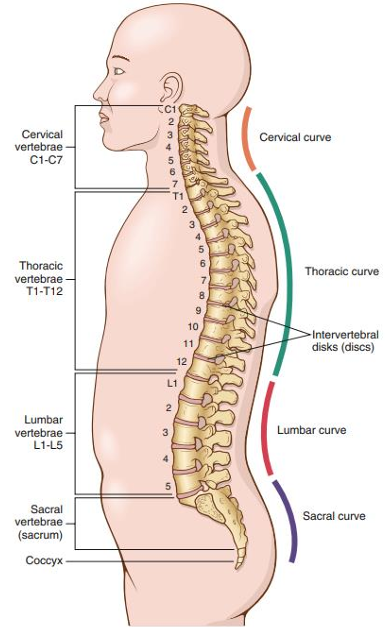
- Vertebral column is to protect the spinal cord and support the body
- Functions
- increase its strength
- maintain balance in the upright position
- absorb shocks
- Normal curves
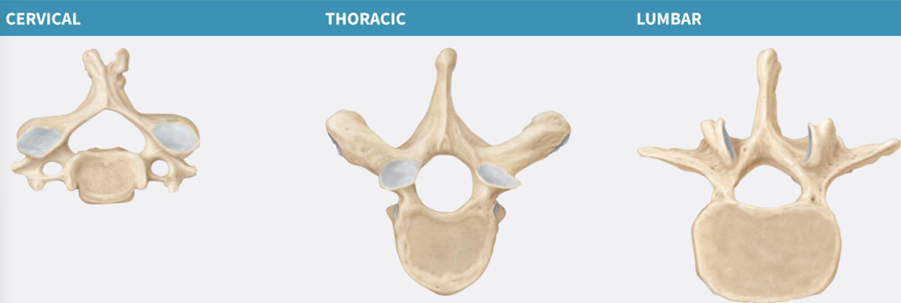
- 颈椎Cervical curve: (formed by 7 cervical vertebrae)
- 胸椎Thoracic curve (formed by 12 thoracic vertebrae)
- 腰椎Lumbar curve (formed by 5 lumbar vertebrae)
- 骶骨Sacral curve (formed by 5 fused sacral vertebrae)
- 图
- 图
- Cervical vertebrae
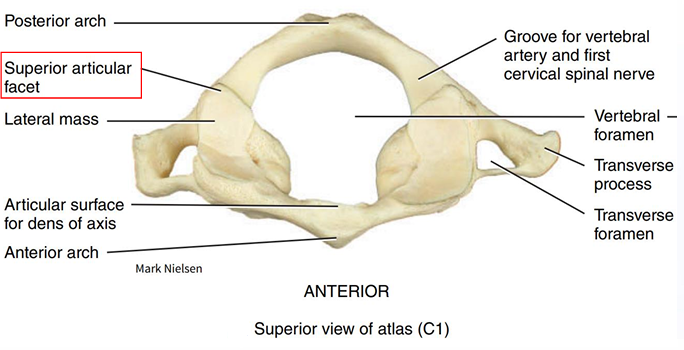
- C1 → atlas
- doesn’t have vertebral body脊椎体 and spinous process鞍状突
- The superior articular facets articulate with the occipital condyles枕髁,形成枕寰关节,permit you to move your head up and down 上下点头
- The inferior articular facets articulate with the axis
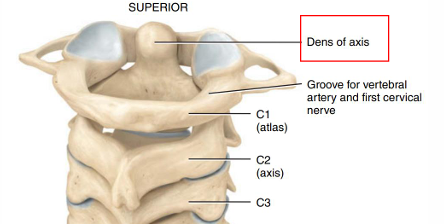
- C2 → axis
- A process called the dens (= tooth) projects superiorly through the vertebral foramen of the atlas
- The dens makes a pivot on which the atlas and head rotate.
- This permits side-to-side movement of the head 左右转头
- A process called the dens (= tooth) projects superiorly through the vertebral foramen of the atlas
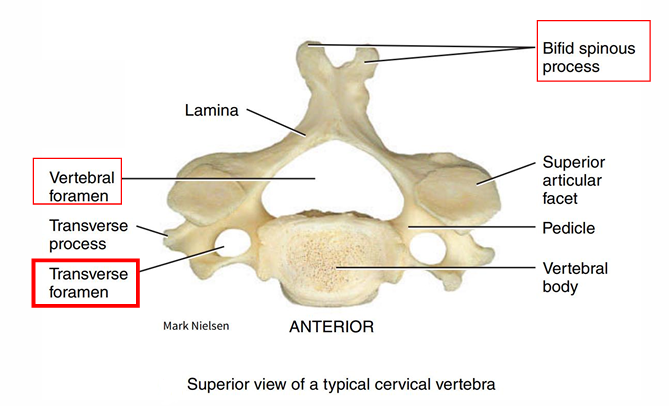
- C3-7 → Typical cervical vertebrae
- 一节
- Each cervical transverse process contains a transverse foramen横突孔 through which the vertebral vessels and nerves pass
- The spinous processes鞍状突 of C2-6 are bifid二叉 - they branch into two projections at the tips
- 图
- 一节
- C1 → atlas
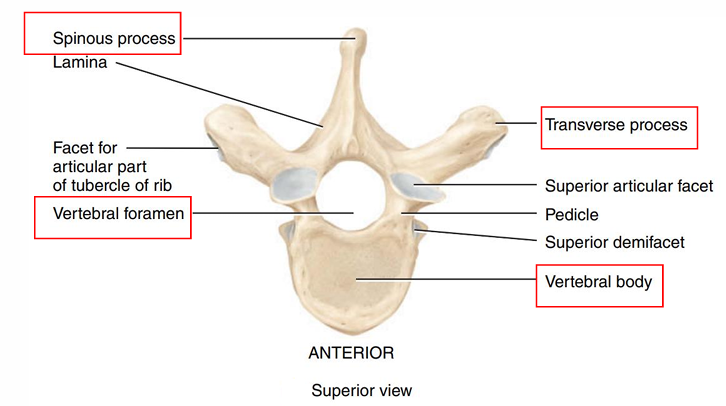
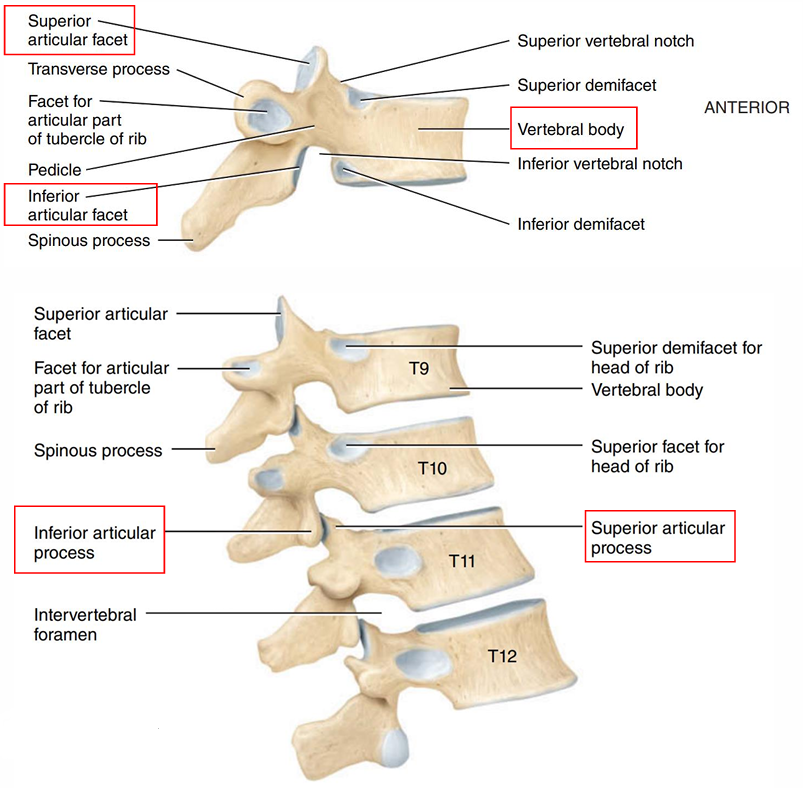
- Thoracic vertebrae
- 一节
- consist of a vertebral body脊椎体, a vertebral arch脊椎弓, and several processes突起
- Process突起
- projection on bone that forms joint or attachment point for connective tissue, such as ligament韧带 and tendon肌腱
- The vertebral foramina孔 of all vertebrae form the vertebral canal椎管
- 图
- Facet → the articular关节 surface,关节通过突起拼乐高
- 一节
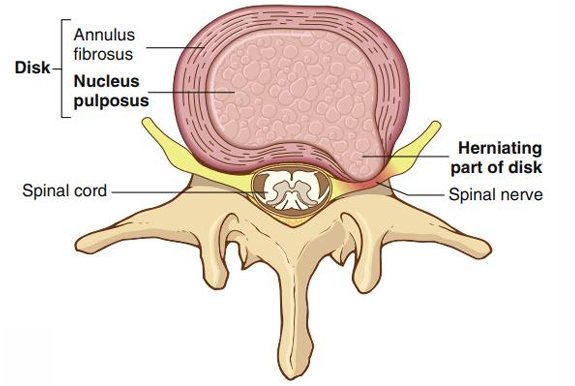
- Intervertebral discs 椎间盘
- Location: between the bodies of adjacent vertebrae from the axis to the sacrum骶骨
- Function: absorb shock
- Disorder: herniation椎间盘突出 = slipped disc滑脱
- The inner portion of the disk presses on spinal脊髓 nerves or on the spinal cord脊髓
- Low back pain is the symptom
- The inner portion of the disk presses on spinal脊髓 nerves or on the spinal cord脊髓
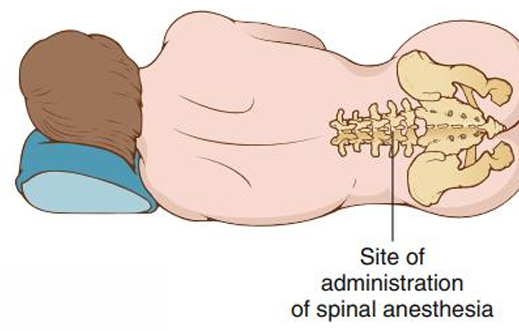
- Spinal anesthesia蛛网膜下隙麻醉
- 图
- 图
- Thorax胸
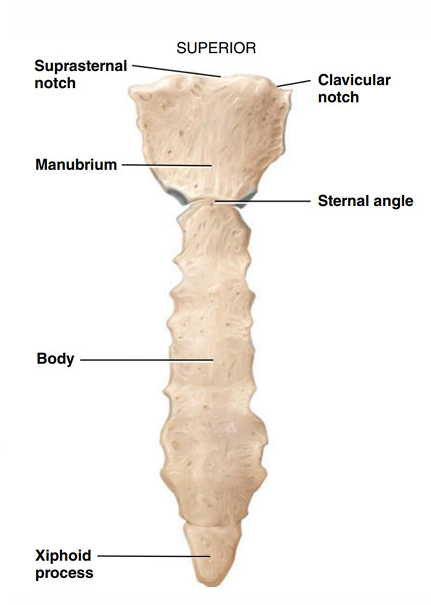
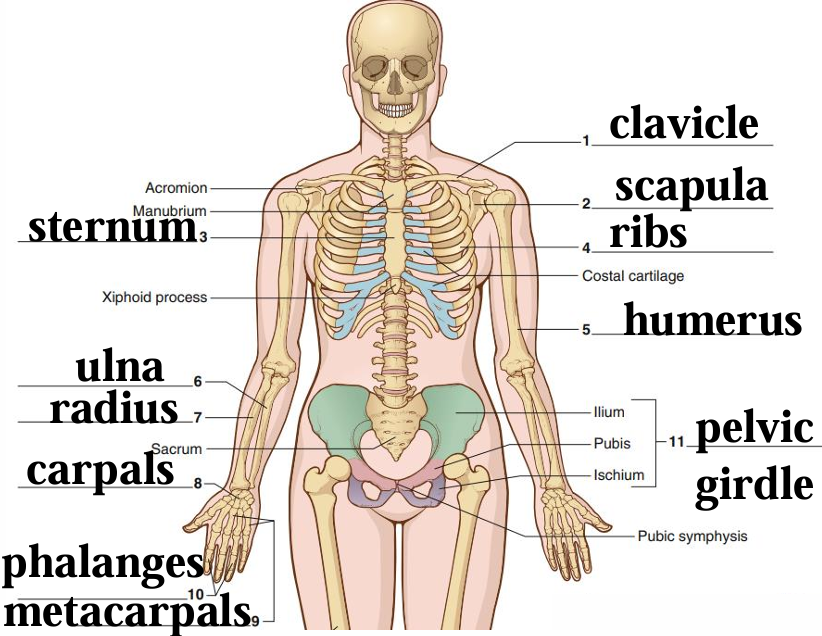
- sternum胸骨
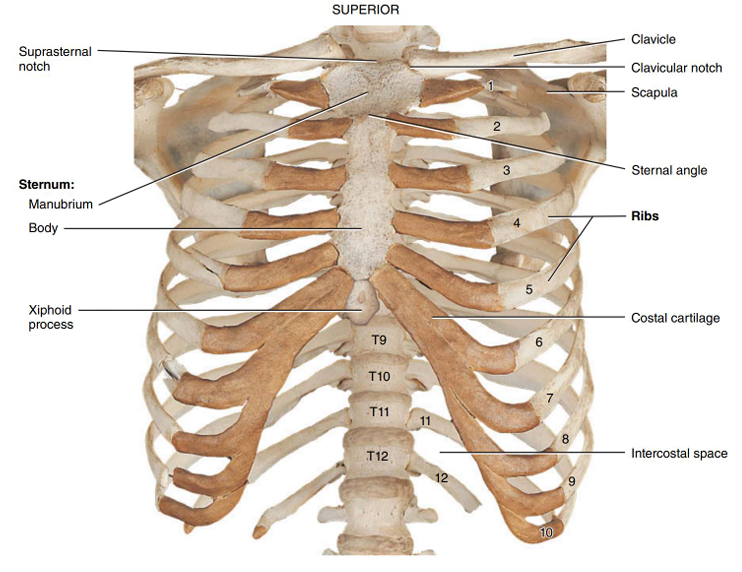
- The sternum (breastbone) is located in the center of the anterior thoracic wall
- superior part: the manubrium 剑柄
- middle part: the body
- inferior part: the xiphoid process 剑突
- 图
- ribs
- There are 12 pairs of ribs.
- Ribs 1 to 7 are called true ribs
- 直接连到胸骨
- They join with the sternum anteriorly by costal cartilage (cost- = rib), and join with the vertebral column posteriorly
- Ribs 8 to 10 are called false ribs
- 连到1-7
- They join the 7th rib anteriorly instead of attaching to the sternum, and join with the vertebral column posteriorly
- Ribs 11 and 12 are the floating ribs
- They are completely free at their anterior ends.
- They attach only posteriorly在后面 to the thoracic vertebrae
- There are 12 pairs of ribs.
- sternum胸骨
- Pectoral (shoulder) girdles肩带
- clavicle锁骨
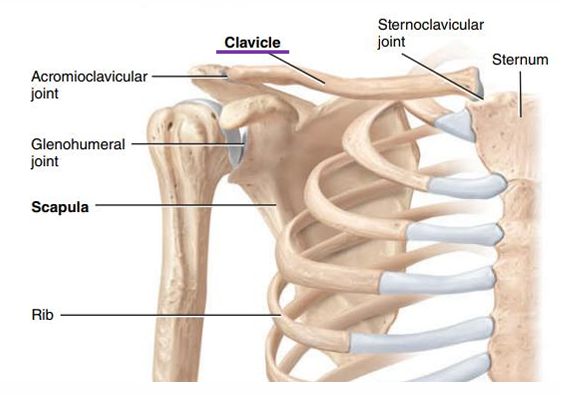
- Each clavicle, or collarbone, lies horizontally across the anterior part of the thorax superior to the first rib
- Each clavicle, or collarbone, lies horizontally across the anterior part of the thorax superior to the first rib
- scapula肩胛骨
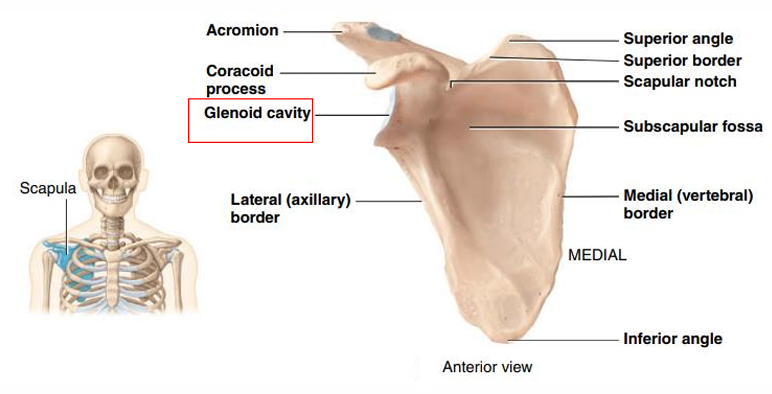
- Each scapula, or shoulder blade, is a large, triangular, flat bone situated in the superior part of the posterior thorax between the levels of the 2nd and 7th ribs.
- The glenoid cavity of the scapula articulates with the head of the humerus to form the shoulder joint
- 肩胛骨的关节盂与肱骨头相连,形成肩关节
- clavicle锁骨
- Upper limbs
- 胳膊
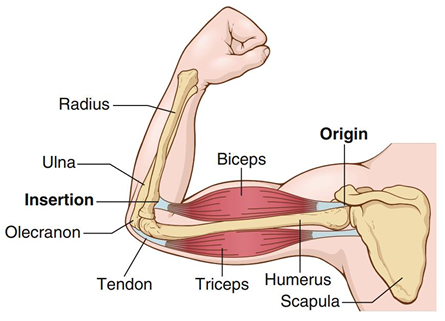
- 肱骨Humerus
- upper arm bone
- 尺骨Ulna
- medial lower arm bone
- 桡骨Radius
- 靠近大拇指
- lateral lower arm bone (in line with the thumb)
- 手
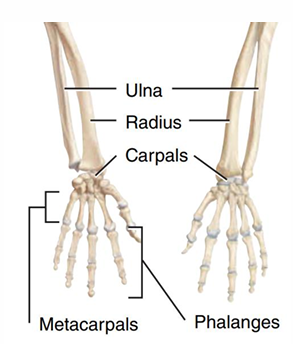
- 腕骨Carpals
- 8块
- 掌骨Metacarpals
- the five bones of the palm of the hand
- meta = beyond
- 趾骨Phalanges
- finger bones
- 胳膊
- Pelvic (hip) girdle盆骨带
- Pelvic girdle (pelvis) joins with the single, dorsally located sacrum
- 骨盆带(骨盆)与单一、位于背侧的骶骨相连
- coccyx is below sacrum
- pelvis骨盆
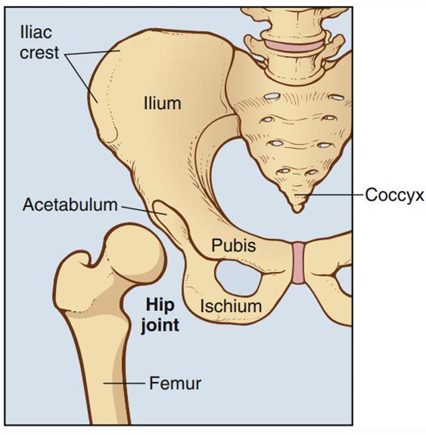
- The adult pelvis is composed of three pairs of fused bones
- 髂骨Ilium—uppermost and largest portion of the pelvis.
- 坐骨Ischium—inferior or lower part of the pelvis.
- 耻骨Pubis—anterior part of the pelvis.
- 髋臼acetabulum,与股骨头构成髋关节
- 图里红色的是Pubic symphysis,耻骨联合,软骨
- Pelvic cavity盆骨腔—region within the ring of bone formed by the pelvic girdle.
- The pelvis supports the trunk of the body and articulates with the femur to form the hip joint髋关节
- The adult pelvis is composed of three pairs of fused bones
- Lower limbs
- 腿
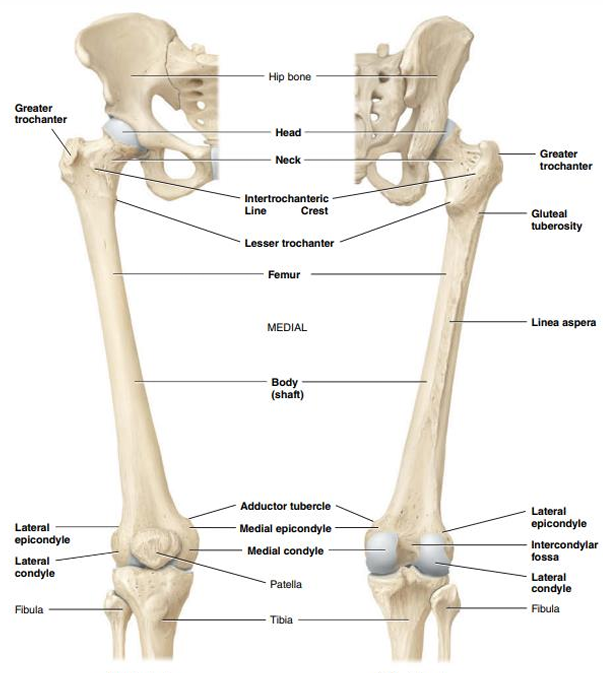
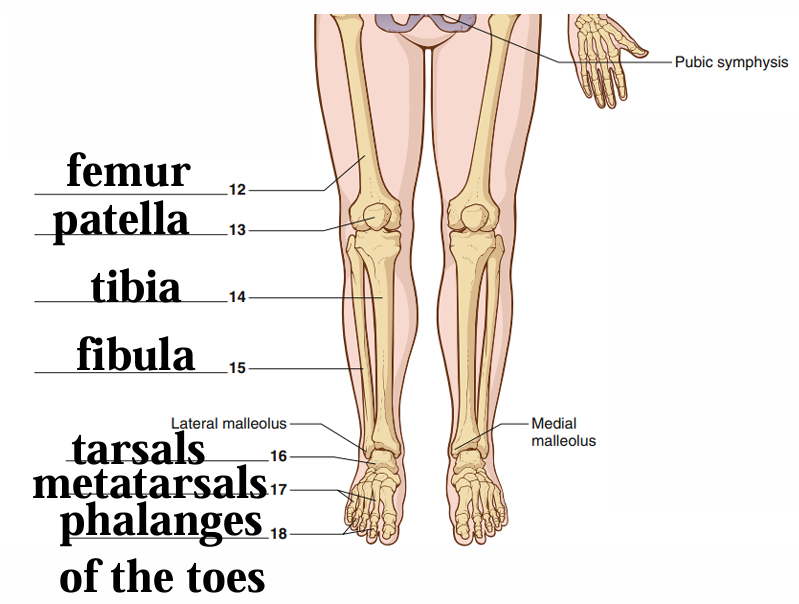
- femur
- AKA thigh bone
- is the longest, heaviest, and strongest bone in the body
- patella
- AKA kneecap
- is a small, inverted triangular bone located anterior to the knee joint
- tibia 大
- AKA shin bone
- is the larger, medial, weight-bearing bone of the leg
- fibula 小
- parallel and lateral to the tibia, and it is considerably smaller
- 不直接连着femur
- 脚
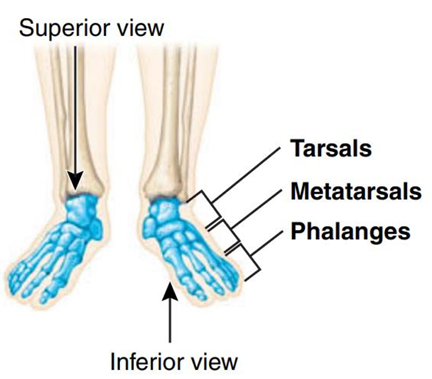
- 跗骨Tarsals—bones of hind parts of the foot
- 跖骨Metatarsals—bones of the midfoot
- 趾骨Phalanges of the toes—bones of the forefoot
- 腿
- 看图说话
- 1
- 2
- 3
- 1
- 俗语
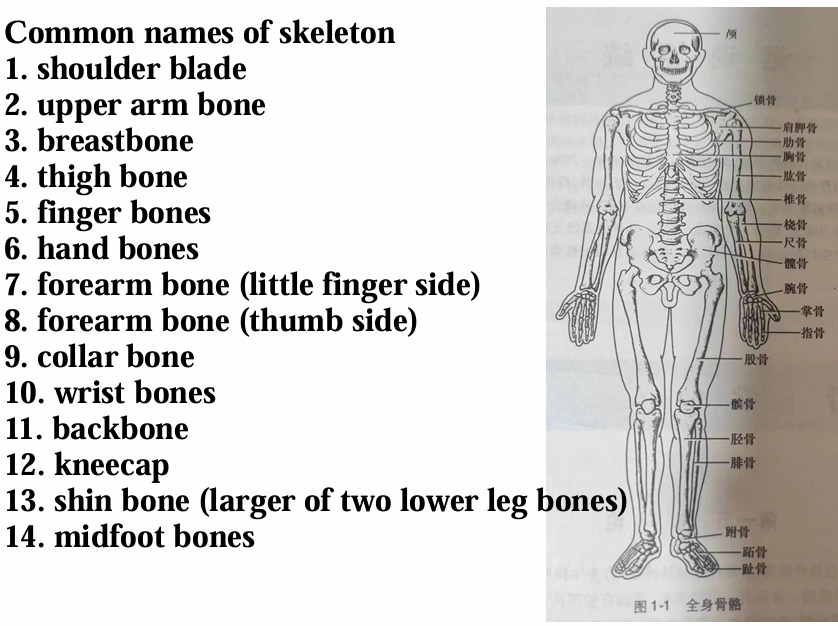
- scapula - shoulder blade - 肩胛骨
- humerus - upper arm bone - 肱骨
- sternum - breastbone - 胸骨
- femur - thigh bone - 股骨
- phalanges - finger bones - 指骨
- metacarpals - hand bones - 掌骨
- ulna - forearm bone (little finger side) - 尺骨
- radius - forearm bone (thumb side) - 桡骨
- clavicle - collar bone - 锁骨
- carpals - wrist bones - 腕骨
- vertebral column - backbone - 脊柱
- patella - kneecap - 髌骨
- tibia - shin bone - 胫骨
- metatarsals - midfoot bones - 跖骨
- 关节
- joint 关节
- AKA articulation,a point of contact between two bones
- 分类
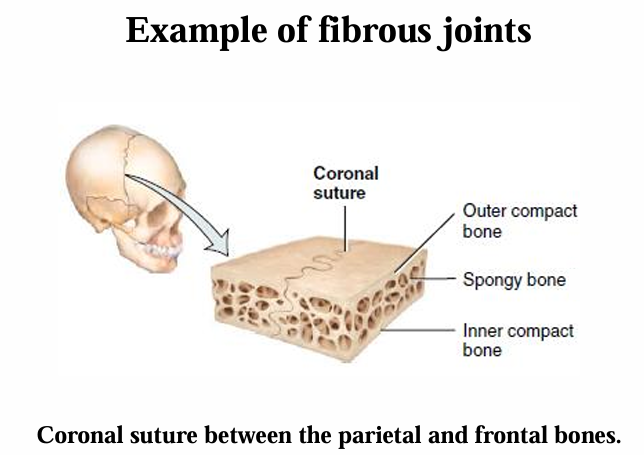
- Fibrous joints纤维关节
- the bones are held together by dense connective tissue
- the bones are held together by dense connective tissue
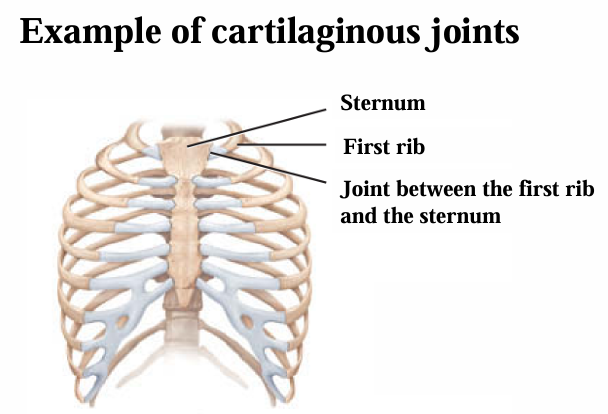
- Cartilaginous joints软骨关节
- the bones are held together by cartilage软骨
- the bones are held together by cartilage软骨
- Synovial joints滑膜关节
- 分类
- hinge joint 铰链关节
- 肘关节
- 膝关节
- ball-and-socket joint 球窝关节
- 肩关节
- 髋关节
- pivot joint 车轴关节
- 寰枢关节 atlas rotates around the axis
- 肘关节
- gliding joint 平面关节
- 腕骨间关节
- hinge joint 铰链关节
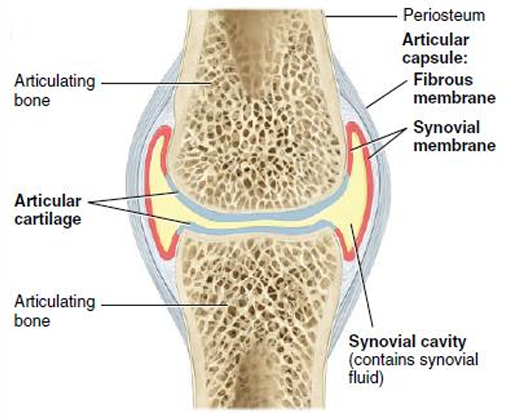
- have a space called synovial cavity滑膜腔 between the articulating bones, and allow considerable movement
- The bones in a synovial joint are surrounded by a joint capsule
- Articular cartilage关节软骨 covers the bones at the joint
- facilitate movement,smooth surface to minimize friction
- absorb shock
- The synovial cavity is filled with synovial fluid滑液 that lubricates润滑 the joints
- 分类
- Fibrous joints纤维关节
- Types of Movements at Synovial Joints
- flexion 两个骨头角度减小
- extension 两个骨头角度增大
- Abduction 远离中心线
- Adduction 靠近中心线
- rotation 转头,转跨
- Circumduction 抡胳膊
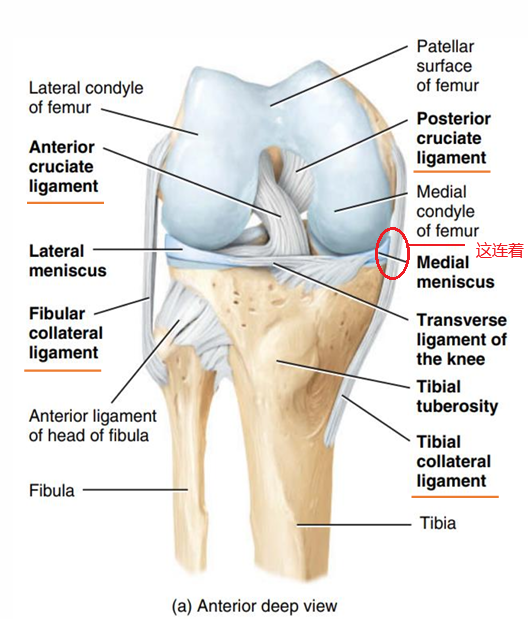
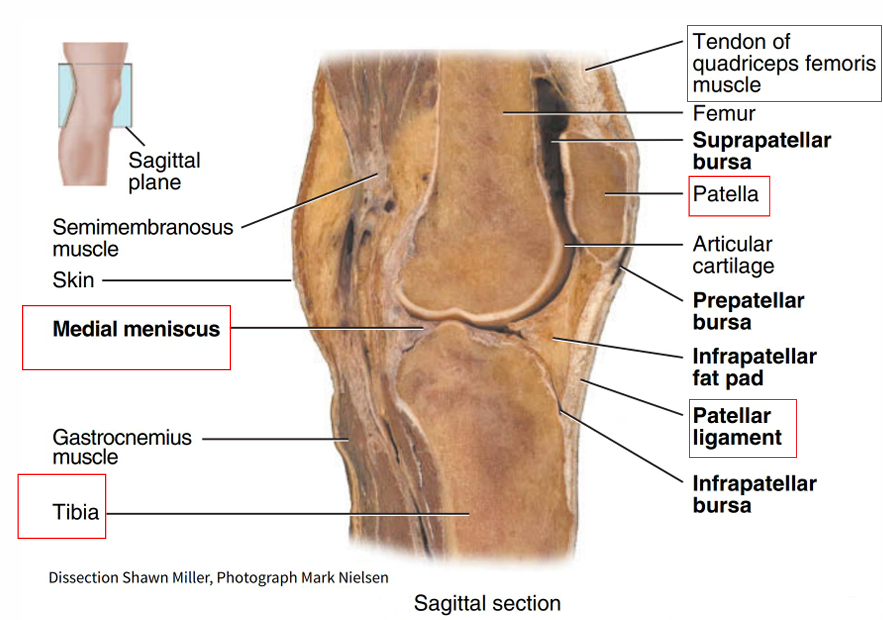
- Knee Joint
- hinge joint
- The knee joint is the largest and most complex joint of the body
- the condyles髁突 of the femur articulate with the tibial plateau胫骨平台
- The medial and the lateral横向的 condyles髁突 of the femur articulate with the medial and lateral condyles of the tibia
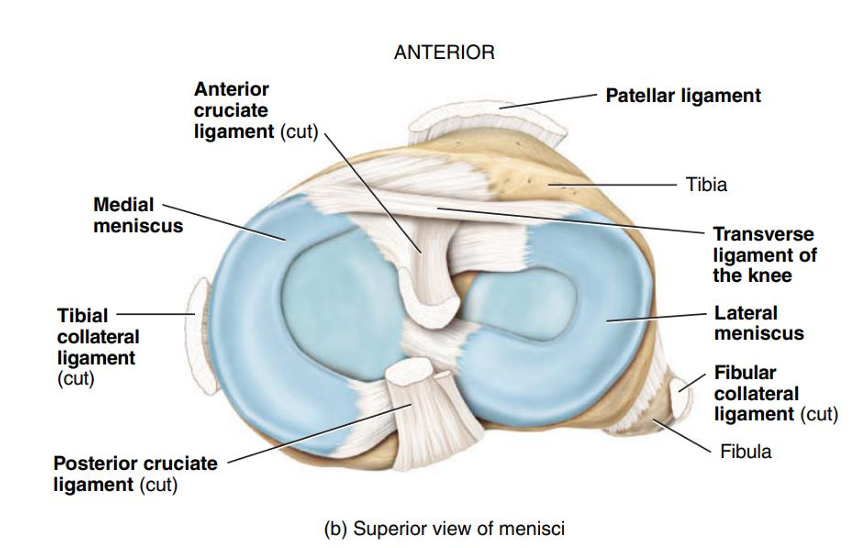
- Meniscus半月板 (cartilage pads) sit between the femur and the tibia. They distribute the weight and help the ligaments韧带 to stabilize the knee
- Ligaments are tough bands of connective tissue that connect two bones together
- Tibial collateral ligament胫侧副韧带
- connect to medial meniscus
- Fibular collateral ligament腓侧副韧带
- Anterior cruciate ligament 前十字韧带
- connect to medial meniscus
- Posterior cruciate ligament 后十字韧带
- 图
- Tibial collateral ligament胫侧副韧带
- The knee joint allows flexion, extension, and rotation of the leg
- patella 髌骨 膝盖
- patellofemoral joint is between the patella and the patellar surface of the femur
- 髌股关节位于髌骨与股骨髌面之间
- patellofemoral joint is between the patella and the patellar surface of the femur
- 病
- torn ACL
- 前十字韧带撕裂
- 70%的膝盖受伤都是这
- unhappy triad
- knee injury of TCL,medial meniscus and ACL
- torn ACL
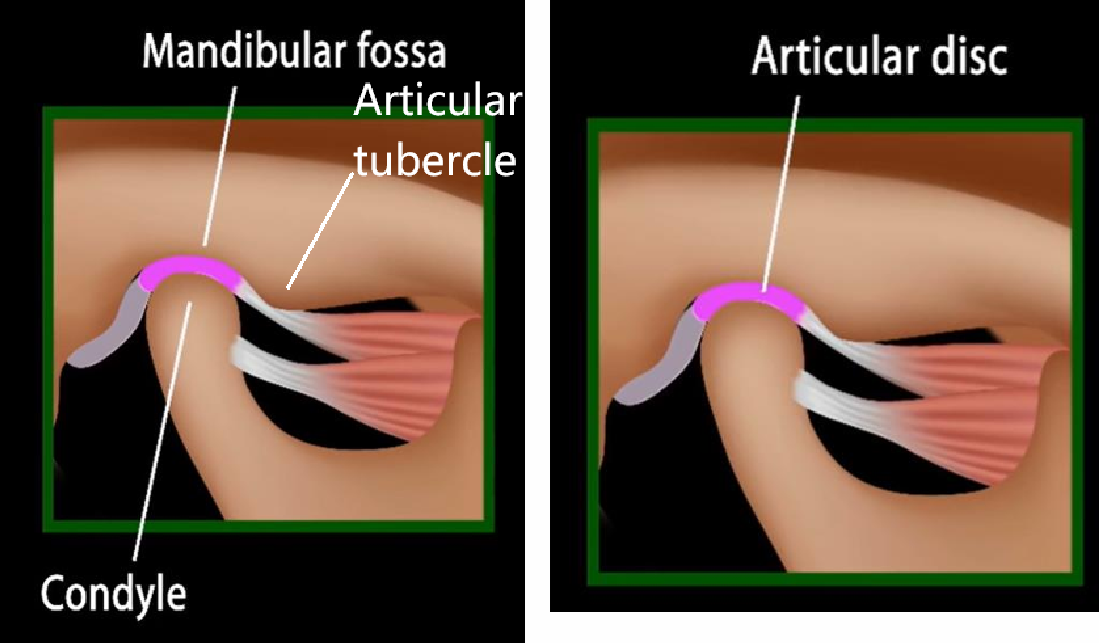
- Temporomandibular Joint 颌关节
- The TMJ is the only freely movable joint between skull bones
- all other skull joints are sutures and therefore immovable
- 图
- TMJ is formed by the condyles(condylar processes) of the mandible and the mandibular fossa and articular tubercle of the temporal bone
- 颞下颌关节(TMJ)由下颌骨的髁突(髁状突)与颞骨的下颌窝和关节结节共同构成
- Fossa: Shallow cavity in or on a bone
- dislocation
- Shoulder joint
- ball-and-socket synovial joint
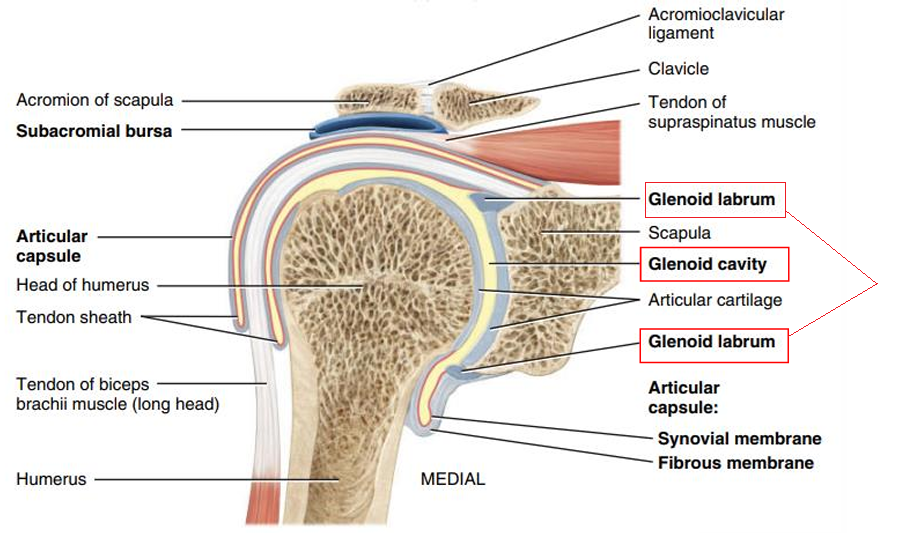
- The head of the humerus肱骨 fits in the glenoid cavity关节盂 of the scapula肩胛骨
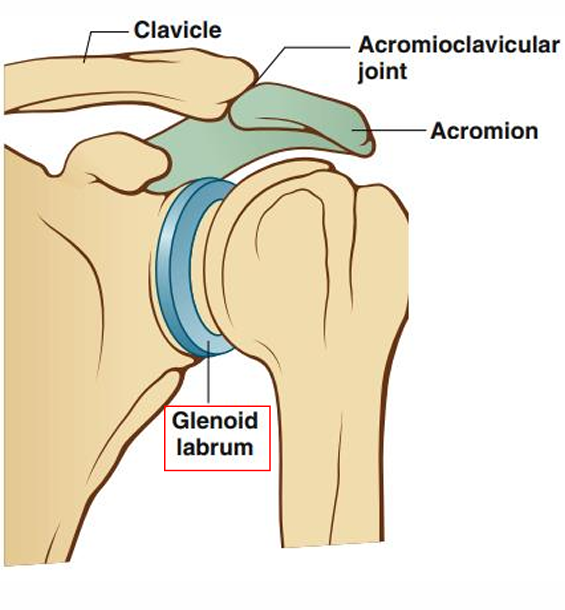
- Glenoid labrum盂唇
- Narrow rim of fibrocartilage around the edge of the glenoid cavity that slightly deepens and enlarges the glenoid cavity
- 围绕关节盂边缘的狭窄纤维软骨环状结构,可略微加深并扩大关节盂
- 图
- The shoulder joint allows flexion, extension, abduction, adduction, rotation, and circumduction of the arm
- 病
- dislocated shoulder
- due to shallow socket
- separated shoulder
- the acromioclavicular joint 肩锁关节
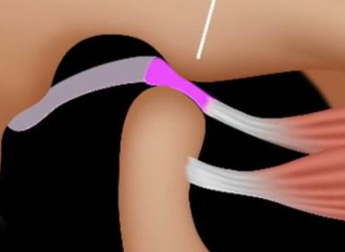
- torn glenoid labrum
- a tear in labrum
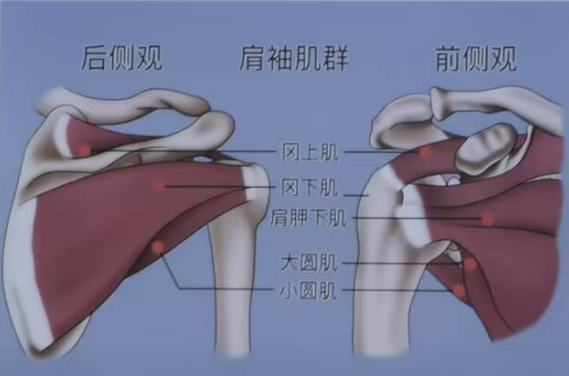
- rotator cuff injury
- a tear in the rotator cuff muscles肩袖肌群
- The rotator cuff muscles (supraspinatus, infraspinatus, teres minor, and subscapularis) anchor the humerus to the scapula
- a tear in the rotator cuff muscles肩袖肌群
- dislocated shoulder
- Elbow joint
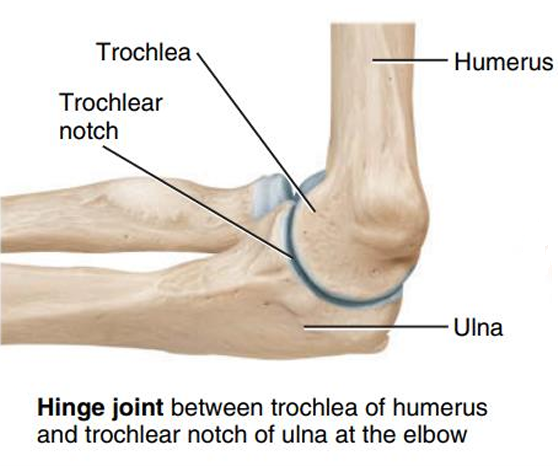
- 一个hinge joint
- formed by the trochlea滑车 and the trochlear notch滑车切迹
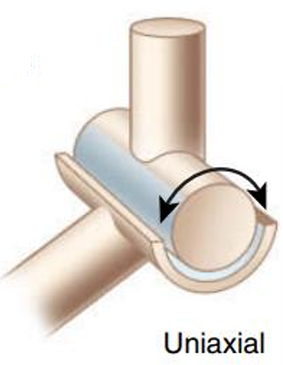
- In a hinge joint, the convex surface of one bone fits into the concave surface of another bone.
- 在铰链关节中,一块骨的凸面与另一块骨的凹面相互嵌合
- As the name implies, hinge joints produce an opening-and-closing motion like that of a hinged door
- formed by the trochlea滑车 and the trochlear notch滑车切迹
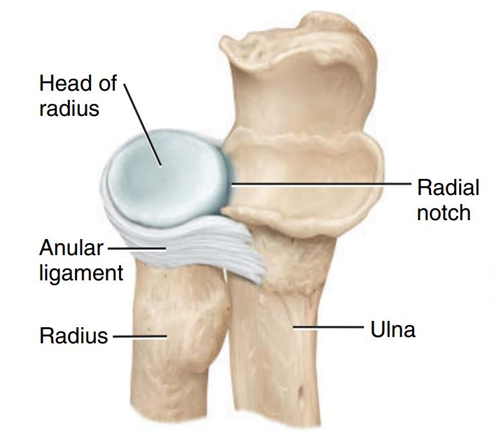
- 一个pivot joint
- enables the palm to turn anteriorly and posteriorly
- allows rotation
- Pivot joint between head ofradius and radial notch of ulna
- 一个hinge joint
- Hip joint
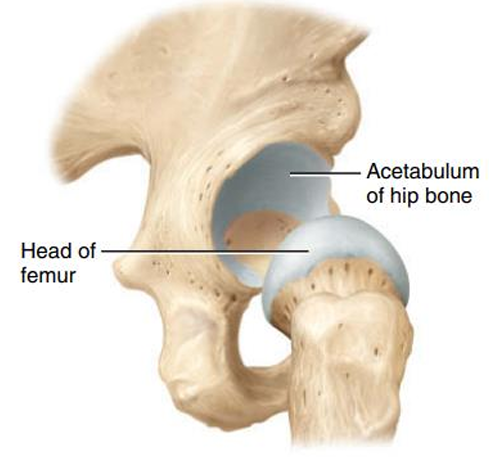
- ball-and-socket synovial joint
- formed by the head of the femur and the acetabulum髋臼 of the hip bone
- More stable, but less movible compared to shoulder joint
- joint 关节
All articles in this blog are licensed under CC BY-NC-SA 4.0 unless stating additionally.