生物力学_Tendons and Ligaments
Tendons and Ligaments
- Function of T&L
- Although tendons and ligaments are mechanically passive (i.e., they do not contract and produce motion as do the muscles), each plays an essential role in joint motion and stability.
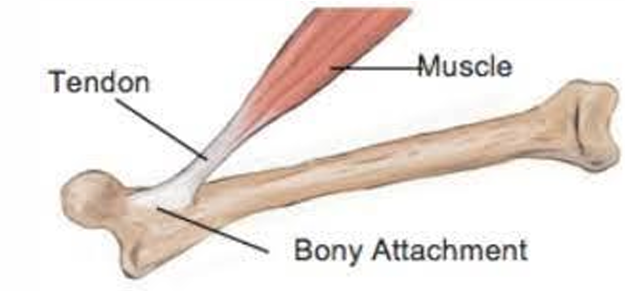
- tendons 肌腱
- attach muscle and transmit the tensile load generated through muscular contraction or passive elongation to bone
- produce joint motion or promote joint stability
- contribute to maintaining body posture.
- tendons and muscles compose the muscle tendon unit
- acts as a dynamic restraint 动态约束
- allow muscles to be pre-positioned at an optimal distance from joints without need for increased muscular length.
- attach muscle and transmit the tensile load generated through muscular contraction or passive elongation to bone
- ligaments 韧带
- connect bone to bone
- augment增强 the mechanical stability of the joints
- guide joint motion, prevent excessive过度 motion
- Ligaments act as static restraints 静态约束
- Tendons
- Structure
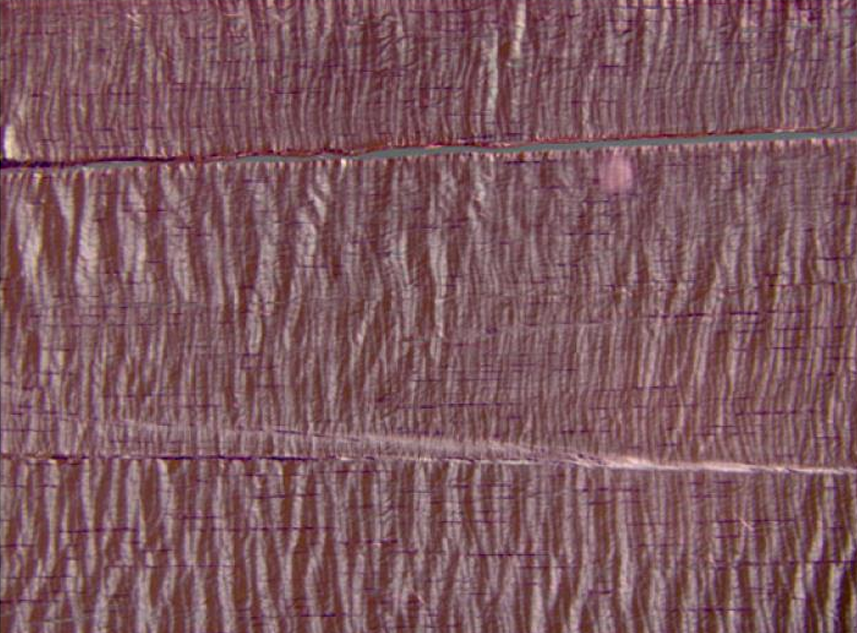
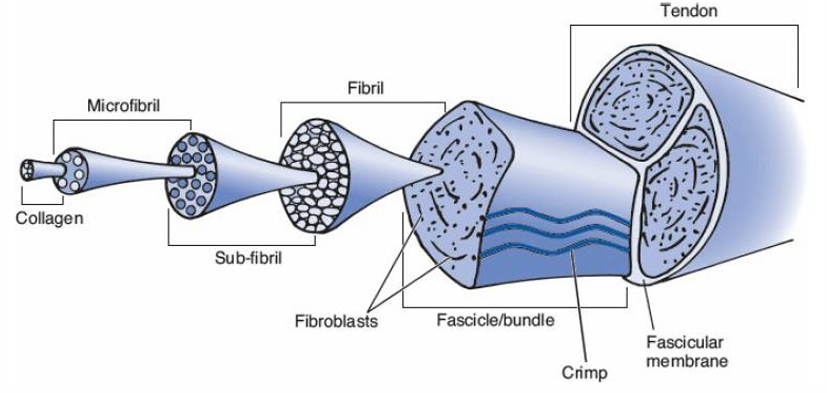
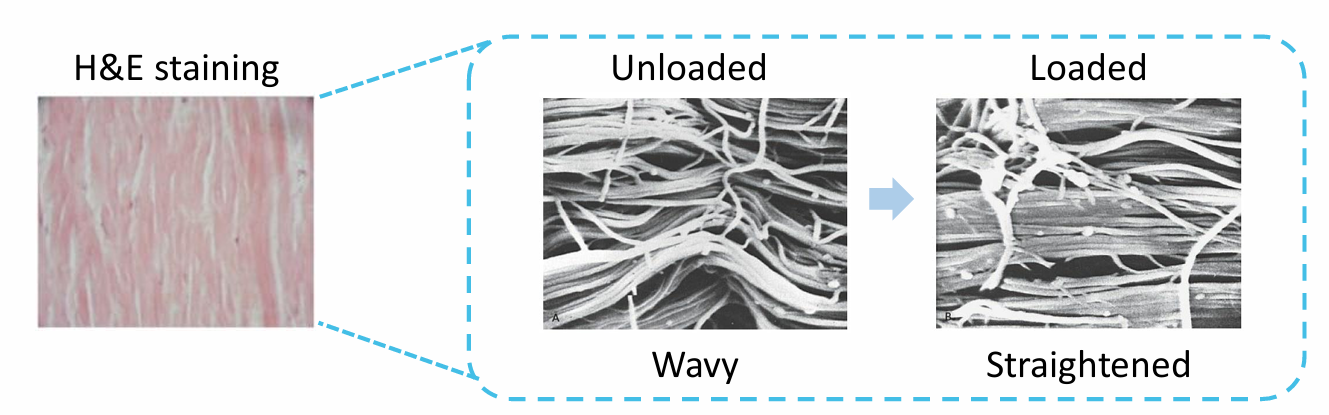
- The parallel arrays of collagen fibers interspersed with darker staining tenocytes/fibroblasts, The wavy or “crimp” pattern is characteristic of unloaded tendon and ligament.
- The parallel arrays of collagen fibers interspersed with darker staining tenocytes/fibroblasts, The wavy or “crimp” pattern is characteristic of unloaded tendon and ligament.
- Composition
- basic
- Tendons are composed of dense connective tissue
- contains an ECM dominated by
- parallel-fibered collagenous network 平行纤维胶原网络
- tenocytes腱细胞(metabolically active fibroblastic cells代谢活跃的成纤维细胞)
- In general, the cellular material occupies approximately 20% of the total tissue volume, while the ECM accounts for the remaining 80%.
- Tenocytes 腱细胞
- Cells within the tendon substance are specialized fibroblasts called tenocytes.
- function
- control tendon metabolism (production and degradation of the ECM)
- mechanotransduction
- respond to the mechanical stimuli applied to the tendon
- particularly tensile loads that serve as signals for collagen production
- shape
- These cells lie in longitudinal rows along the collagen fibrils, following the tensile load at which they are stressed.
- These cells have multiple extensions that stretch extensively within the extracellular matrix, allowing for three-dimensional intercellular communication via gap junctions.
- Blocking these gap junctions in vitro体外 resulted in the cessation停止 of collagen production in response to tensile loads.
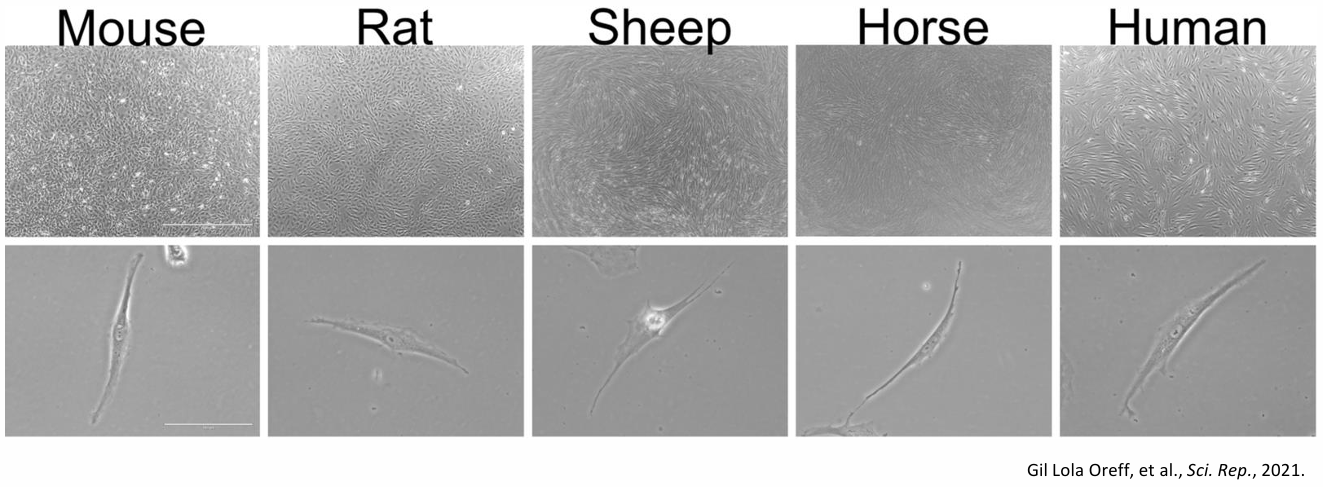
- Tenocytes from all five species shared common characteristics with a fusiform 梭状 appearance, adherence to the flask and similar dimensions
- ECM
- composition
- largely composed of a network of collagen fibers
- Collagen
- the collagen network is dominated by type I fibers (~60%), but other types (e. g., III, IV, V, VI) are also present .
- Collagen type I fibers are characterized by their capacity to sustain large tensile loads while allowing for some level of compliance柔顺性 or mechanical deformation.
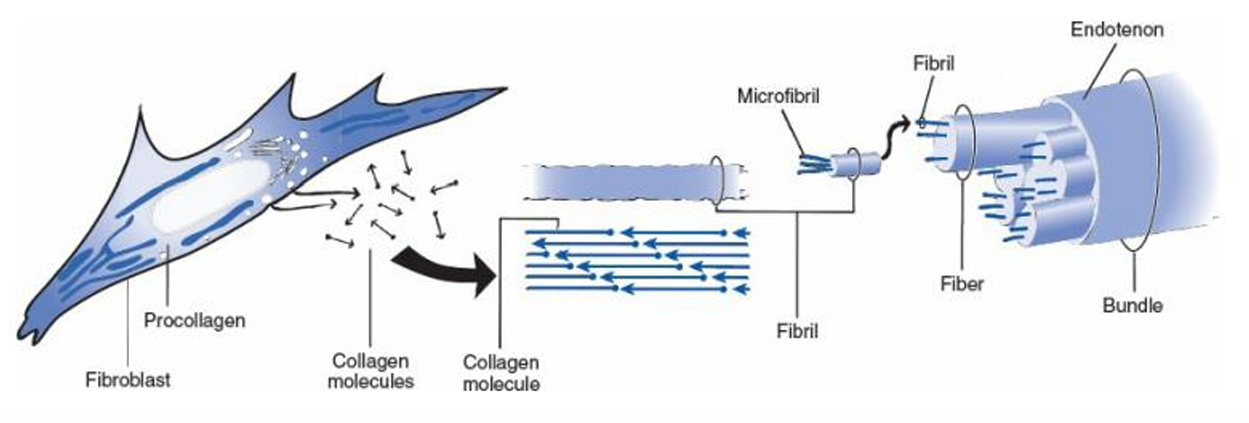
- Collagen is synthesized by tenocytes in an complex process that ultimately contributes to the quality and stability of the collagen molecule
- Cross-links are formed between collagen molecules and are essential to aggregation at the fibril level.
- It is the cross-linked character of the collagen fibrils that gives strength to the tissues they compose and that allows these tissues to function under mechanical stress.
- Collagen
- a smaller percentage of proteoglycans, elastin, and other proteins
- 图
- largely composed of a network of collagen fibers
- function
- maintain the tendon’s structure
- facilitate the biomechanical response to mechanical loading
- composition
- Ground Substance
- The ground substance in tendons and ligaments is composed mainly of proteoglycans (PGs 蛋白聚糖) and other proteins, accounting for <0.2% and approximately 4.5% of the weight, respectively.
- PGs
- PGs are macromolecules composed of various sulfated polysaccharide chains (glycosaminoglycans)
- bonded to a core protein linked to a long hyaluronic acid (HA) chain that forms an extremely high molecular weight PG aggregate
- PGs, such as decorin蛋白核心聚糖 and cartilage oligomatrix protein软骨寡聚基质蛋白, contribute to biomechanical and viscoelastic properties of ground substance.
- PG与水结合
- The PG aggregates bind most of the extracellular water of the tendon, making the matrix a highly structured gel-like material rather than an amorphous无规则 solution.
- function
- allows for spacing and lubrication between the collagen microfibrils
- acts as a cement-like substance that help stabilize the collagenous skeleton of tendons肌腱的胶原骨架
- contributes to the overall strength of these composite structures
- basic
- Structure
- Ligaments
- Structure
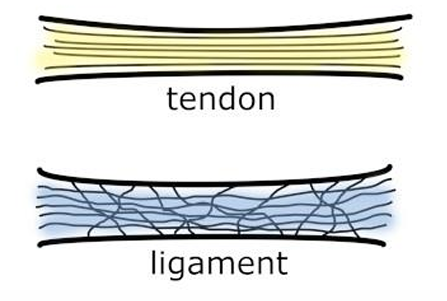
- The ECM of ligaments is also composed mainly of type I collagen
- in contrast to tendons, the fibers are not parallel and are multidirectional
- Most fibers- in line with the axis of the ligament
- Some fibers- with specific orientation among the ligaments
- Depending on the function of the ligament
- Composition
- elastin
- The protein elastin is rarely present in tendons and extremity四肢 ligaments composing approximately 2-3% of the dry weight
- but in elastic ligaments such as the ligamentum flavum黄韧带, the proportion of elastic fibers is large
- flavum ligament黄韧带
- elastic / collagen fibers = 2 / 1
- connects the laminae of adjacent vertebrae
- protect the spinal nerve roots from mechanical impingement撞击
- pre-stress (preload) the motion segment (the functional unit of the spine)
- provide some intrinsic stability to the spine.
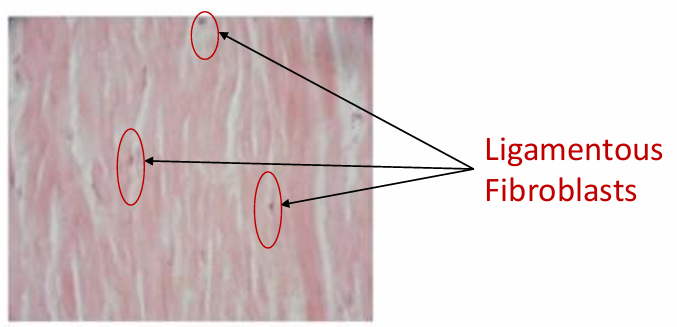
- Ligamentous Fibroblasts
- 图
- 图
- Ground Substance
- The ground substance in tendons and ligaments is composed mainly of proteoglycans (PGs 蛋白聚糖) and other proteins, accounting for <0.2% and approximately 4.5% of the weight, respectively.
- PGs
- PGs are macromolecules composed of various sulfated polysaccharide chains (glycosaminoglycans)
- bonded to a core protein linked to a long hyaluronic acid (HA) chain that forms an extremely high molecular weight PG aggregate
- PGs, such as decorin蛋白核心聚糖 and cartilage oligomatrix protein软骨寡聚基质蛋白, contribute to biomechanical and viscoelastic properties of ground substance.
- PG与水结合
- The PG aggregates bind most of the extracellular water of the tendon, making the matrix a highly structured gel-like material rather than an amorphous无规则 solution.
- function
- allows for spacing and lubrication between the collagen microfibrils
- acts as a cement-like substance that help stabilize the collagenous skeleton of tendons肌腱的胶原骨架
- contributes to the overall strength of these composite structures
- elastin
- Outer Structure and Insertion into Bone
- 图
- 图
- Structure
- Biomechanical Properties of T&L
- 既能承受拉伸又有柔韧性
- Tendons and ligaments are viscoelastic structures with unique mechanical properties
- Tendons
- strong enough to sustain the high tensile forces that result from muscle contraction during joint motion
- yet they are sufficiently flexible to angulate around bone surfaces and to deflect beneath retinacula to change the final direction of muscle pull
- Ligaments
- pliant柔软 and flexible, allowing natural movement of the bones to which they attach
- but are strong and inextensible不易伸长 so as to offer suitable resistance to applied forces.
- 主要承受拉伸
- Both structures sustain mainly tensile loads during normal and excessive loading.
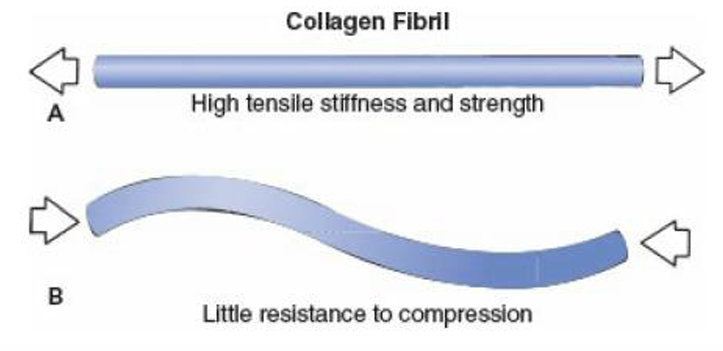
- Strong in tension
- Little resistance to compression
- The large slenderness ratio长细比 makes it easy for them to buckle弯曲 under compressive loads
- viscoelastic
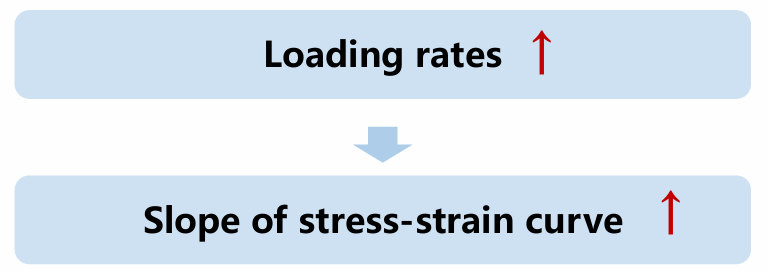
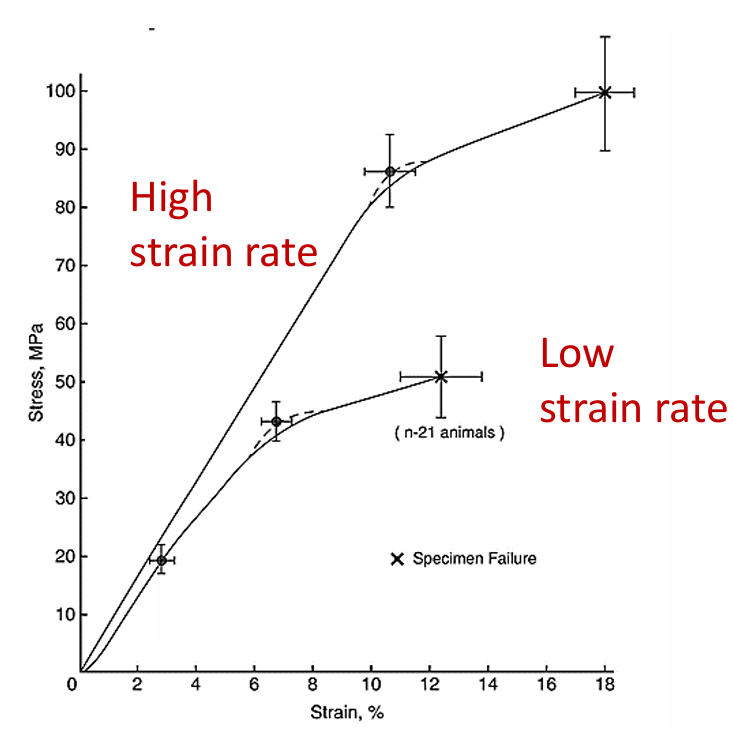
- 加载力的速度快时候弹性模量更大
- With higher strain rates, tendons and ligaments require more force to rupture, and undergo greater elongation
- When injury happens, the degree of damage is related to the rate of loading as well as the amount of load
- 加载力的速度快时候弹性模量更大
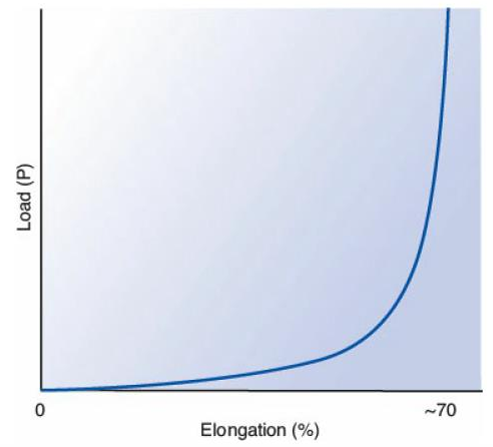
- tensile testing
- 图
- In tensile testing of a human ligamentum flavum黄韧带, elongation of the specimen reached 50% before the stiffness increased appreciably.
- At 70% elongation the ligament exhibited a great increase in stiffness with additional loading and failed abruptly without further deformation.
- The greater proportion of elastic proteins and the resultant elastic capacity of the ligament results then in a larger capacity to elongate before failure (large strain to failure).
- 图
- 能量消耗
- The proportion of elastic proteins in ligaments and capsules关节囊 is extremely important for
- 1.the small elastic deformation that they endure under tensile strain
- 2.the storage and loss of energy.
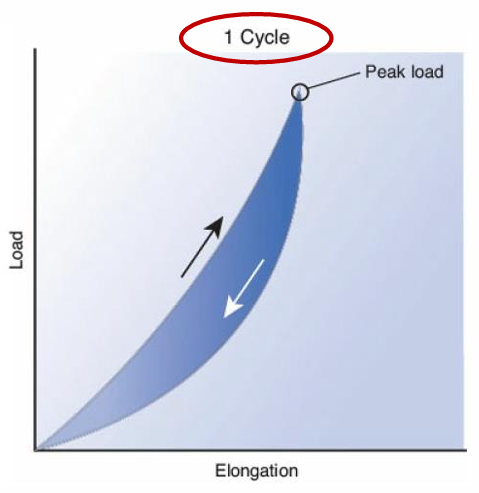
- During the loading and unloading of a ligament between two limits of elongation, the elastic fibers allow the material to return to its original shape and size after being deformed.
- Part of the energy spent is stored.
- What remains represents the energy loss during the cycle and is called hysteresis.
- The area enclosed by the loop represents the energy loss.
- The proportion of elastic proteins in ligaments and capsules关节囊 is extremely important for
- 既能承受拉伸又有柔韧性
- Injury of T&L
- two general categories or combination
- high levels of stress or load
- high rates of strain
- high levels of both stress and strain
- 2种损伤
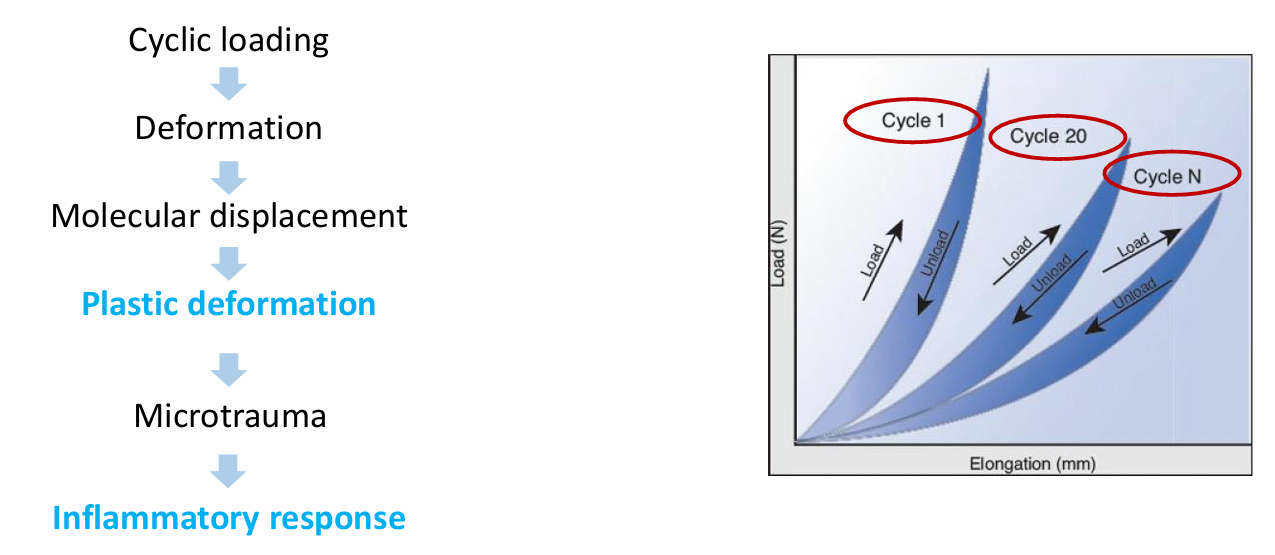
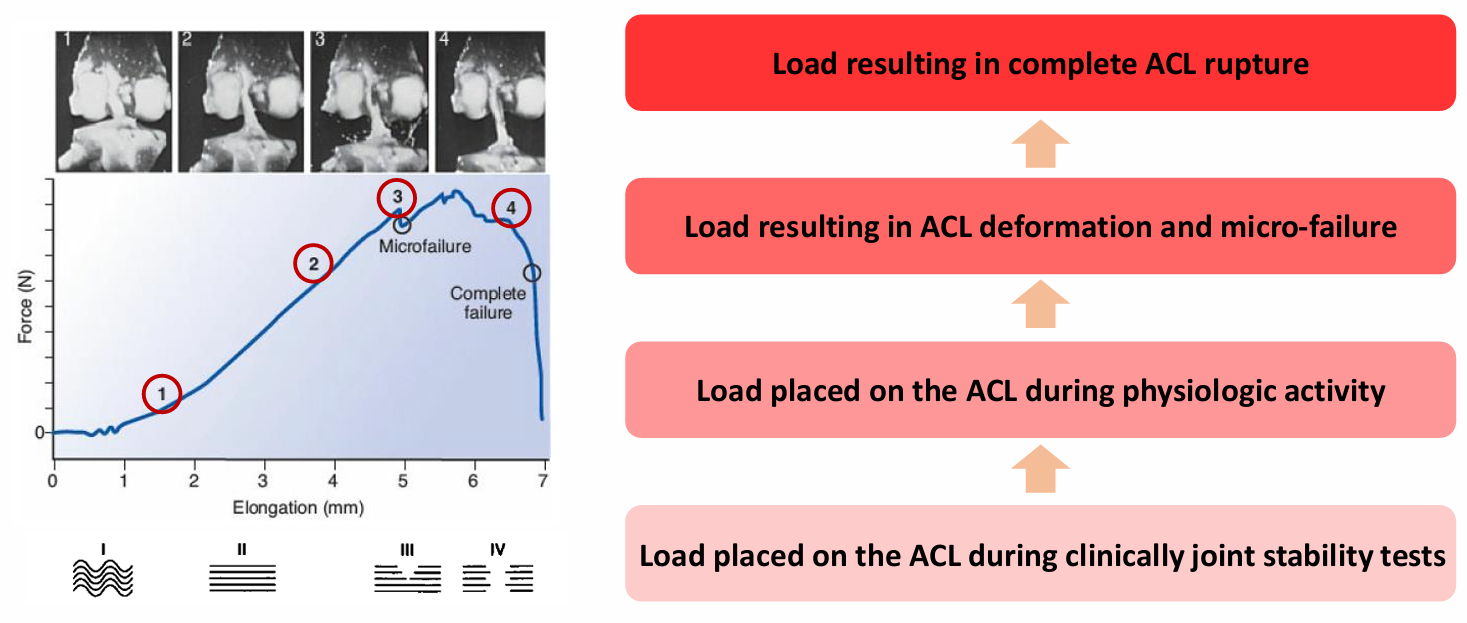
- When a ligament in vivo is subjected to loading that exceeds the physiologic range (injury due to high levels of stress)
- microfailure takes place even before the yield point is reached (i.e., partial rupture of a ligament) yield point
- if the yield point is exceeded, the ligament will undergo gross failure (complete rupture)
- 运动过度→塑性形变→微损伤→炎症
- 从下到上对应1234阶段,1常规测试时候所受力不会造成损伤,后续运动造成微损伤最终撕裂
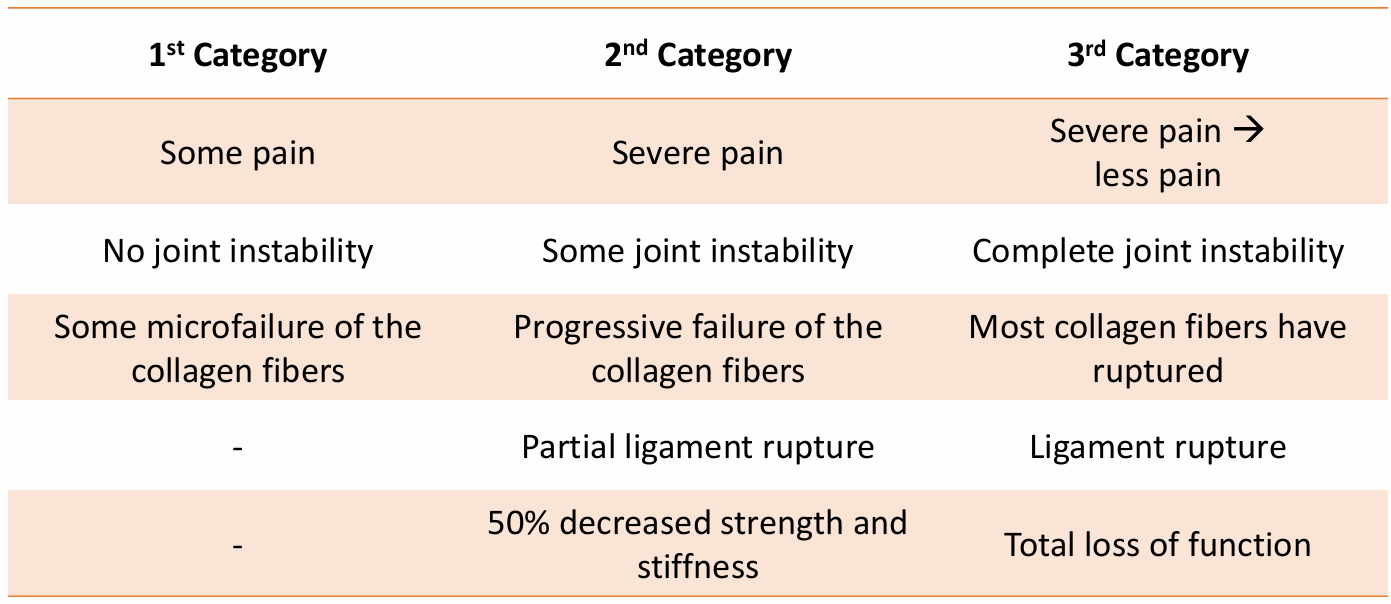
- 韧带损伤的三级损伤标准
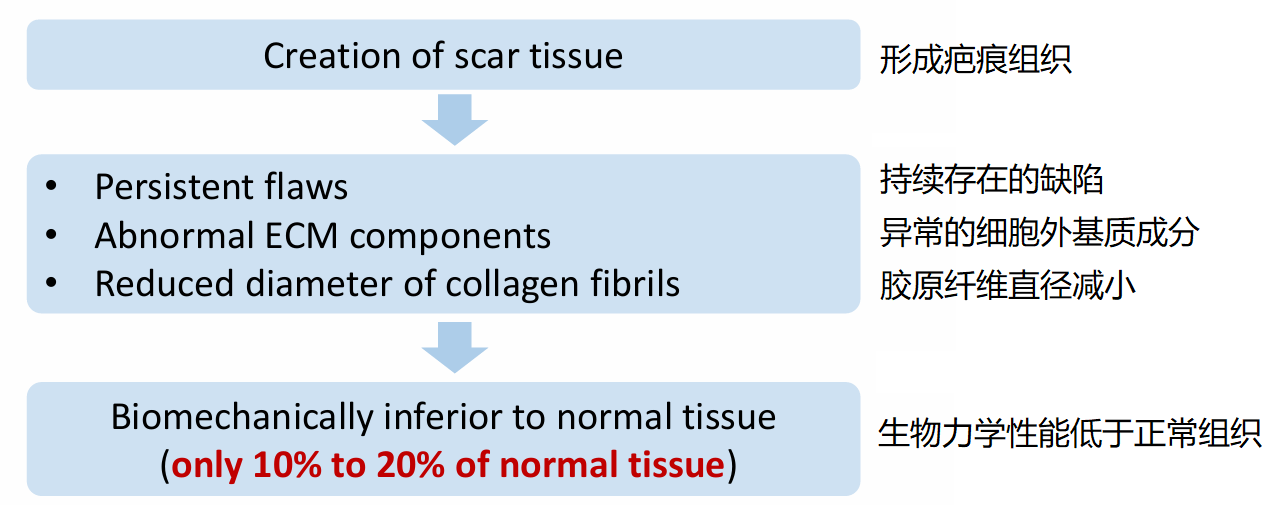
- healing
- The healing process of ligaments is quite slow due to the limited vascularity
- 治愈过程,最终治愈也只有10%-20%性能
- two general categories or combination
- Factors that Affect the Biomechanical Properties of T&L
- Maturation and aging
- During maturation成熟, cross-links strengthen tendons and ligaments, enhancing tensile strength
- With aging, collagen’s mechanical properties declines
- Mobilization and Immobilization
- Ligaments adapt to stress, strengthening with increased loads and weakening with reduced stress or immobilization
- Pharmacologic agents 药物影响
- Steroids inhibit collagen synthesis, affecting healing and reducing peak tissue load
- NSAIDs, like indomethacin and diclofenac, help treat ligament inflammation
- Dietary
- The uptake of vitamins (C, D, E), protein, and zinc is crucial for maintaining the biomechanical function of ligaments
- Maturation and aging
- Case Studies
- Case Study 1
- The regulation of tendon stem cell differentiation by the alignment of nanofibers
- Biomaterials, 2010
- Main idea
- Nanofiber alignment provides topographical cues that regulate tendon stem cell differentiation.
- aligned nanofibers vs random nanofibers
- 纤维方向本身就是细胞命运信号, 细胞会沿着材料结构改变形态和表达
- Electrospinning setup
- syringe with polymer solution
- needle and liquid jet
- high voltage power supply
- Taylor cone
- collector
- Cell morphology
- On aligned fibers, cells become elongated and oriented along the fiber direction.
- On random fibers, cells spread with less directional organization.
- 图 - SEM shows aligned vs random nanofiber networks; fluorescence images show different cell shapes
- Gene expression trends
- SCX scleraxis, a tenogenic marker, is higher on aligned nanofibers at 3d and 7d.
- RUNX2 and ALP are higher on random nanofibers, suggesting more non-tenogenic or osteogenic tendency.
- Integrin α1, integrin β1, integrin α5, and myosin II respond to nanofiber alignment.
- 图 - aligned/random comparison shows material architecture changes tendon stem cell marker expression
- Case Study 2
- Cyclic tensile strain upregulates collagen synthesis in isolated tendon fascicles
- Biochemical and Biophysical Research Communications, 2005
- Experimental setup
- isolated fascicle mounted in a chamber
- medium surrounding the fascicle
- Perspex grips and 15 mm gauge length
- load cell
- loading arm connected to actuator
- Mechanical stimulus
- cyclic tensile strain applied to tendon fascicles
- compared with unstrained controls
- Matrix synthesis readouts
- sulfate incorporation increased with strain by 7.9%
- proline incorporation increased with strain by 25.1%
- proline incorporation is a collagen synthesis-related signal
- 机械拉伸会让 tendon fascicle 更积极合成基质, 尤其是 collagen 相关合成
- Case Study 3
- Multifunctional tendon-mimetic hydrogels
- Science Advances, 2023
- Design logic
- anisotropic assembly of aramid nanofiber composites
- stiff aramid nanofibers mimic aligned collagen fibers
- soft polyvinyl alcohol (PVA) mimics proteoglycan-rich soft matrix
- 硬纤维 + 软基质, 模仿肌腱里 collagen fibers 和 PG matrix 的组合
- Fabrication route
- random network
- stretching
- confined drying
- reswelling
- isotropic network becomes oriented structure
- Reported properties
- modulus about 1.1 GPa
- strength about 72 MPa
- fracture toughness 7333 J/m^2
- properties approach natural tendon more closely than previous synthetic hydrogels
- Added functions
- printed bioelectronic connections
- biofunctionalization for cell interface
- cell alignment on ACH-80 surface
- 图 - oriented hydrogel structure and aligned cells show tendon-mimetic anisotropy
- Case Study 1
- Take-Home Message
- What is the major composition of tendons and ligaments?
- Answer EN
- Tendons and ligaments are dense connective tissues composed mainly of extracellular matrix and fibroblastic cells.
- The ECM is dominated by collagen, mostly type I collagen.
- Tendons contain about 75-85% collagen, < 3% elastin, and 1-2% proteoglycans.
- Ligaments contain about 70-80% collagen, elastin, proteoglycans, and resident ligamentous fibroblasts.
- Ground substance contains PG aggregates that bind water, lubricate collagen microfibrils, and stabilize the collagen skeleton.
- 回答 中文
- 肌腱和韧带主要是胶原为主的 ECM 加少量细胞
- 肌腱细胞叫 tenocytes, 韧带里有 ligamentous fibroblasts
- 胶原主要负责抗拉, PG 和水形成凝胶样基质, 帮助润滑和稳定纤维骨架
- Answer EN
- What are the structural properties of tendons and ligaments?
- Answer EN
- Tendons have parallel-fibered collagen networks aligned with the main tensile loading direction.
- Unloaded tendons and ligaments show a wavy crimp pattern that straightens during loading.
- Tenocytes lie in longitudinal rows along collagen fibrils and communicate through gap junctions.
- Ligaments contain mainly type I collagen but their fibers are more multidirectional than tendon fibers.
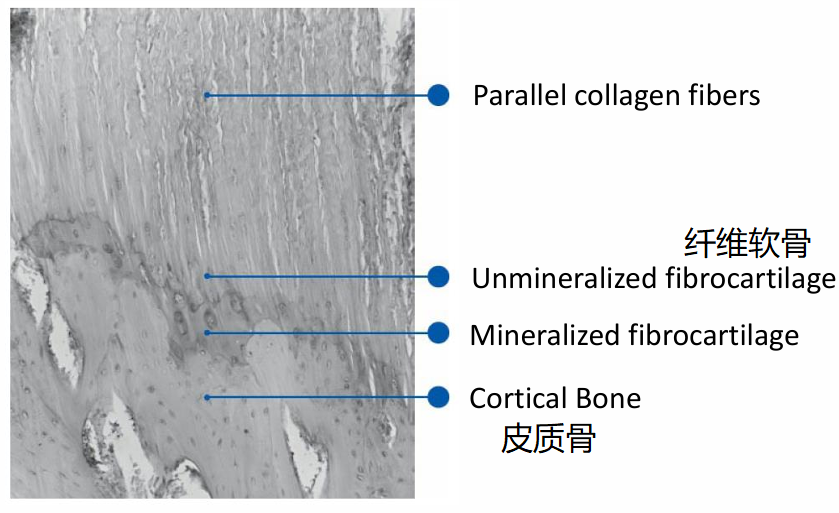
- Insertion into bone is graded through parallel collagen fibers, unmineralized fibrocartilage, mineralized fibrocartilage, and cortical bone.
- 回答 中文
- 肌腱胶原纤维更平行, 适合单向传递肌肉拉力
- 韧带胶原方向更多样, 适合按关节运动方向限制过度运动
- unloaded 状态的 crimp 波纹先被拉直, 这是早期变形的重要来源
- 肌腱/韧带插入骨的位置有纤维软骨过渡层, 用来减少软硬交界处应力集中
- Answer EN
- What is the relationship between the structure and respective function of tendons and ligaments?
- Answer EN
- Tendons connect muscle to bone and transmit tensile load, so their collagen fibers are highly aligned and strong in tension.
- Tendons are also flexible enough to wrap or deflect around anatomical structures and redirect muscle pull.
- Ligaments connect bone to bone, guide joint motion, and prevent excessive motion.
- Ligament fiber orientation is more multidirectional and function-dependent, allowing joint restraint in specific directions.
- Elastic components in ligaments, especially ligamentum flavum, allow large elongation and energy storage before failure.
- 回答 中文
- 肌腱是传力绳, 所以结构强调平行胶原和抗拉强度
- 韧带是限位带, 所以结构强调按关节运动方向布置纤维
- 黄韧带 elastin 多, 所以能大幅伸长并帮助脊柱保持稳定
- Answer EN
- Which factors may affect the biomechanical properties of tendons and ligaments?
- Answer EN
- Maturation strengthens tendons and ligaments by increasing cross-links and tensile strength.
- Aging reduces collagen mechanical properties.
- Mobilization and increased loads strengthen ligaments, while reduced stress or immobilization weakens them.
- Steroids inhibit collagen synthesis, affect healing, and reduce peak tissue load.
- NSAIDs such as indomethacin and diclofenac help treat ligament inflammation.
- Vitamins C, D, E, protein, and zinc are important for maintaining biomechanical function.
- Loading rate also matters: higher strain rate increases force required for rupture and increases stress-strain slope.
- 回答 中文
- 成熟、交联、合理加载会让肌腱韧带更强
- 衰老、固定不用、激素抑制胶原合成会让组织变弱或愈合变差
- 营养和抗炎药物会影响修复环境
- 加载速度也重要, 拉得越快组织表现得越硬, 损伤风险和破裂模式也会变
- Answer EN
- What is the major composition of tendons and ligaments?

https://vexpaer.github.io/2026/07/01/%E7%94%9F%E7%89%A9%E5%8A%9B%E5%AD%A6_Tendons%20and%20Ligaments/
All articles in this blog are licensed under CC BY-NC-SA 4.0 unless stating additionally.