
组织工程_6.biomaterial & delivery bioactive cues
- What to control in delivery
- Relevant (What?)
- Temporal (when?)
- Spatial (Where?)
- Nanoscale (How?)
- Multi-dimensional? (all above)
- 递送后脱落
- Growth factor delivery
- basic
- Growth factors are by far the drugs of highest interest in tissue engineering.
- Many of the growth factors are dimers, typically a receptor (kinase) that is bound to one subunit of the growth factor phosphorylating the receptor that is bound to the other
许多生长因子为二聚体,通常是一个亚基结合激酶,使另一个亚基结合的受体发生磷酸化 - Examples of growth factors
- BMPs, (INFUSE®; Medtronic)
- TGF-βs
- platelet-derived growth factors (PDGFs), (Regranex®; J & J)
- fibroblast growth factors (FGFs)
- VEGFs
- Insulin like growth factors (IGF)
- Sequential release of dual GFs 双生长因子的序贯释放
- 分阶段释放两种不同功能的生长因子,让它们在不同阶段发挥协同作用
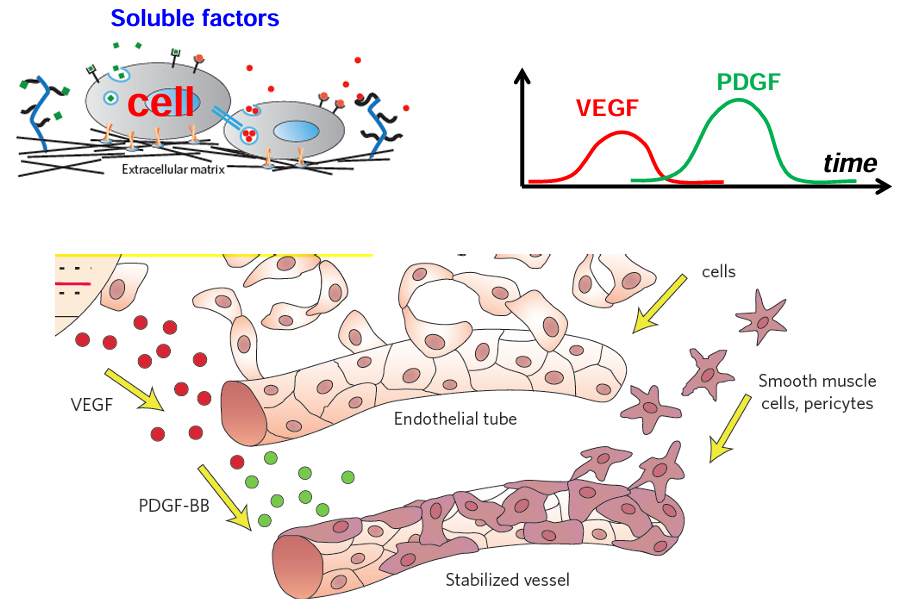
先VEGF-A生成血管, 再PDGF成熟血管 - The growth factor VEGF-A induces angiogenesis 血管内皮生长因子 (VEGF-A) 可诱导血管生成
- however, the newly formed blood vessels are often immature不成熟, being hyperpermeable高通透性 and unusually branched in architecture结构有分支
- Other growth factors, such as PDGF血小板衍生生长因子, are known to induce maturation of these vessels, by associating them with other cells that stabilize the new vessels and reduced permeability
- two-stage release method
- release VEGF-A quickly, being incorporated整合到 into the surface of the scaffold
- release PDGF more slowly, being pre-incorporated预整合到 into microparticles微粒 that were then incorporated into the scaffold
- Delivering the right soluble factors at the right time
- 分阶段释放两种不同功能的生长因子,让它们在不同阶段发挥协同作用
- basic
- soluble factor load
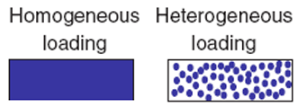
- Homogeneous loading 均相负载
- hydrophilic scaffold (hydrogels) 亲水支架
- hydrophilic drugs (growth factor) 亲水药物
- Hydrophilic drug delivered by hydrophlic materials
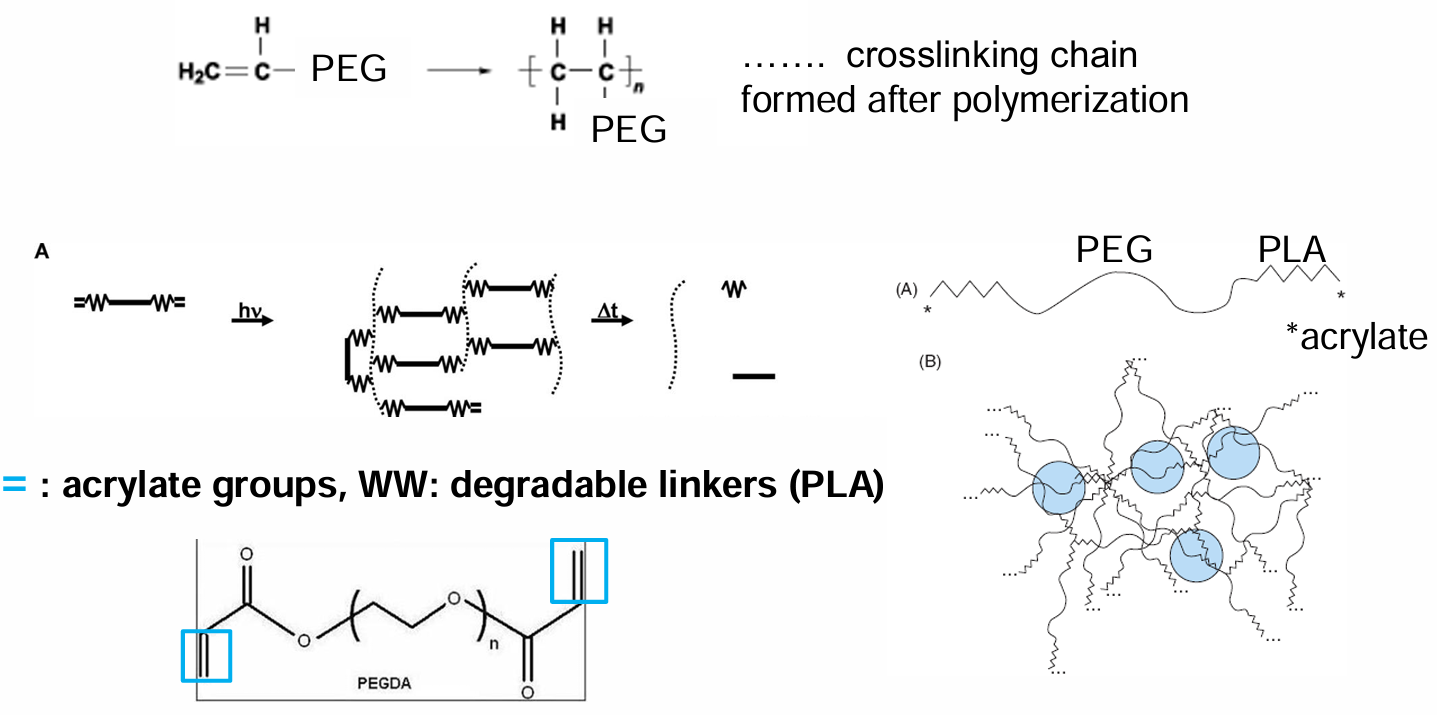
水凝胶- Homogeneous hydrogels have a structure like a 3D “fishing net” connected by crosslinks (knots)
- The molecular weight of the chains that connect the cross-links and the basic structure of the polymer chain determine the distance between the cross-links, and thus the average pore size within the material
- 连接交联键的链段分子量与聚合物链的基本结构,决定了交联键之间的距离,进而决定材料内部的平均孔径
- When the average distance between cross-links within the hydrogel network becomes of the same order of magnitude as the diameter of the protein drug, diffusion of the drug becomes significantly restricted and the drug becomes entrapped within the hydrogel.
- 当水凝胶网络中交联键的平均距离与蛋白药物的直径处于同一数量级时,药物的扩散会受到显著限制,药物会被截留于水凝胶内部
- 图
- Heterogeneous loading 非均相负载
- hydrophobic scaffold (like PCL) 疏水支架
- hydrophilic drugs (growth factor) 亲水药物
- Hydrophilic drug delivered by hydrophobic materials
- Growth factor
- can be incorporated负载 by simple way
- such as adsorption吸附 on the material surface
- porous sintered polyester particles soaked in BMP7 solution
- 将多孔烧结聚酯颗粒浸泡在骨形态发生蛋白 7 (BMP7) 溶液中
- Protein drug
- can be made in to a dry powder干粉 (by lyophilization and milling冻干研磨, or spray-dried directly直接喷雾干燥)
- then such powders directly into polymer scaffolds
- BMP-7 was suspended in degradable polyester polymer in an organic solvent, films were cast and the solvent was evaporated to result in polymer films containing the polymer fine particles of the protein drug distributed throughout.
- 骨形态发生蛋白 7 (BMP-7) 悬浮在含可降解聚酯聚合物的有机溶剂中,浇铸成膜后蒸发溶剂,最终得到蛋白药物细颗粒均匀分布的聚合物膜
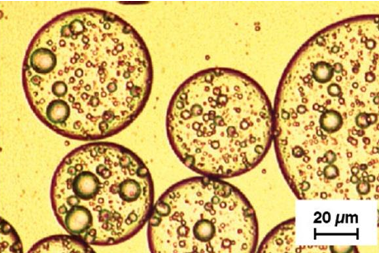
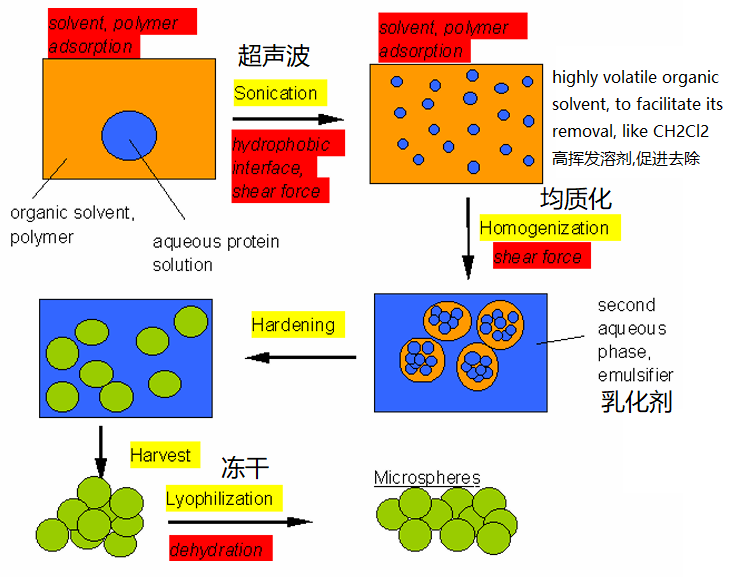
- Double emulsion双重乳液法
- water-in-oil-in-water
- product - hydrophobic polymer microparticle with dispersed domains of protein-containing water droplets
- Limitation
- Low encapsulation efficiency包封率 (EE)
- commonly used polymer (PLA, PLGA) degrade to yield acidic products that lead to chemical changes in the protein encapsulated in the microspheres
常用聚合物降解会产生酸性产物,导致包的蛋白发生化学变化- To counter this, bases, such as Mg(OH)2 , are coencapsulated, dramatically improving stability of the encapsulated protein
- 为解决这一问题, 可共包裹碱类物质, 如氢氧化镁 Mg (OH)₂, 从而显著提升被包裹蛋白的稳定性
- 流程
- Growth factor
- 图
- Homogeneous loading 均相负载
- soluble factor release
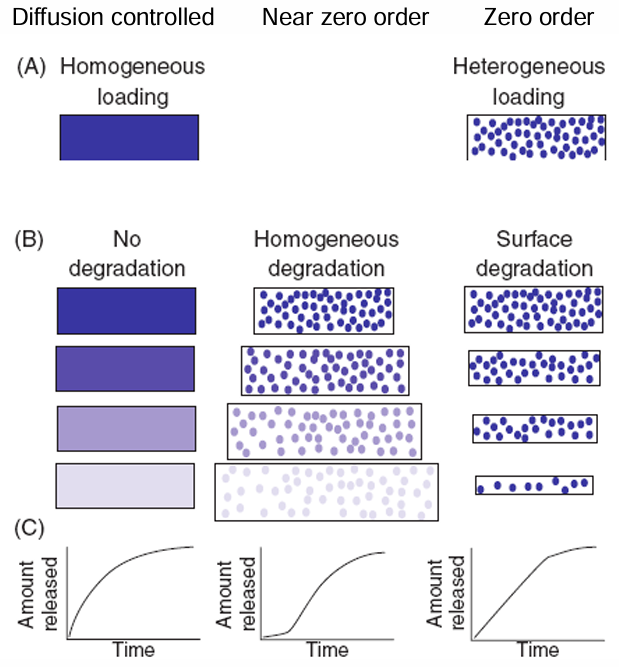
- Diffusion-controlled release 扩散控制释放
- material structure does not present a big resistance to drug diffusion 材料结构对药物扩散无显著阻力
- e.g. hydrogel水凝胶 mesh孔径 sizes larger than around 100 nm.
- Release is independent of material degradation 释放过程与材料降解无关
- Near zero order release 近零级释放
- with smaller mesh size, drug cannot escape from the matrix until the matrix begins to degrade (homogeneous/bulk degradation)
- As the gel degrades, the diffusion coefficient increases over time, leading to increasing release rates.
- as release occurs, the concentration of drug remaining in the hydrogel matrix decreases over time, offsetting抵消 this increasing release rate.
- When these two effects are balanced, release are nearly order接近零级释放 , i.e. that are nearly constant over time
- Zero order release 零级释放
- hydrophobic scaffold leads to surface degradation 疏水性支架会发生表面降解
- drug release depends on the rate of polymer degradation and also the morphology of the implant 药物释放由聚合物降解速率和植入物形态决定
- rate of release in such morphologies is close to constant over time 释放速率恒定
- Zero order release generally results in prolonged release
- 图
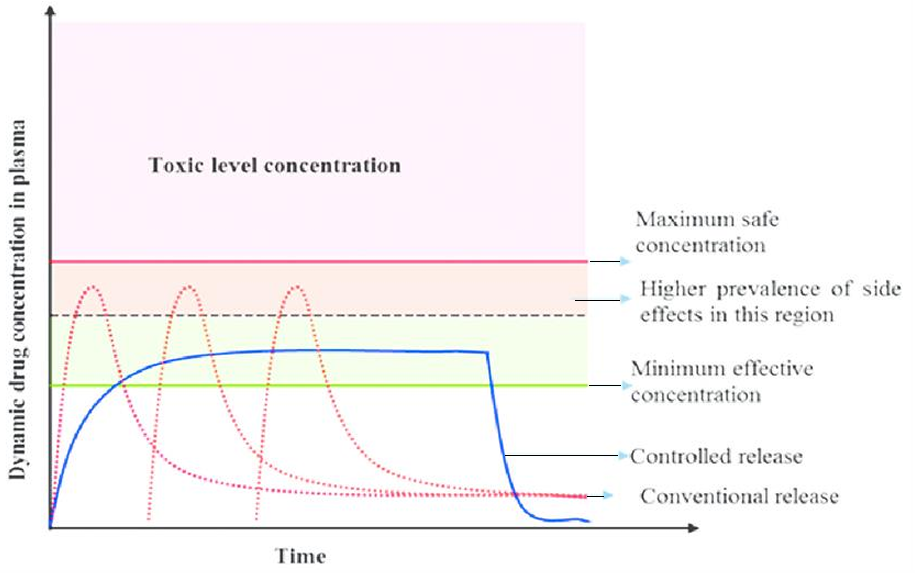
- Uncontrolled drug release vs. controlled drug release
- Diffusion-controlled release 扩散控制释放
- Manipulating the cargo release rate by controlling biomaterial porosity
- 不同孔径可以控制释放速率
- 10-kDa 的 PEG 形成的水凝胶孔径更大,货物释放更快, 2-kDa 的 PEG 形成的孔径更小,释放更慢
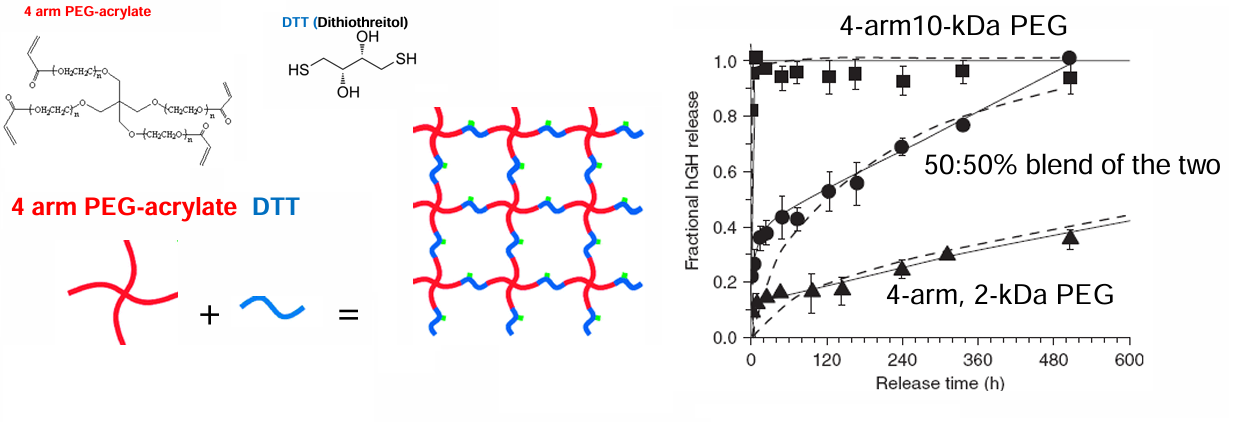
Da为单位道尔顿, 1/12C原子质量
- 10-kDa 的 PEG 形成的水凝胶孔径更大,货物释放更快, 2-kDa 的 PEG 形成的孔径更小,释放更慢
- cargo interactions 蛋白与基质的作用
- 大量低亲和力静电
- Numerous but low affinity electrostatic interactions between the protein drug and the matrix can lead to sustained release in highly porous biopolymer matrices
- 蛋白药物与基质之间大量低亲和力的静电相互作用,可实现药物的缓释
- Native hepatocyte growth factor releases very slowly from cross-linked gelatin matrices
- 天然肝细胞生长因子从交联明胶基质中释放速度极慢
- By contrast, when a highly charged region of the protein was deleted to make a less charged variant protein, that variant was released much faster by simple diffusion
- 相比之下,当删除该蛋白的高电荷区域以制备低电荷变体蛋白时,该变体可通过简单扩散实现更快释放
- Most growth factors contain on their surfaces domains that are positively charged, that bind with relatively high affinity to highly sulfated GAG like heparan sulfate or heparin in the extracellular matrix
- 大多数生长因子的表面含有带正电的结构域,这些结构域能以较高亲和力结合ECM中高度硫酸化的糖胺聚糖 (GAG)
- 高亲和力生物物理作用
- Some biopolymeric matrices have the potential to exhibit high affinity biophysical interactions for some proteins
- 部分生物聚合物基质可能与某些蛋白发生高亲和力生物物理相互作用
- FGF-2, VEGF contains a very high-affinity binding site for fibrinogen and fibrin (polymerization product of fibrinogen by thrombin)
- 成纤维细胞生长因子 - 2 (FGF-2)、血管内皮生长因子 (VEGF) 均含有与纤维蛋白原及纤维蛋白 (凝血酶作用下纤维蛋白原的聚合产物) 的高亲和力结合位点
- 例
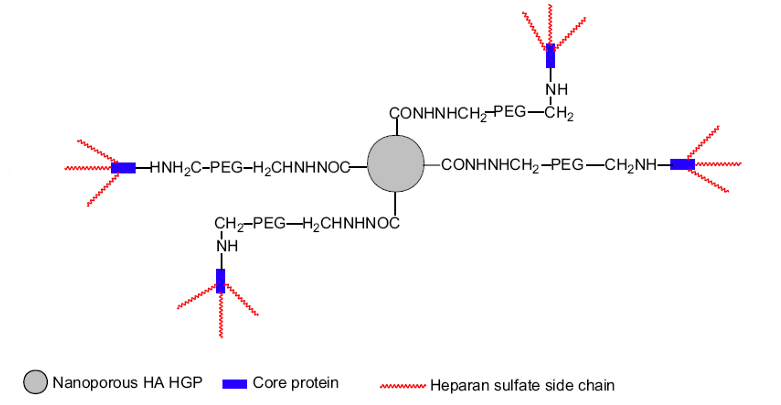
- heparan sulfate (HS)-bearing perlecan domain I (PlnDI) was covalently immobilized to hyaluronic acid hydrogel particles (HA HGP) via a flexible poly(ethylene glycol) (PEG) linker
- 含硫酸乙酰肝素 (HS) 的基底膜蛋白聚糖结构域 I (PlnDI),通过柔性聚乙二醇 (PEG) 连接子共价固定于透明质酸水凝胶颗粒 (HA HGP) 表面
- 大量低亲和力静电
- 不同孔径可以控制释放速率
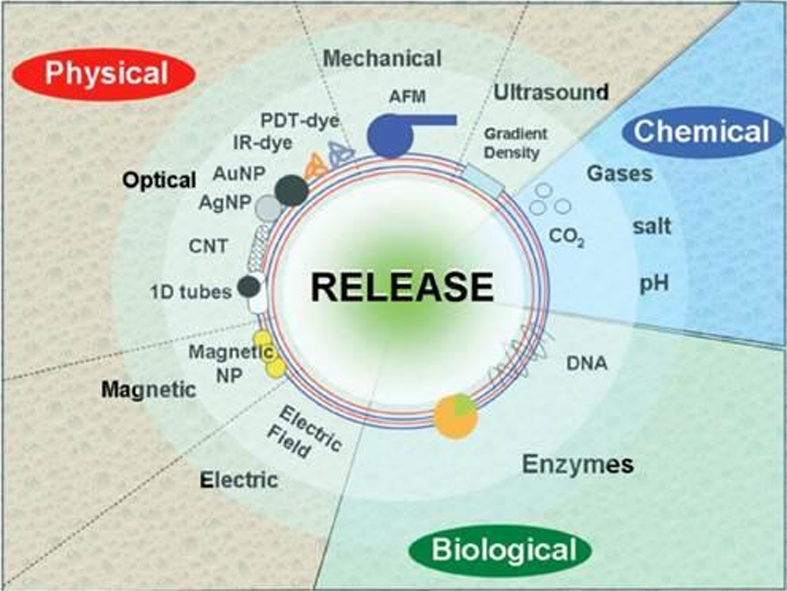
- Controlled delivery by stimuli responsive biomaterials
- three main categories
- physical
- biological
- chemical
- 图
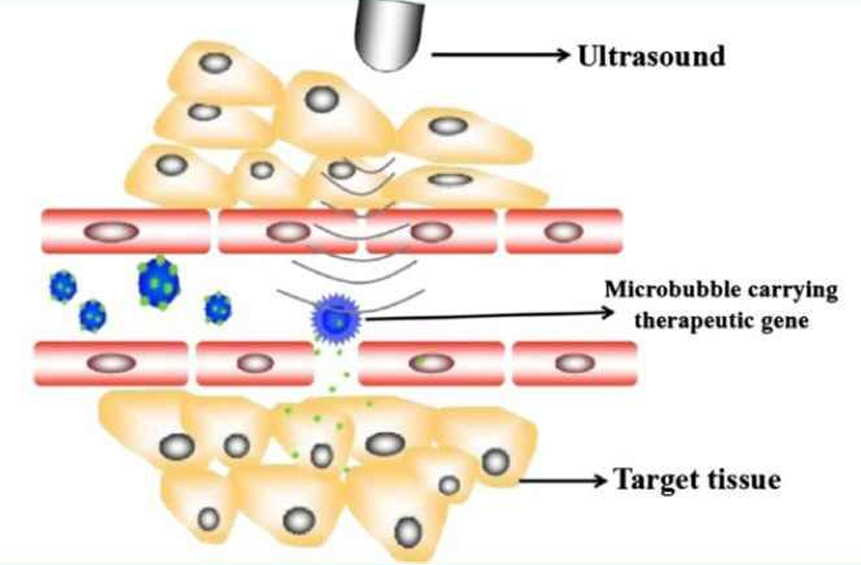
- Ultrasound bursting microbubbles to release drugs to the target site
- 在target地方使用超声打碎经过的泡泡释放药物
- 在target地方使用超声打碎经过的泡泡释放药物
- NIR (near infrared) triggered drug release
- NIR irradiation of the upconversion nanoparticle (UCNP) generate UV emission, which cleaves linking polymer or degrades gating polymer to release drugs
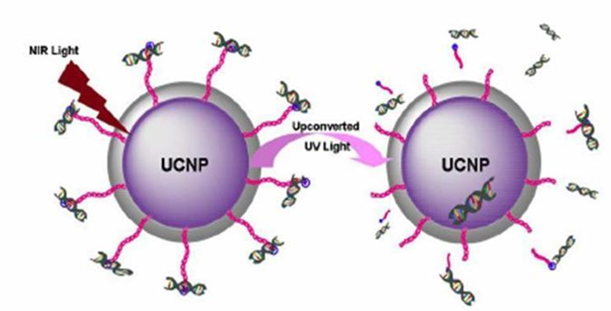
上转换纳米颗粒UCNP的近红外照射会产生紫外发射,该紫外发射可切割连接聚合物或降解门控聚合物以释放药物
- Advantage is that NIR has deep tissue penetration
优势是近红外光具有深层组织穿透性
- NIR irradiation of the upconversion nanoparticle (UCNP) generate UV emission, which cleaves linking polymer or degrades gating polymer to release drugs
- three main categories
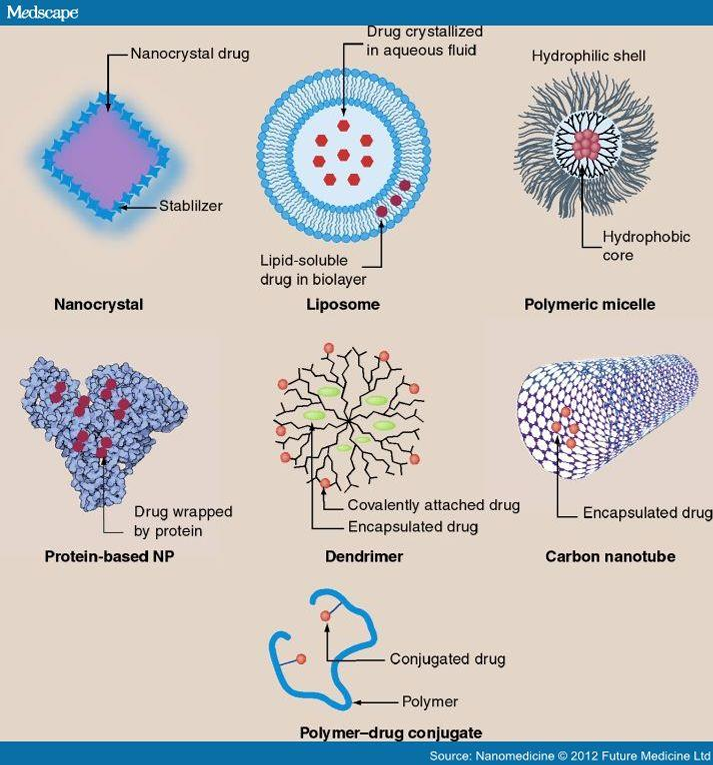
- Nano/microcarriers for drug delivery
- 图
- 图
- Growth factor delivery
- 递送不脱落
- Presentation of immobilized bioactive factors
固定化生物活性因子的呈递- For example, presentation of cell adhesion factors细胞黏附因子 are also important for tissue engineering
- Adhesion factors include
- fibronectin 纤连蛋白
- vitronectin 玻连蛋白
- fibrinogen 纤维蛋白原
- the laminins 层粘连蛋白
- thrombospondin 血小板反应蛋白
- In addition to the whole proteins, subdomains within the proteins that contain the receptor-binding domains
除完整蛋白外,还包括蛋白中含受体结合结构域的亚结构域 - Synthetic peptides like RGD, IKVAV, GFOGER, etc. 都是合成的肽段序列
- Generally placed in the scaffold via covalent bond or the scaffold itself is made of this molecules
- Covalent coupling of biomolecules to scaffold
- 让递送的东西一直留在支架上持续发挥作用
- Controlled delivery in tissue engineering does not always imply that the bioactive agent is actually released from the support, a desired controlled release outcome may mean that the bioactive agent is retained on the surface of a polymer matrix or scaffold.
组织工程中的可控递送并不总是意味着生物活性物质会从载体中实际释放, 理想的可控释放结果可能是生物活性物质保留在聚合物基质或支架的表面 - In order for an adhesion factor to carry out its biological function of transmitting stress between a substrate outside the cell and the cytoskeleton within the cell, the adhesion factor must be immobilized to the substrate.
为使黏附因子发挥其在细胞外基质与细胞内细胞骨架之间传递应力的生物学功能,黏附因子必须固定在基质上 - Covalent tethering of proteins can compromise their activity, Correct orientation of the immobilized proteins is critical to their biological activities.
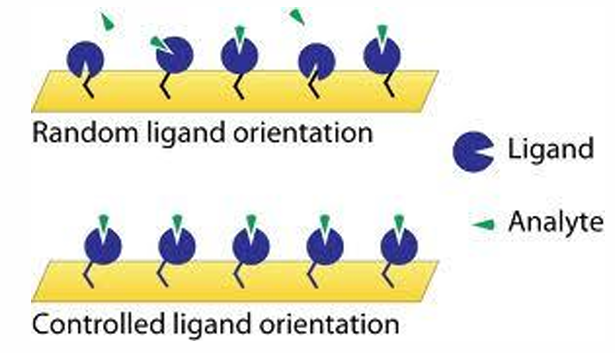
蛋白质的共价固定可能会损害其活性, 固定化蛋白质的正确取向对其生物学活性至关重要
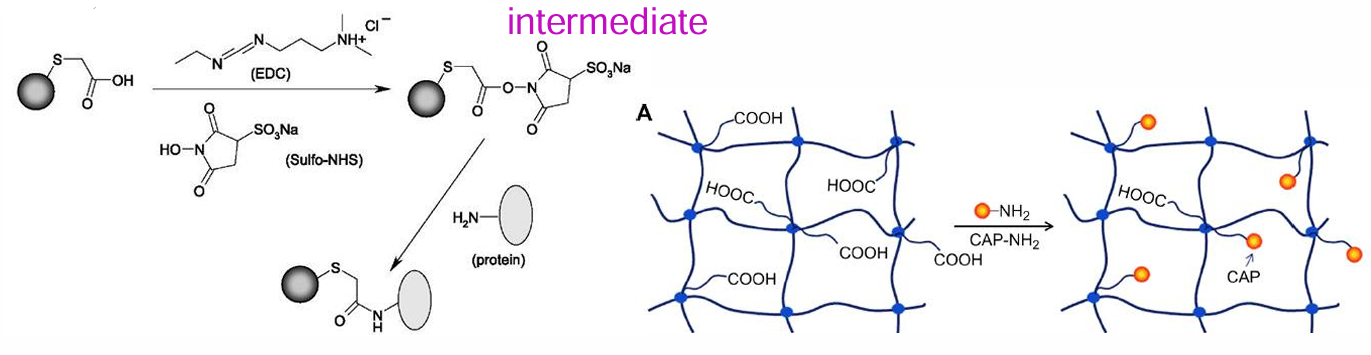
- 例 - EDC/NHS coupling
- 通过水溶性碳二亚胺(EDC)和 N - 羟基琥珀酰亚胺(NHS)的协同作用,实现羧基-COOH与氨基-NH₂的高效偶联,生成稳定的酰胺键-CONH-
- 通过水溶性碳二亚胺(EDC)和 N - 羟基琥珀酰亚胺(NHS)的协同作用,实现羧基-COOH与氨基-NH₂的高效偶联,生成稳定的酰胺键-CONH-
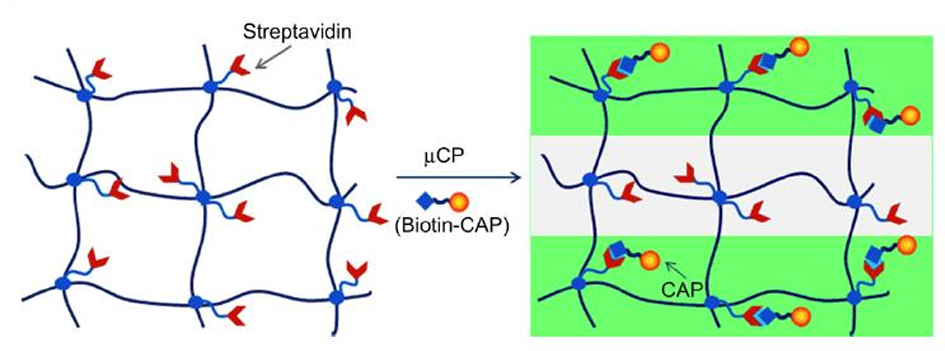
- 例 - Biotin/streptavidin
- 这俩东西碰到一起能黏上
- 这俩东西碰到一起能黏上
- Bioconjugation - click chemistry
- 核心思想是用不影响其他地方的反应连接不同组件之间的C原子
- Click chemistry describes chemistry tailored to generate substances quickly and reliably by joining small units together.
点击化学是一类经设计的化学方法,通过连接小分子单元快速、可靠地生成目标物质 - Click chemistry is not a single specific reaction, but was meant to mimic nature, which also generates substances by joining small modular units
点击化学并非单一特定反应,而是旨在模拟自然界 —— 自然界同样通过连接小分子模块化单元生成物质 - 特点
- generate only inoffensive byproducts
- be physiologically stable
- favor a reaction with a single reaction product
- have simple reaction conditions
- use readily available starting materials and reagents
- use no solvent or use a solvent that is benign无害的 or easily removed (preferably water)
- provide simple product isolation by non-chromatographic非色谱 methods (crystallisation or distillation)
- Presentation of immobilized bioactive factors
- Combined delivery of soluble and immobilized bioactive factor
- 同时递送会溶解的和固定的生物活性因子
- Sustained release of soluble bioactive factors is essential to the recruitment of the cells to the biomaterial scaffold and subsequent modulation (i.e., differentiation) of the recruited cells
可溶性生物活性因子的持续释放,对于将细胞募集到生物材料支架上以及后续调控(即分化)至关重要 - Some bioactive factors are active in their bound rather than free state, such as cell adhesive factors
部分生物活性因子在结合态而非游离态下具有活性,例如细胞黏附因子 - Immobilization of cell adhesive factors in biomaterial scaffold is important to the cell-scaffold interactions and mechanotransduction
将细胞黏附因子固定在生物材料支架上,对细胞 - 支架相互作用及机械传导具有重要意义 - 例 1
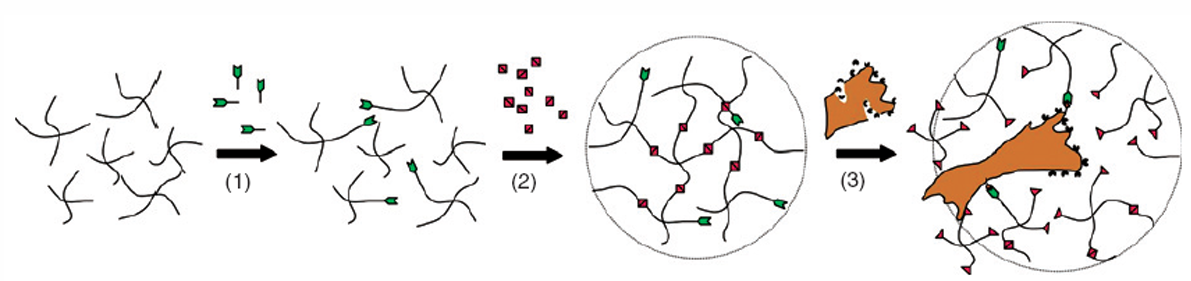
- Biomimetic gel matrices can be constructed by cross-linking of reactive branched PEGs, e.g. terminated with vinylsulfone moieties, and dithiol peptides (red squares), with a cysteine residue on each end of the peptide.
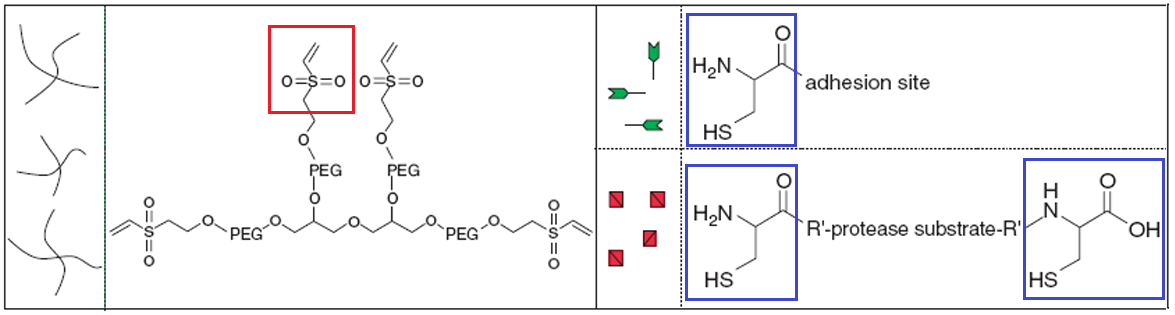
这句话在说红框和蓝框里东西可以连起来
- (1)绿色的(RGB黏附肽,模拟ECM与细胞结合位点)只有一个蓝框,第一步不会交联,只是绿的连到PEG上 (2)红的有两个蓝框,会与PEG交联 (3)细胞表面的酶(如基质金属蛋白酶)可以降解红色的,可以边走边切穿过凝胶
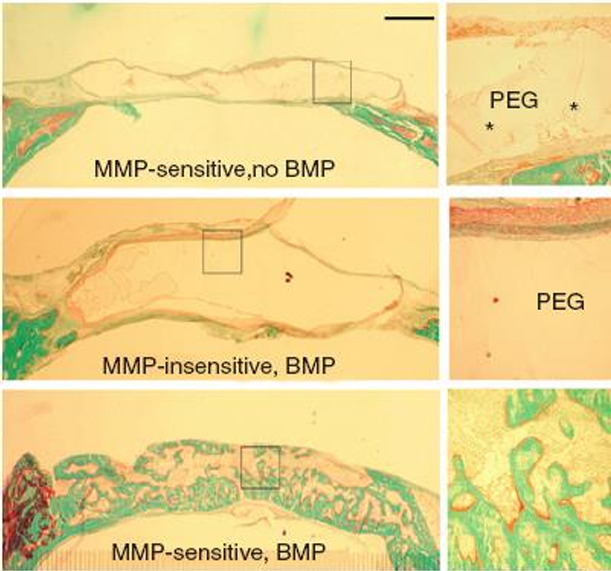
- Matrix metalloproteinase-sensitive biomimetic gel were used to release BMP-2 in calvarial defects in rats
基质金属蛋白酶敏感型仿生凝胶被用于在大鼠颅骨缺损中释放骨形态发生蛋白 - 2- 结果图
- 上图, 对照组, 不含BMP形态发生蛋白, 没有骨头形成
- 中图, 对照组, MMP-insensitive, 细胞切不开红色的, 没有骨头形成
- 下图, 实验组, 使用前面的设计, 细胞能切开红色的, 递送了BMP, 有骨头形成
- 结果图
- Biomimetic gel matrices can be constructed by cross-linking of reactive branched PEGs, e.g. terminated with vinylsulfone moieties, and dithiol peptides (red squares), with a cysteine residue on each end of the peptide.
- 例 2
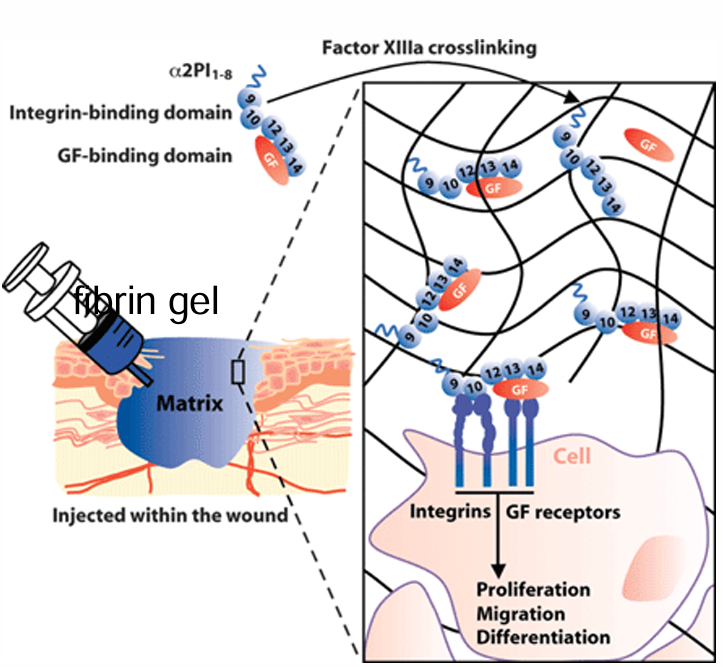
- 这种东西连接结实 Transglutaminase factor XIIIa, links glutamine residues to lysine residues to cross-link the fibrin gel in to a strong and stable matrix
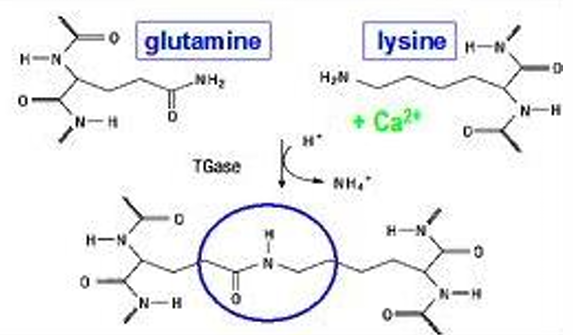
转谷氨酰胺酶 XIIIa 因子将谷氨酰胺残基与赖氨酸残基连接,使纤维蛋白凝胶交联形成坚固稳定的基质
- 同时有黏附位点和生长因子 Co-presentation of cell adhesive ligand and growth factors to biomaterial scaffold mediates a synergistic effect
- 这种东西连接结实 Transglutaminase factor XIIIa, links glutamine residues to lysine residues to cross-link the fibrin gel in to a strong and stable matrix
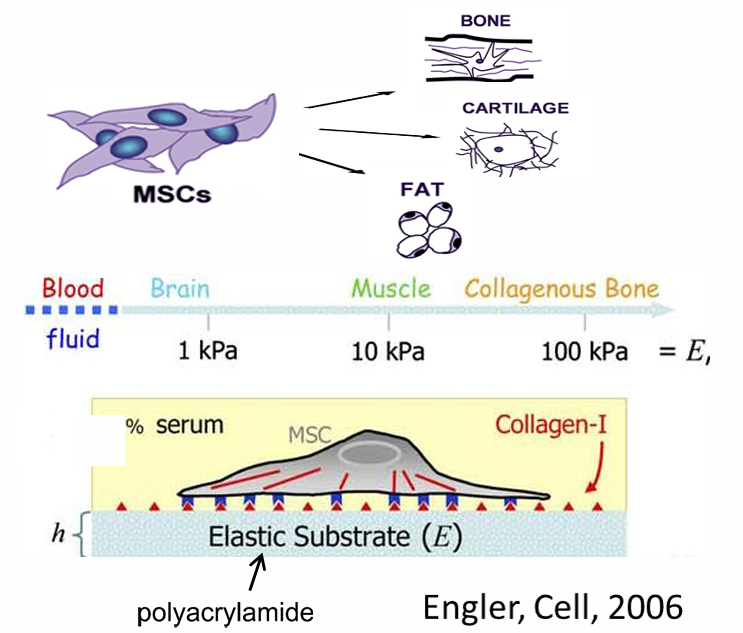
- Biomaterials can present biomechanical cues to cells
递送物理信号- 这是一个材料呈递物理信号的例子
- Human mesenchymal stem cells (hMSCs) respond to mechanicalcues presented by biomaterial scaffold
- 2D实验
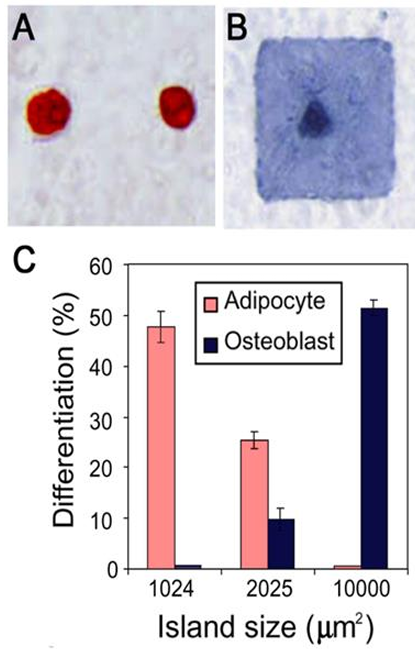
- 有个橙色的染剂染脂肪颗粒, 发现ECM面积小变成脂肪, ECM面积大变成成骨细胞
- matrix mechanics → cell spreading → cell tension/fate
- 有个橙色的染剂染脂肪颗粒, 发现ECM面积小变成脂肪, ECM面积大变成成骨细胞
- 3D实验
- 实验1
- 流程
- 图
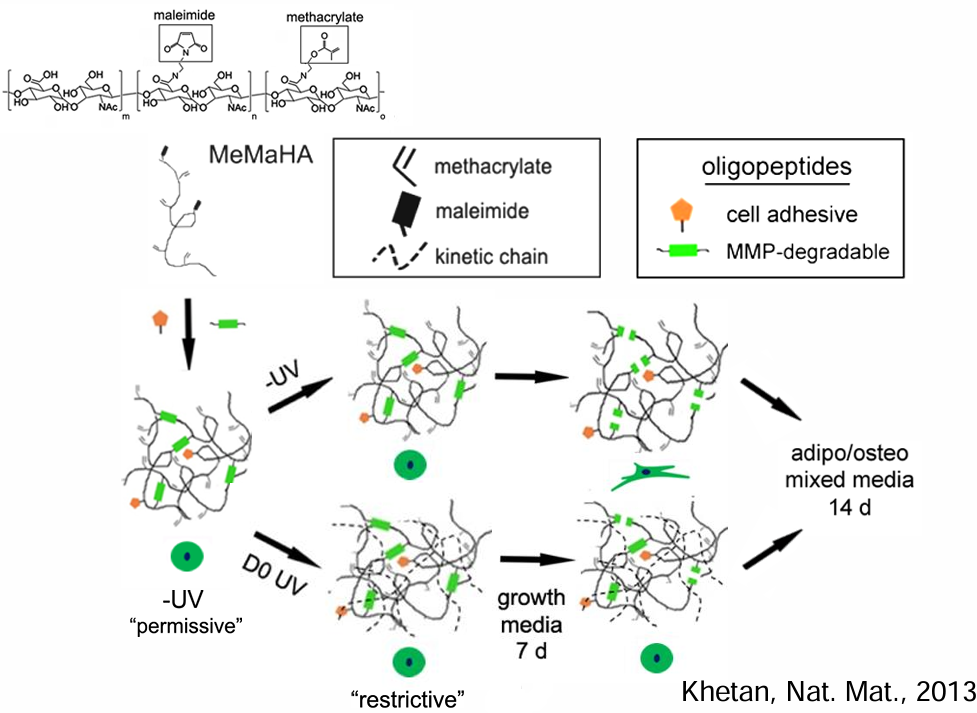
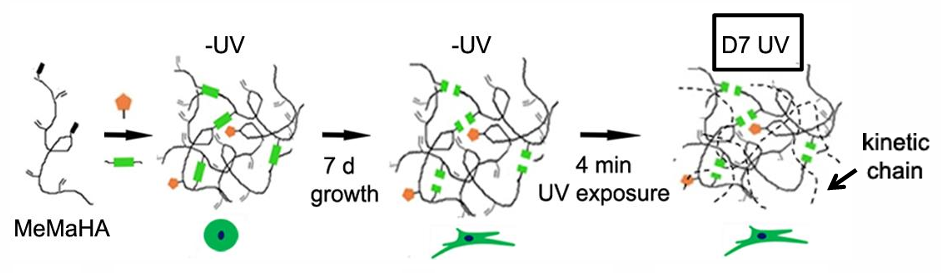
- 绿色的是交联剂,和左边两个methacrylate和malemide反应交联,细胞可以断开他
- 橙色的是细胞粘附分子,细胞可以粘在上面
- 绿色橙色功能对应 例 1 红色绿色
- 上面的, 不光照, 细胞可以降解绿的, 可以继续扩展
- 下面的, 第0天光照, 双键会继续交联, 细胞没法降解, 没法继续扩展
- 图
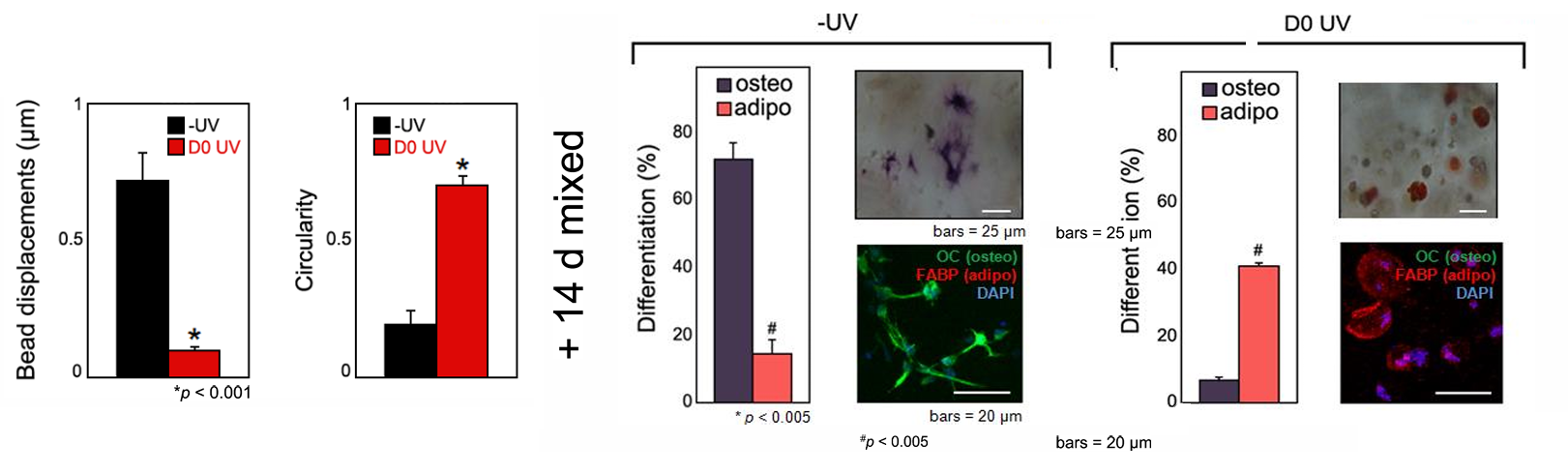
- 结果
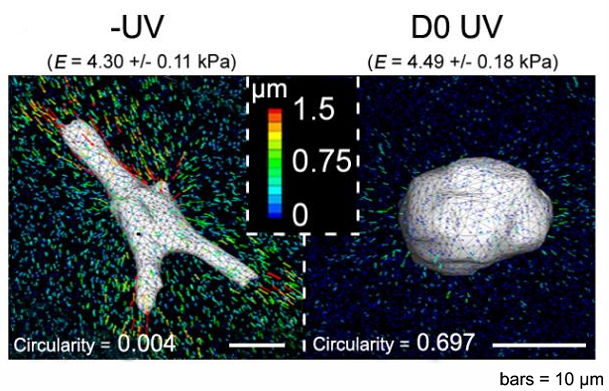
- 外面绿色点点代表displacement of hydrogel,通过接了一堆荧光颗粒看到,根据这些荧光点初始与最终位置可以得到向量(初始位置加点洗衣液杀了细胞就可以得到,两亲性分子可以破坏细胞膜)
- 可以看到第0天光照的细胞不怎么动弹都变成了脂肪细胞, 没光照能动弹的细胞变成了成骨细胞
- Cell-mediated degradation of hydrogel facilitates the development of traction forces of encapsulated hMSC
细胞降解水凝胶产生了牵引力
- 外面绿色点点代表displacement of hydrogel,通过接了一堆荧光颗粒看到,根据这些荧光点初始与最终位置可以得到向量(初始位置加点洗衣液杀了细胞就可以得到,两亲性分子可以破坏细胞膜)
- 流程
- 实验2
- 流程
- 先不光照, 细胞7天长成了成骨细胞, 符合实验1, 此时再光照固定水凝胶
- 先不光照, 细胞7天长成了成骨细胞, 符合实验1, 此时再光照固定水凝胶
- 结果
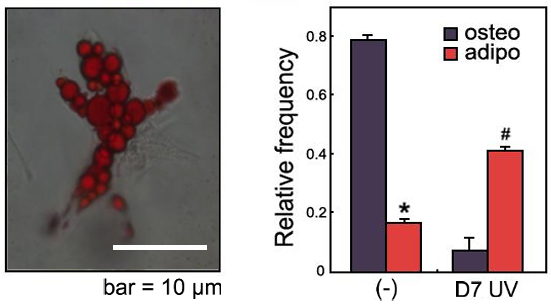
- D7 UV abrogates消除 tractions牵引力 and switches hMSC fate without affecting spread morphology
- Delayed secondary crosslinking changes the hydrogel degradability and therefore regulates stem cell differentiation
- 所以可以得到结论, 由于牵引力消失, 停止了mechanical signal, 细胞才又变成脂肪细胞, 与体积大小没有关系
- D7 UV abrogates消除 tractions牵引力 and switches hMSC fate without affecting spread morphology
- 流程
- 实验1
All articles in this blog are licensed under CC BY-NC-SA 4.0 unless stating additionally.